The 2026 snow castle took 30 days and 3,800 person-days of Self-Defense Force labour
Related guide: Sapporo Snow Festival 2027
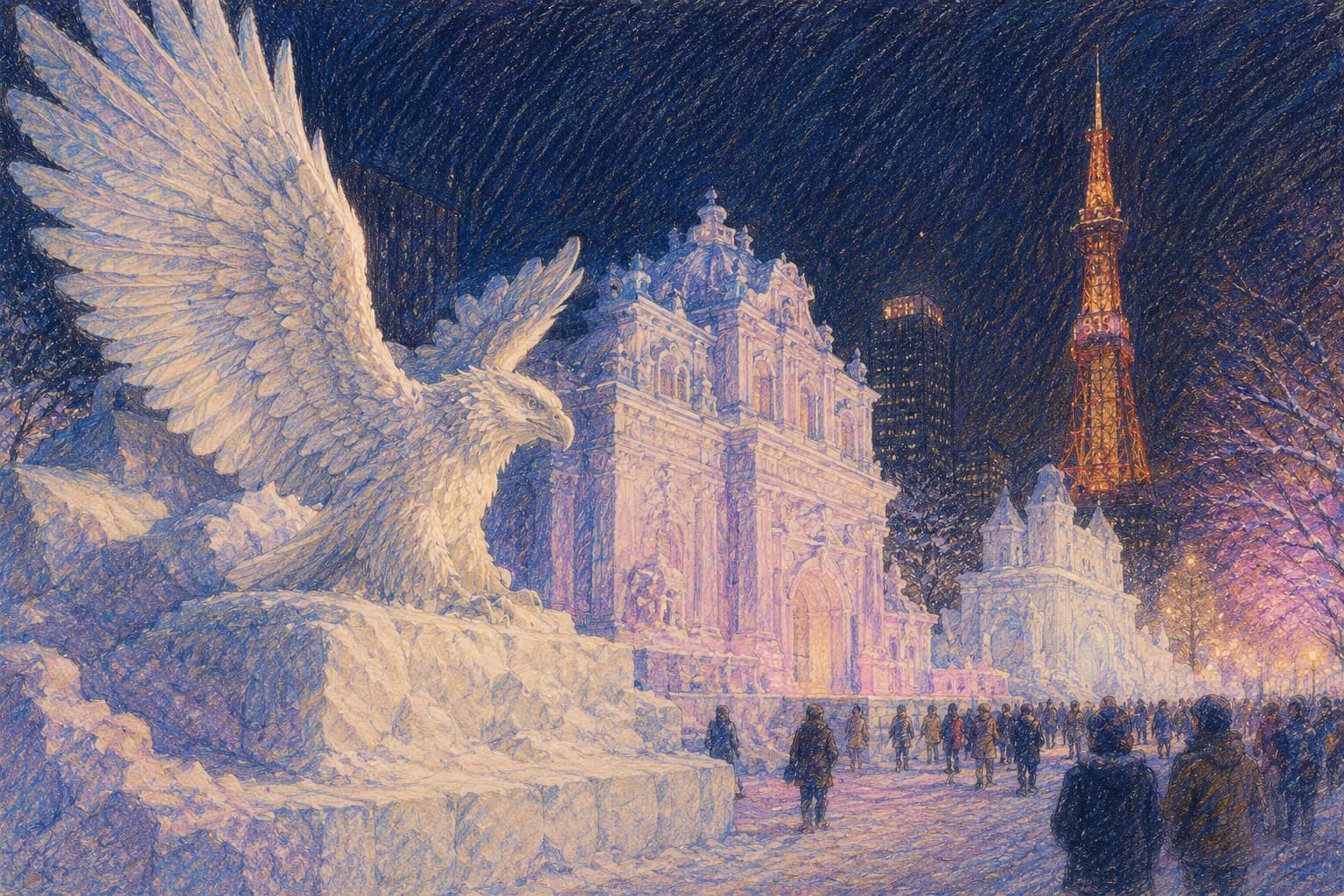
The Odori Park site runs from 1-chome to 11-chome, about 1.5 km in all, and starts as soon as you leave Odori subway station. In 2026, the 76th edition, the large sculptures stood at five spots, 4-, 5-, 7-, 8- and 10-chome, some of them taller than a two-storey building.
Most of the large sculptures are built with help from the Ground Self-Defense Force, an arrangement that began with the 6th festival in 1955. In 2026 the replica of Aizu-Wakamatsu's Tsurugajo Castle at 8-chome was built by the 18th Infantry Regiment together with the broadcaster HTB, working from 5 January to 3 February: 30 days and 3,800 person-days of Self-Defense Force labour.
The International Plaza at 11-chome hosts the international snow sculpture contest, which started in 1974. The 50th contest ran 2–7 February 2026 with 10 teams, and Finland took first place. South of the park, the Susukino site sits on Ekimae-dori between Minami 4-jo and Minami 6-jo and is given over to ice carvings, while Tsudome in Higashi Ward has snow slides and indoor play, including the Titan slide, about 12 m high.
About 2,539,000 people visited over the eight days in 2026. Dates for the 77th edition in 2027 have been announced, the same at all three sites. In the last few days the sculptures' edges soften visibly, and once the festival closes they are taken down where they stand.
The full guide to this festival
Sapporo Snow Festival 2027: 4–11 February, 1.5 km of snow sculptures in Odori Park
Full guide: dates, getting there and what you can book →
Tickets and transport you can book
These are affiliate links: if you book through them, VoucherData may earn a commission. You pay the same price.
Hokkaido
JR Hokkaido Rail Pass
Choose the all-Hokkaido pass or the Sapporo–Furano or Sapporo–Noboribetsu area pass, valid 4 to 10 days. The price shown is the cheapest option; each version is priced differently.
See plansLake Shikotsu, Hokkaido
Lake Shikotsu Ice Festival half-day tour
An evening bus trip from Sapporo, about 5 hours, to see Lake Shikotsu's ice festival lit up. Japanese-speaking staff only; meals not included.
See pricesJapan eSIM (Softbank 5G / Docomo 4G)
Runs on Softbank or Docomo in Japan; install by QR code, unlimited-data plans with a choice of days.
See plans