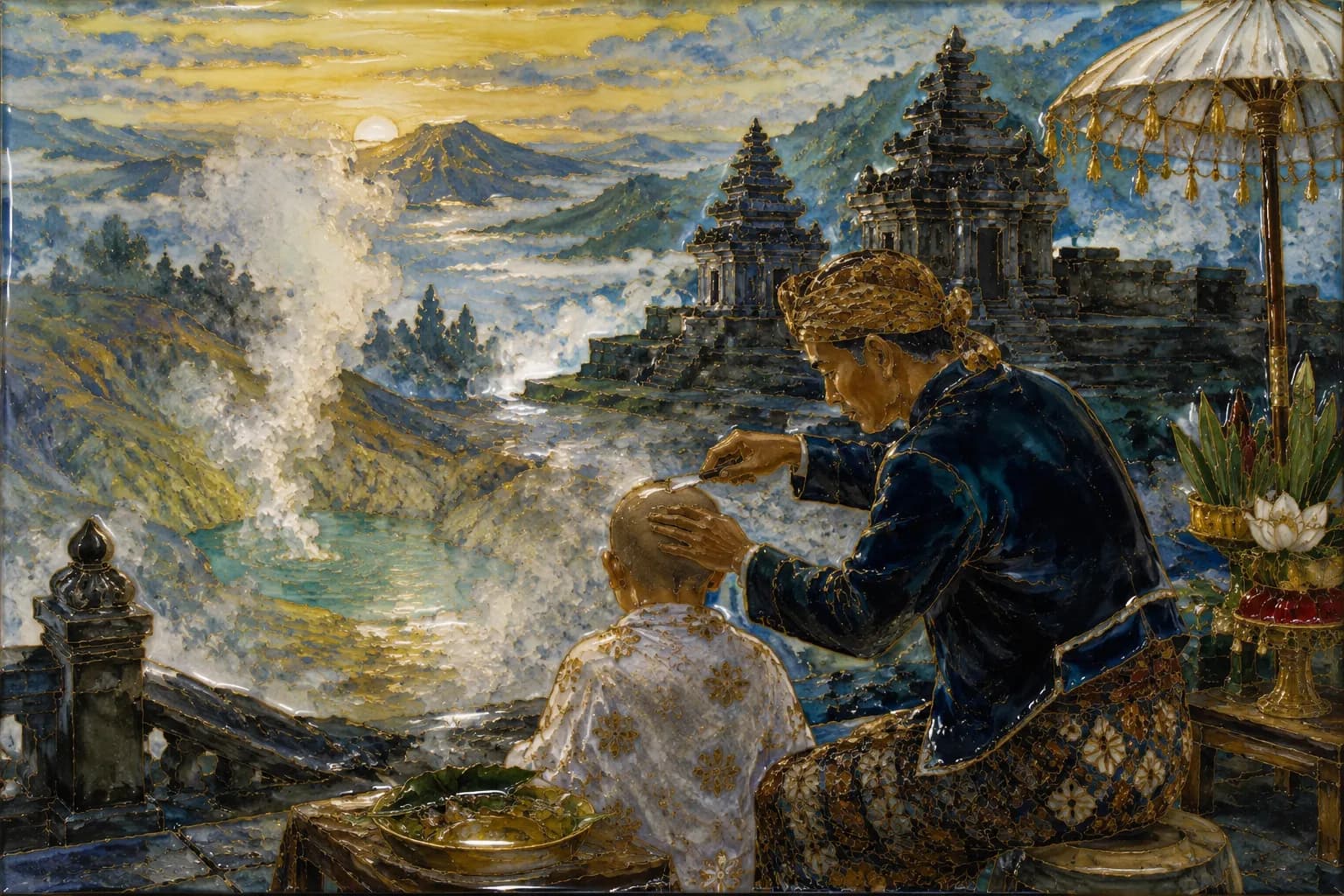
Each child names a wish before the matted hair is cut
Related guide: Dieng Culture Festival 2027
Some children in Dieng grow matted hair, known as gimbal, often after a high fever. The festival centres on ruwatan, the ritual that cuts it off. The 2026 programme also included a cultural parade (kirab budaya), a lantern festival, the Batur sheep festival and a Dieng coffee festival.
Before the cut, each child names a wish, and the family has to grant it during the ritual. The children are bathed (jamasan) with water from the Sendang Sedayu spring, and the hair is cut at the Arjuna temple complex. It then goes into an earthenware jar and is usually released at Telaga Warna.
The 2026 Dieng Culture Festival opened on the evening of 28 August with the Jazz Atas Awan concert, followed by the Harmoni Dieng show on the 29th, under the theme "Spirit of Harmony". It is organised by the Banjarnegara regency government and Pokdarwis Dieng Pandawa, the tourism group of Dieng Kulon village, and is listed in the tourism ministry's Kharisma Event Nusantara calendar.
The 2025 festival lasted two days, and in 2026 it stretched to three. Taking part in the full 2026 programme required a participant package registered to the name on your ID, and packages could not be transferred.
In July 2025 the Banjarnegara weather station recorded minimums of about 2–6 °C around the plateau, and frost formed on the grass at the Arjuna temples.
The full guide to this festival
Dieng Culture Festival 2027: the ruwatan haircut for children with matted hair, est. late August
Full guide: dates, getting there and what you can book →
Tickets and transport you can book
These are affiliate links: if you book through them, VoucherData may earn a commission. You pay the same price.
Central Java, Indonesia
Dieng Plateau day tour from Yogyakarta
Outside festival days, a same-day round trip from Yogyakarta to the Dieng Plateau: private tour, about 14 hours, with sunrise at Sikunir Hill.
See prices