Leaf-wrapped offerings at the crossroads, for spirits no one feeds
Related guide: Boon Khao Pradap Din 2027
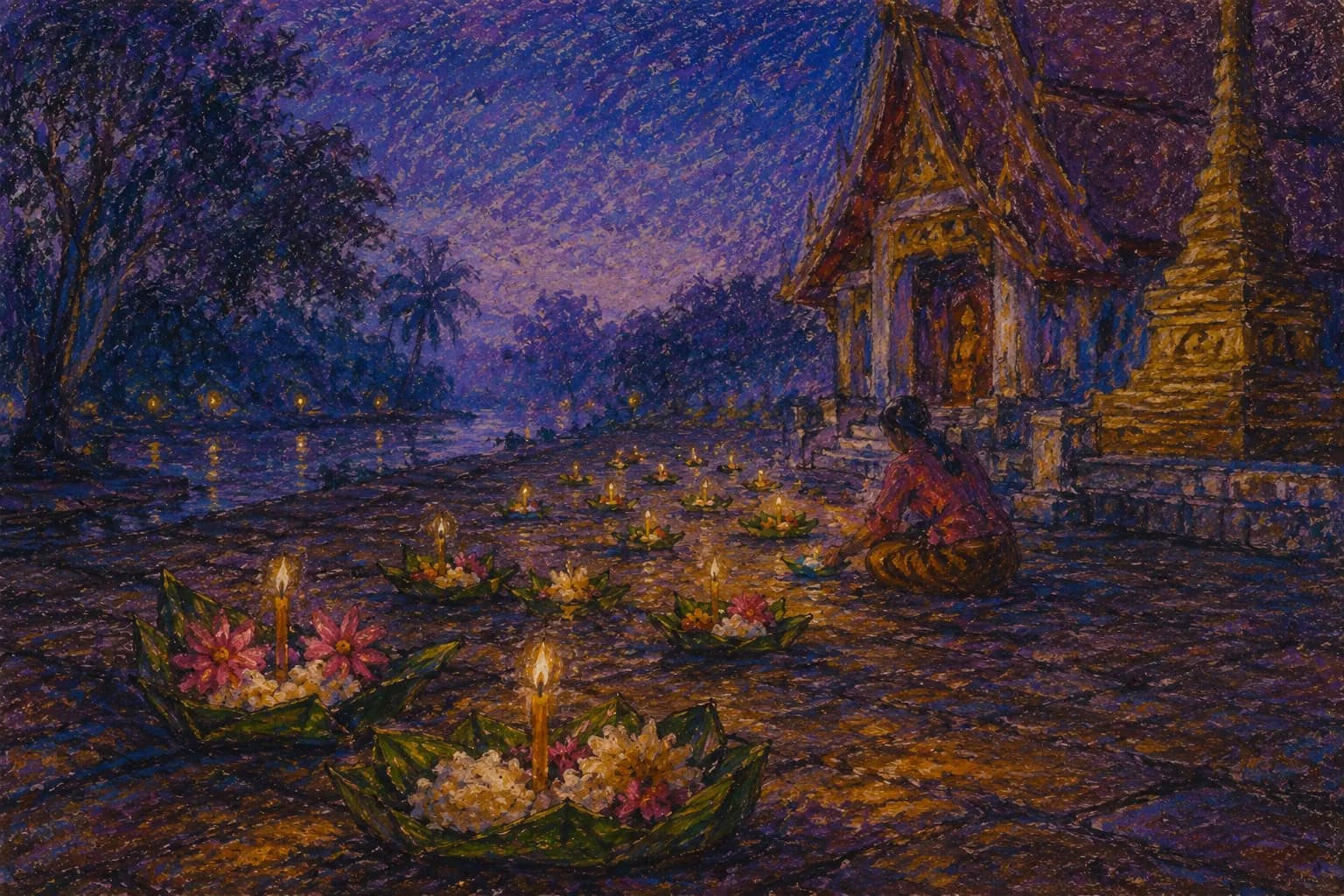
Khao pradap din means rice that decorates the ground. The day falls on the 14th of the waning moon in the ninth Thai lunar month, when people in Isan wrap offerings in banana leaves or small krathong and lay them on the ground or hang them up.
The food is not for monks. It is for wandering spirits with no one to feed them, called sampawesi in Thai, which folk belief holds can eat only offerings, and for the family's own ancestors. Traditionally the offerings go out at night, around temples, at crossroads and in cemeteries.
A month later, in the tenth lunar month, Isan holds Bun Khao Sak, when the merit is passed on through monks instead. The Tourism Authority of Thailand lists the two together as merit-making traditions unique to Isan.
In Kuchinarai district of Kalasin province, the Phu Thai cultural village of Ban Kutwa weaves bamboo into flower- and tree-shaped garlands called Malai Mai Phai. During both festivals, villagers hang fruit, vegetables, snacks and even banknotes on them as offerings to monks.
The full guide to this festival
Boon Khao Pradap Din 2027: expected 31 August, leaf-wrapped offerings laid on the ground across Isan
Full guide: dates, getting there and what you can book →
Tickets and transport you can book
These are affiliate links: if you book through them, VoucherData may earn a commission. You pay the same price.
Thailand 5G eSIM (AIS)
Unlimited data on AIS. Your phone must support eSIM; activate it in the Klook app before you fly. Full refund if cancelled before it connects.
See plans