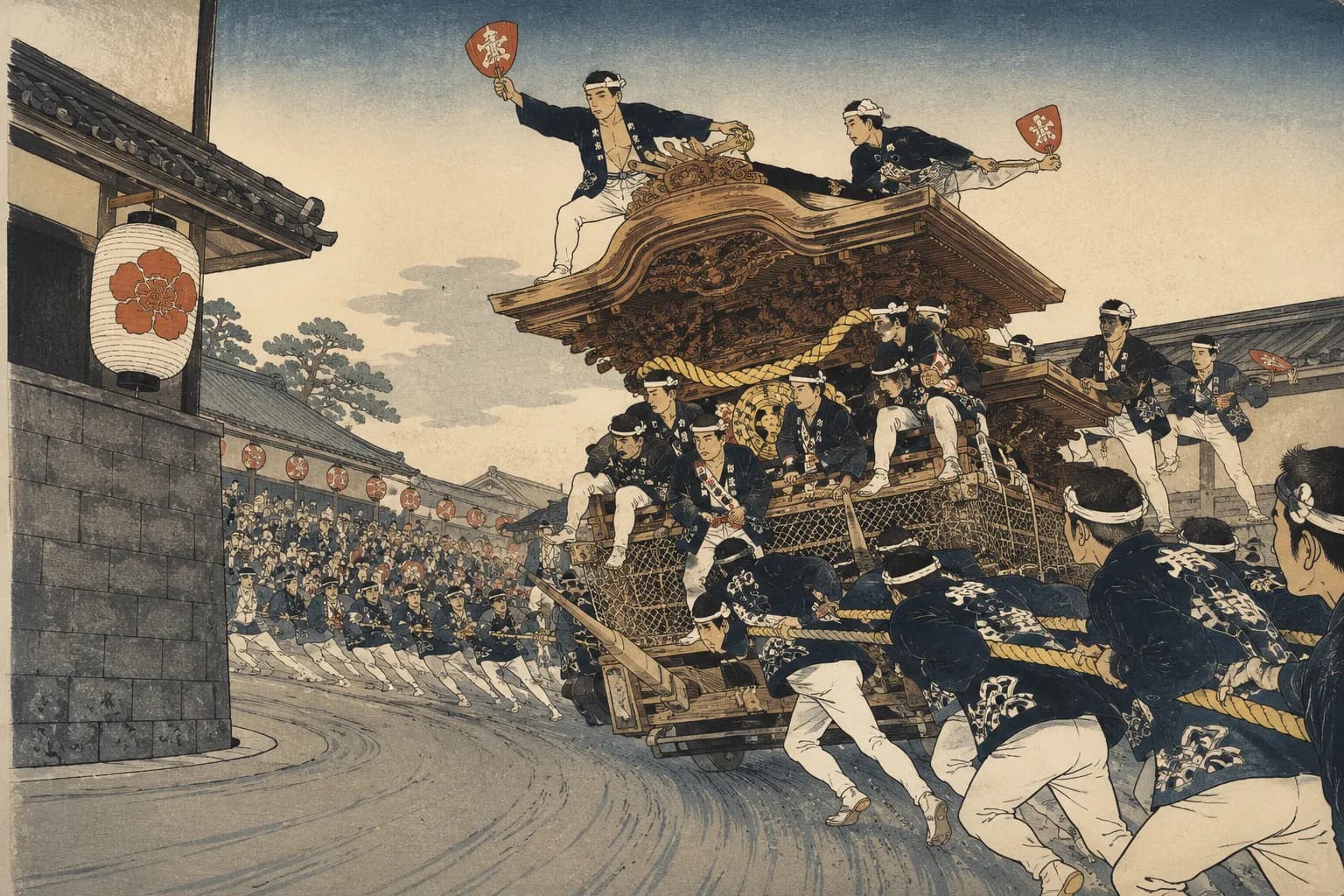
On the roof, a daikukata leaps with the float through each corner, waving a fan
Related guide: Kishiwada Danjiri Matsuri 2027
Kishiwada's danjiri are hauled through the city's ordinary streets. On the yoimiya of the 2026 September festival, each neighbourhood's float was out from 6am until 10pm; on the honmiya it ran from 9am to 10pm, with times varying by district. A second round followed on 10–11 October. According to Kishiwada City, the festival began in the mid-Edo period as an Inari festival held by the lord of Kishiwada to pray for good harvests, and has more than 300 years of history.
The danjiri are built of wood and carved all over with warriors and mythical beasts. On the roof stand the daiku-gata, who leap with the float as it turns and signal with fans. Kishiwada is still hot by day in September.
The yarimawashi at street corners is the heart of the festival: the float reaches the corner without slowing, and the rope teams fore and aft pull against each other to swing several tonnes through ninety degrees at full speed. When a turn goes wrong the float can smash into buildings, and there have been deaths and injuries in the past. Each float belongs to its own neighbourhood group, and the rope teams, the daiku-gata on the roof and the people directing at the corner all have to work together.
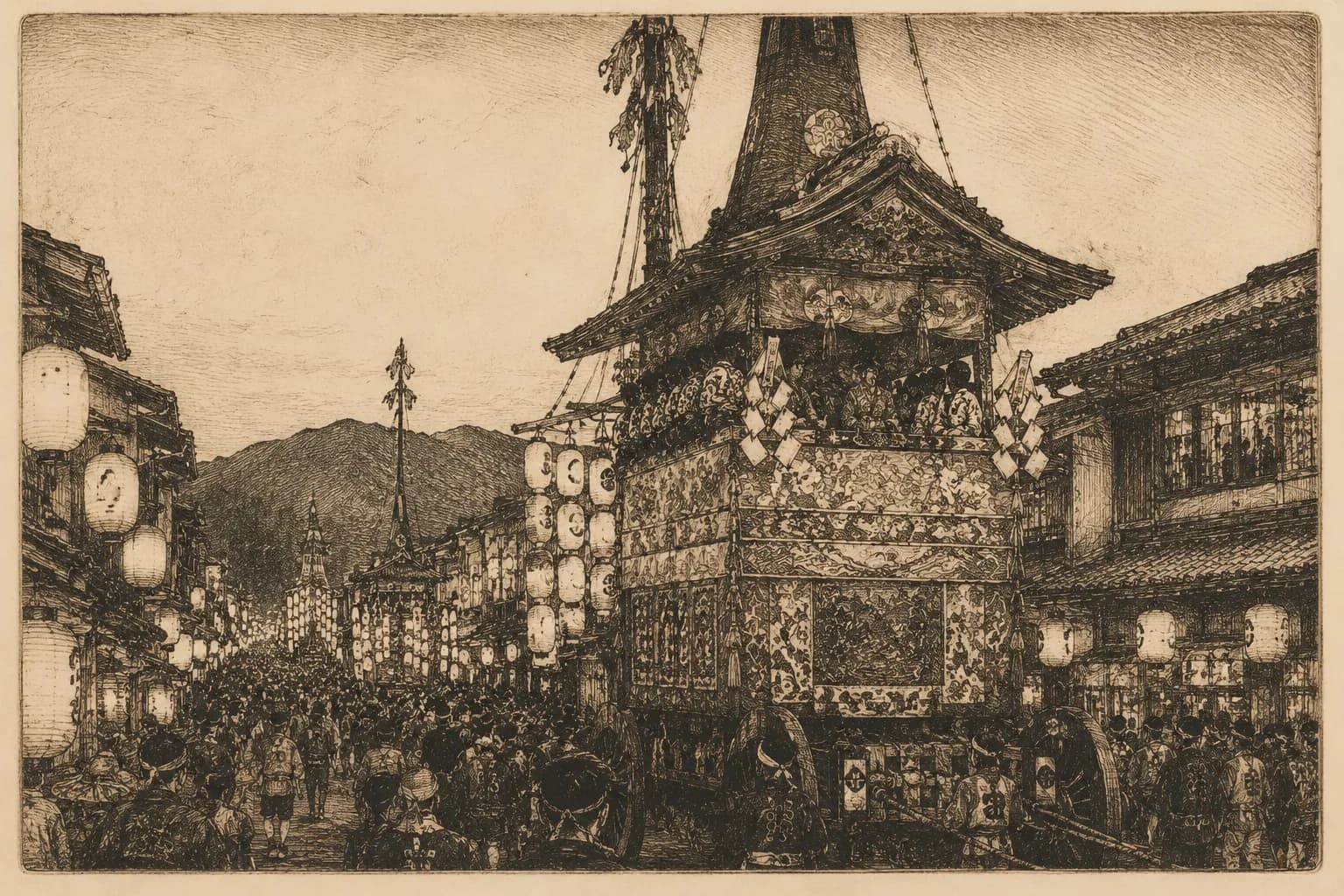
After dark the floats hang lanterns and slow down, and the same danjiri that swung through the corners by day are drawn slowly past the food stalls.
The full guide to this festival
Kishiwada Danjiri Matsuri 2027: multi-ton wooden floats cornering at full speed, est. 18–19 September
Full guide: dates, getting there and what you can book →