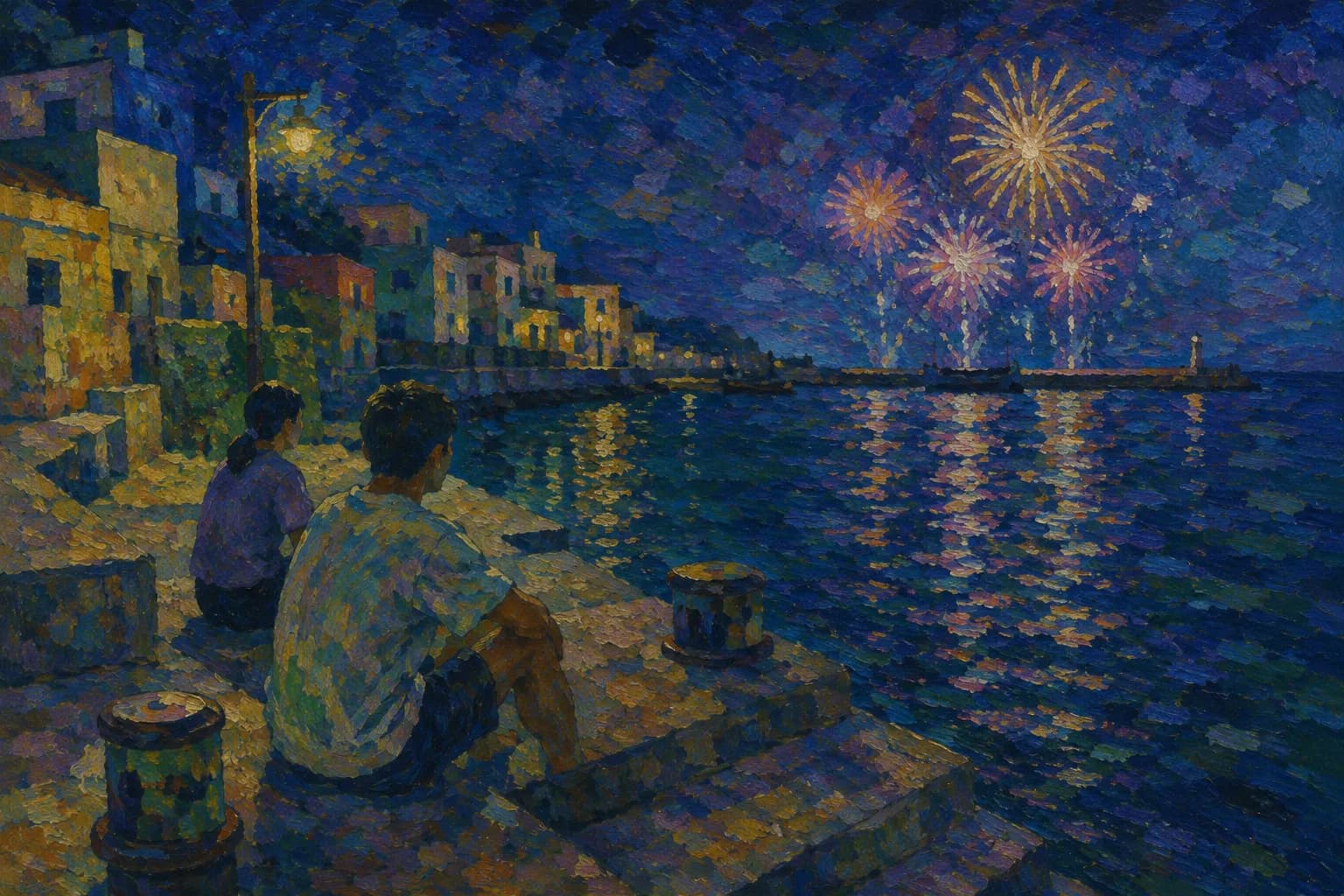
In 2026 Penghu staged 33 fireworks shows between May and August
Related guide: Penghu Fireworks Festival 2027
The 24th edition, in 2026, brought fireworks teams from Japan, Malaysia, Argentina, Italy, Malta and Finland in turn over the season, with a drone display after each show.
Beyond the main venue, Jibei, Wang'an and Qimei each had one outlying-island show: near the Jibei pier, in front of the Green Turtle Conservation Center on Wang'an, and at Nanhu Harbour on Qimei.
The main shows are at Guanyinting Park in Magong. The fireworks go up from the water beyond the park, where the steel arch of the Xiying Rainbow Bridge spans the bay.
The full guide to this festival
Penghu Fireworks Festival 2027: weekly shows over Magong harbour, est. May to August
Full guide: dates, getting there and what you can book →
Tickets and transport you can book
These are affiliate links: if you book through them, VoucherData may earn a commission. You pay the same price.
Magong, Penghu
Penghu scooter rental (Magong pick-up)
The fireworks are at Magong harbor, so a scooter makes getting around easy. 100–125cc; Taiwanese renters need a Taiwan license, foreign renters follow each shop's rules.
See plansPenghu
Penghu south islands: Tongpan, Qimei & Wang'an day trip
Summer sailings for the day after the fireworks: about 6–7 hours; depending on the plan, ferries to Qimei and Wang'an plus an island scooter are included, and you can see the Twin Hearts stone weir. Mandarin-speaking guide.
See prices