Taiwan
Dajia Mazu Pilgrimage 2027: departure date to be announced after divination on 20 February (usually March–April)
At a glance
- Dates
- Next dates to be announced
- Where
- Jenn Lann Temple, Dajia, to Fengtian Temple, Xingang
- Getting there
- Train to Dajia Station, then about a 3-minute walk to Jenn Lann Temple
- Cost
- Not listed
- Limits
- Pilgrim flags are only sold after a favourable divination at Jenn Lann
The 2026 edition has passed · Next dates will be added once announced (usually in March or April)
Dates last checked: 14 October 2026
The festival
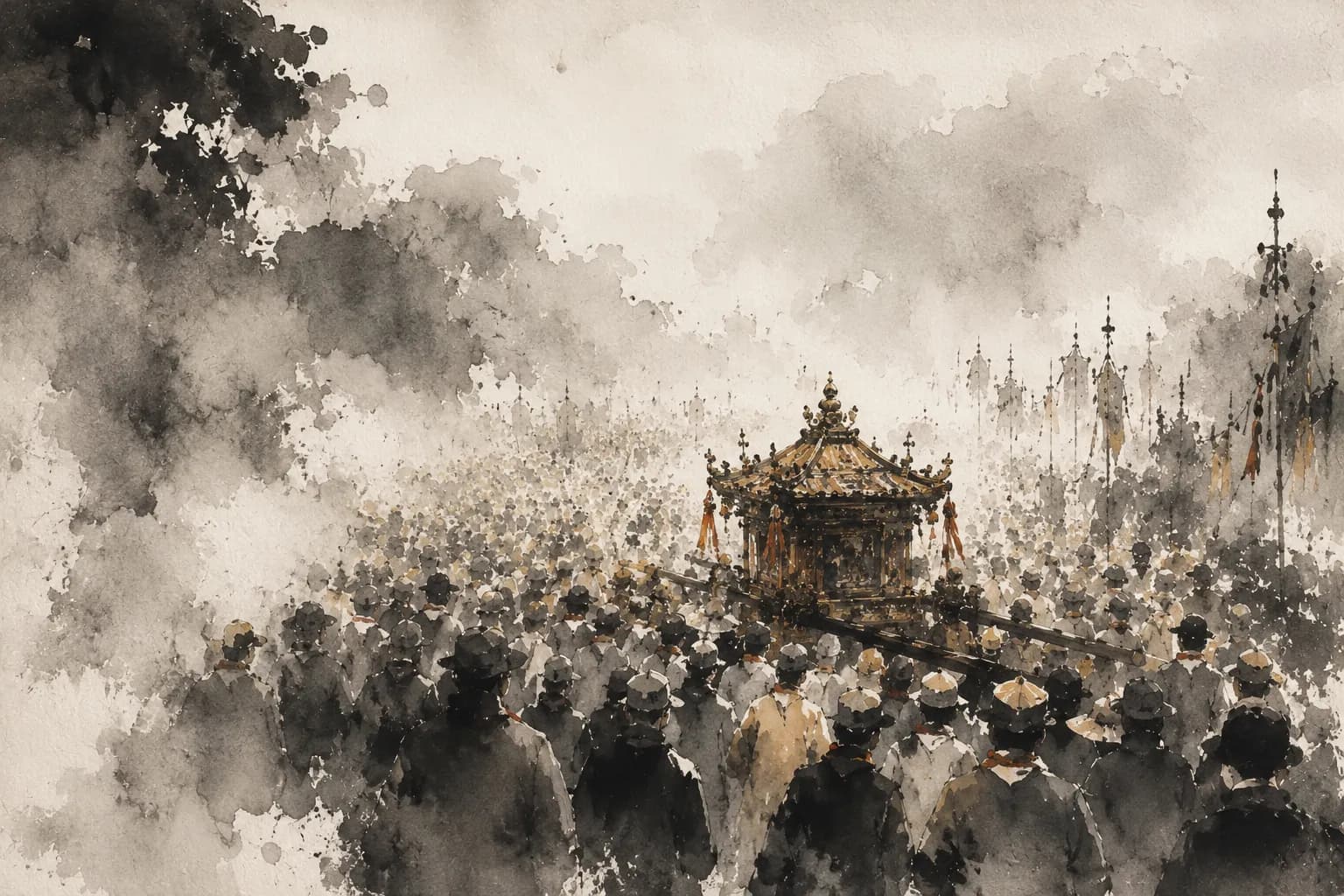
Nine days and about 340 km on foot through four counties
The departure date and hour are set each year by casting divination blocks on Lantern Festival night, so they cannot be planned in advance. In 2026 that happened at 6 pm on 3 March: temple chairman Yen Ching-piao led the board in asking Mazu, and once the answer was favourable he announced the departure for Friday 17 April at 22:05.
The palanquin reaches Fengtian Temple in Xingang, Chiayi, on the fourth day. In 2026 it arrived on 20 April and the birthday ceremony was held the next day. It then retraced the route and was back at Jenn Lann Temple in Dajia on 26 April.
The most common blessing on the road is crawling under the palanquin. Worshippers kneel on the ground so Mazu's palanquin is carried over them, and some crawl underneath it while it is stopped.
Booking
These are affiliate links: if you book through them, VoucherData may earn a commission. You pay the same price.
Transport
Taiwan-wide
Taiwan High Speed Rail tickets with attraction add-ons
The pilgrimage starts at Jenn Lann Temple in Dajia, Taichung; HSR Taichung is the easiest connection.
See plans
Details
Walking along needs no registration, you can join for just one stretch, and lodging and transport are up to you. The 2027 departure date won't be known until the divination on Lantern Festival night; in past years it has fallen in March or April.
How the departure date is set
The departure date is only known on Lantern Festival night. The temple chairman casts divination blocks to ask Mazu, and the date and hour are announced after a favourable answer.
Until the divination, keep March and April free and check again before you travel. Jenn Lann Temple's announcement is final. The lunar calendar lands on different Gregorian dates each year, so last year's dates won't carry over.
Route: Dajia to Xingang
The procession starts at Jenn Lann Temple in Dajia, Taichung, heads south through Taichung, Changhua and Yunlin to Fengtian Temple in Xingang, Chiayi, and returns to Dajia the same way.
The round trip is over 340 km and crosses four cities and counties: Taichung, Changhua, Yunlin and Chiayi.
Registration and pilgrim flags
You don't register with the temple to walk, and there are no rules on how far or how long you go. You can join or leave the procession anywhere.
A pilgrim flag is different: you fill in a form at the Jenn Lann Temple service desk and buy it only after a favourable divination answer. On your first time, walk with the pilgrims around you and follow the volunteers' directions.
Walking just one stretch
Walking the full nine days and eight nights is very hard. The asphalt is long and blisters come quickly, and only a minority complete the whole route.
Check the daily schedule and overnight stops published by Jenn Lann Temple, pick a stretch that starts and ends near a station and suits your fitness, then take public transport home from that town.
Transport, lodging and costs
Decide which stretch you will walk first, then plan how to get in and out from a nearby town.
Villages along the way provide food, so meals cost little. The main costs are lodging and transport, which you arrange yourself.
Shoes and gear
This is a long walk, and shoes matter most. Wear a pair you have broken in and that fit well, and carry blister plasters and spare socks.
Bring your own water, a hat, rain gear and a headlamp, and stop at rest points when you are tired.
Crawling under the palanquin
There are two ways to do it: kneel on the ground so the palanquin is carried over you, or crawl under it while it is stopped.
If you want to take part, watch how experienced worshippers do it, follow the volunteers' directions, and keep your place and timing with the line. Only get up once the palanquin has fully passed.
Crowds and night safety
The send-off, overnight stops and return are the busiest moments. Watch your footing when the palanquin comes close and don't push into packed spots.
The procession keeps walking after dark. If you walk along the road at night, wear light or reflective clothing, step aside when the palanquin approaches, and wait until it has fully passed.
Roadside altars and food
Temples and households along the route set up altars to welcome Mazu, and villages prepare food for pilgrims. You don't need to share the faith.
Return bowls when you finish, take your rubbish with you, and thank the hosts as you pass their altar.
Good to know
- 2026 pilgrimage (finished)
- Left at 22:05 on 17 April, stayed at Fengtian Temple in Xingang on 20–21 April for the birthday ceremony, and returned to Dajia on 26 April
- Next edition
- The 2027 departure date will be set by divination on Lantern Festival night, 20 February. It usually falls in March or April
- Distance
- Over 340 km there and back, nine days and eight nights
- Send-off
- Jenn Lann Temple estimated about 600,000 visits on departure day in 2026
- How to take part
- You don't register with the temple, and you choose how far and how long to walk. Most people join for one stretch
- Food along the way
- Villages along the route provide food for pilgrims on foot
- 2026 theme
- "Goodness" (shan)
FAQ
5
Where does the pilgrimage start and end?
It starts at Jenn Lann Temple in Dajia, Taichung, heads south through Taichung, Changhua and Yunlin to Fengtian Temple in Xingang, Chiayi, then retraces the route to Dajia. The round trip is over 340 km through four cities and counties.
Do you need to register to join?
No. You don't register with the temple, and there are no rules on how far or how long you walk. If you want an official pilgrim flag, you fill in a form at the Jenn Lann Temple service desk and must receive a favourable divination answer from Mazu before buying one.
Can I walk just one stretch?
Yes. You decide how far and how long to walk. Pick a stretch you can manage and take a train or bus home from the town where you stop.
What should I prepare?
Shoes matter most. Wear a pair you have broken in and that fit well, and carry blister plasters and spare socks. Villages along the way provide food, but you arrange your own lodging and transport.
What is crawling under the palanquin?
It is a way of asking for blessings: worshippers kneel on the ground so Mazu's palanquin is carried over them, or crawl under the palanquin while it is stopped. If it is your first time, watch experienced worshippers around you and follow the volunteers' directions.
Read next