Thailand
Ubon Candle Festival 2027: expected 17–19 July in Ubon Ratchathani, giant wax sculptures for Buddhist Lent
At a glance
- Dates
- Next: 17–19 July 2027 (est.)
- Where
- Thung Si Mueang park, central Ubon Ratchathani
- Getting there
- Domestic flight from Bangkok, or train or long-distance bus
- Cost
- Free to watch, with free seats along the route (2026)
- Limits
- Do not touch or climb the wax floats
The 2026 edition has passed
Dates last checked: 13 October 2026
The festival
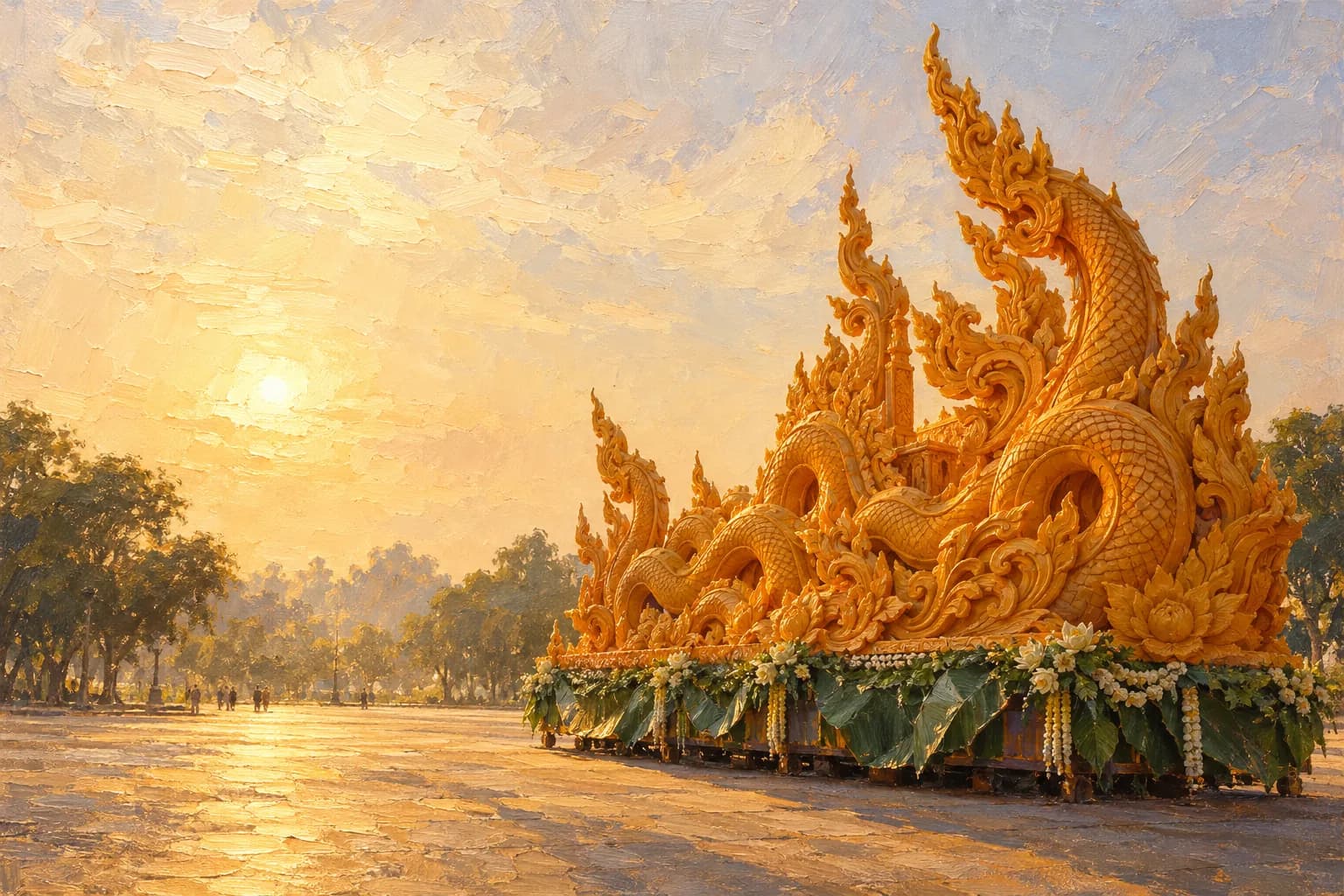
Giant wax sculptures called candles, and never lit
The giant wax sculptures in Ubon's candle procession are made by temples and their communities. Some are built on wood or plaster frames and coated in wax, most show scenes from Buddhist and Hindu mythology, and although they are called candles, they are never lit. The 2026 procession was the 125th.
The festival is tied to Khao Phansa, the start of the monks' three-month rains retreat, when people traditionally donate candles to temples. Ubon turned that offering into giant sculptures. Before the parades, nine temple communities welcome visitors to learn about wax decoration.
Both main days have a morning parade. On 29 July the royally bestowed Lent candle and monastic bathing cloth led the way, and on 30 July a Phanom Phra boat procession from Surat Thani joined in. Over the two days, more than 37 dance troupes from temple communities and schools across the province took part.
Booking
These are affiliate links: if you book through them, VoucherData may earn a commission. You pay the same price.
Prices and ratings checked 13 Oct 2026
Mobile data
Thailand 5G eSIM (AIS)
Unlimited data on AIS. Your phone must support eSIM; activate it in the Klook app before you fly. Full refund if cancelled before it connects.
See plans
Details
The parades follow the Buddhist calendar: in 2026 both big parades set off at 08:29 on the mornings of Asanha Bucha and Khao Phansa, and in 2027 those two days fall on 18 and 19 July. Arrive early for the free seats.
Origins: Khao Phansa and the candle offering
Khao Phansa marks the start of the monks' rains retreat, roughly three months in which monks stay at their temples and do not travel. Traditionally, people donate candles to temples at this time. Ubon's temples and communities turn the offering into giant wax sculptures and compete with them in the parade.
How the date is set
The festival has no fixed solar date. It follows Asanha Bucha and Khao Phansa the next day, both set by the eighth Thai lunar month, which usually falls in July. In 2026 the two holy days were 29 and 30 July, and in 2027 they are 18 and 19 July.
Location and getting there
The main venue is Thung Si Mueang park in central Ubon Ratchathani, and the parades run through the city streets. Ubon has an airport with domestic flights from Bangkok, and trains and long-distance buses also run there.
Heat and long hours standing
July is the rainy season. Days are hot and showers can arrive suddenly. The parades start in the morning, and waiting along the route and following the floats can mean several hours on your feet outdoors. Bring a hat, sunscreen, water and light rain gear, or arrive early for a spot in the free seating.
Where to stay
A room in the centre near Thung Si Mueang park lets you walk to both the morning parades and the evening shows. The festival is one of Ubon's biggest events of the year, so central rooms are tighter than usual.
The two parade days in 2026
29 July: the royal Lent candle and bathing cloth procession set off from 08:29, followed by the candle parade and dance troupes. Light-and-sound shows began at 19:00 at Wat Si Ubon Rattanaram and Lan Khwan Mueang.
30 July: the official opening at 08:29, then the candle parade, dance troupes and the Phanom Phra boat procession. Results were announced at 17:30, followed by another light-and-sound show and candle procession at 19:00.
Seating and costs
The parades and sculptures are free to see. In 2026 the organisers set up more than 5,000 free seats at five viewing points: Wat Si Ubon Rattanaram, Lan Khwan Mueang, U Hotel, Siam Commercial Bank and the Bangchak petrol station. The main costs are transport and a room.
Before and after the parades
From 13 to 27 July, nine temple communities welcome visitors to learn about wax decoration. From 25 to 30 July, TAT ART SPACE runs candle carving, wax-flower and gold-leaf workshops. After the parades, the award winners stayed at Thung Si Mueang park and the City Pillar Shrine on 31 July and 1 August. From 3 to 17 August, Wat Phra That Nong Bua held a separate display, “Ubon Candles on View Throughout the Month”.
Etiquette
The sculptures are Khao Phansa offerings to temples and the parade includes religious rites, so dress modestly and do not block the procession. Wax softens in the heat. Look without touching, never climb on the floats, and stay behind any lines set by staff when taking photos.
Good to know
- Location
- Thung Si Mueang park in the centre of Ubon Ratchathani, northeastern Thailand
- The sculptures
- 47 pieces in 2026, competing in traditional, moulded-wax and carved-wax categories
- Seating
- In 2026 more than 5,000 free seats were set up at five viewing points along the parade route
FAQ
6
Where is the Ubon Candle Festival held?
In Ubon Ratchathani, northeastern Thailand. The main venue is Thung Si Mueang park in the city centre, the parades run through the central streets, and the evening light-and-sound shows take place at Wat Si Ubon Rattanaram and Lan Khwan Mueang.
What is the main thing to see?
Giant wax sculptures made by temple communities. There were 47 in 2026, in traditional, moulded-wax and carved-wax categories. Some are built on wood or plaster frames coated in wax, most show scenes from Buddhist and Hindu mythology, and none of these candles is ever lit.
What is Khao Phansa?
Khao Phansa marks the start of the monks' rains retreat, roughly three months during which monks stay at their temples. Traditionally, people donate candles to temples at this time.
Can you still see the sculptures after the parade?
Yes. In 2026 the award winners stayed on display at Thung Si Mueang park and the City Pillar Shrine on 31 July and 1 August. Wat Phra That Nong Bua then held a separate candle display, “Ubon Candles on View Throughout the Month”, from 3 to 17 August.
Do you need tickets for the parade?
No. The 2026 parades were free to watch, and the organisers provided more than 5,000 free seats at five viewing points: Wat Si Ubon Rattanaram, Lan Khwan Mueang, U Hotel, Siam Commercial Bank and the Bangchak petrol station.
What etiquette applies at the festival?
The sculptures are Khao Phansa offerings to temples and the parade includes religious rites. Dress modestly, do not block the procession, and do not touch or climb on the floats.
Read next