In cold, damp years the sweetgum stays red into January
Related guide: Aowanda maple season
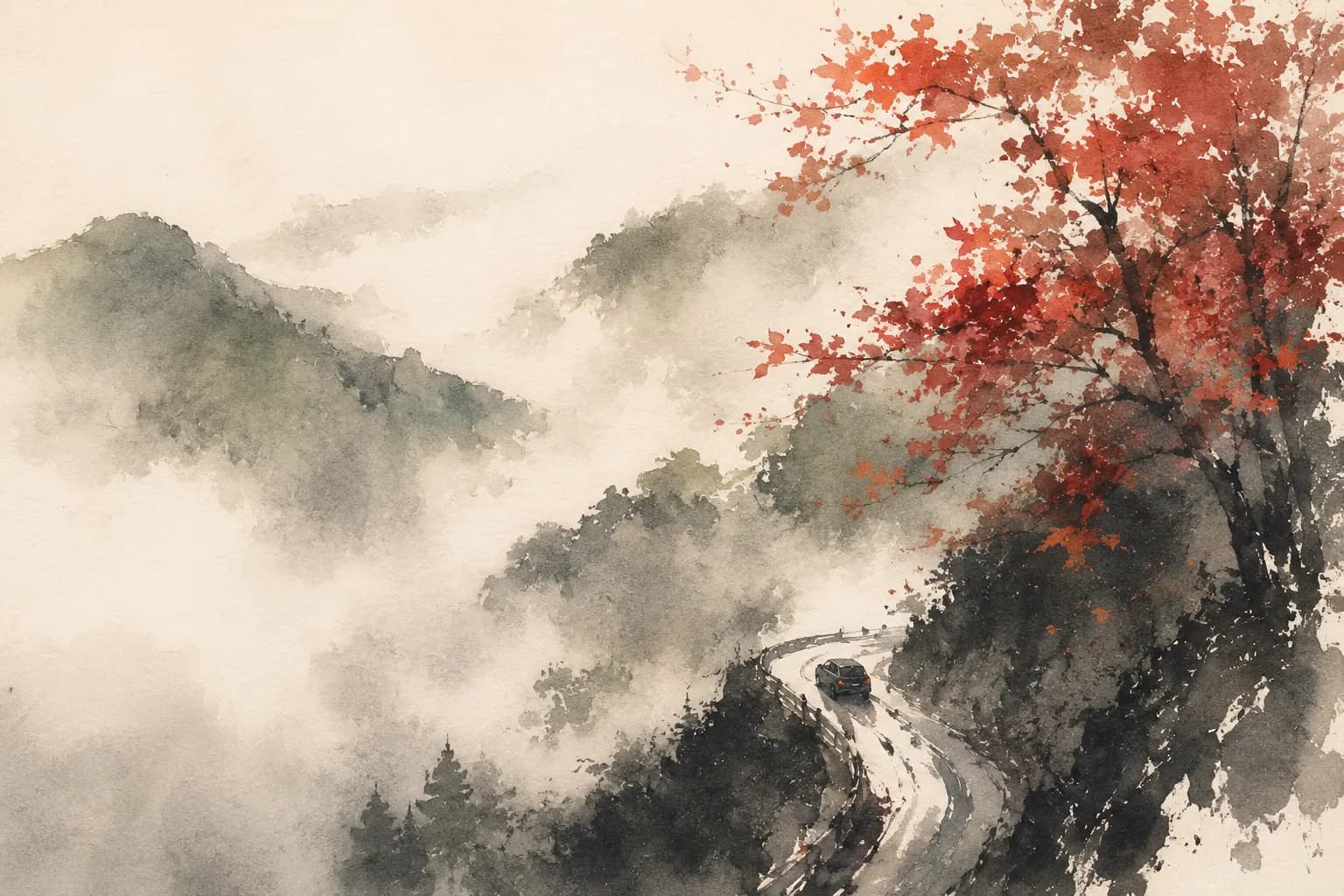
Aowanda National Forest Recreation Area climbs from 1,100 to 2,600 metres in Renai Township, Nantou, and holds an intact native Formosan sweetgum forest. You reach it by driving a winding mountain road from Taichung or Puli, and the sweetgum trail starts from the park's car park.
Formosan sweetgum (Liquidambar formosana) is not a maple but a deciduous tree in the family Altingiaceae, with three-lobed leaves that go from green to yellow to red in winter; in Taiwan the season is still called maple viewing. Peak colour usually runs from mid-November to late December. The park says that in years of steady cold and damp air the leaves turn faster, and red leaves can still be seen from December into January.
The sweetgum trail in the main park is gently graded and needs no hiking experience. After rain the fallen leaves are soft and wet, and the trail is more slippery than usual.
Beyond the sweetgums, most of the park is mid-elevation broadleaf forest with about 120 recorded bird species, and the suspension bridge, waterfall and birding trails are all within the same park.
The full guide to this festival
Aowanda maple season: mid-November to late December in Renai, Nantou
Full guide: dates, getting there and what you can book →
Tickets and transport you can book
These are affiliate links: if you book through them, VoucherData may earn a commission. You pay the same price.
Ren'ai, Nantou
Aowanda National Forest Recreation Area ticket
Driving yourself? Buy the entry ticket first. While renovation work is under way, the former half-price ticket applies to all adults.
See pricesRen'ai, Nantou
Aowanda maple viewing & Wujie village day tour
Hotel pick-up in Taichung, about 7–8 hours, Chinese-speaking guide. The mountain road is winding, and this saves you the drive.
See pricesSun Moon Lake, Nantou
Sun Moon Lake & Cingjing Farm day tour with lake cruise
Hotel pick-up in Taichung (07:30–16:30) with the Sun Moon Lake boat ticket. Meals and Cingjing Farm entry are not included.
See prices