Alishan's Zhushan Line runs on sunrise time
Related guide: Alishan sunrise and Forest Railway
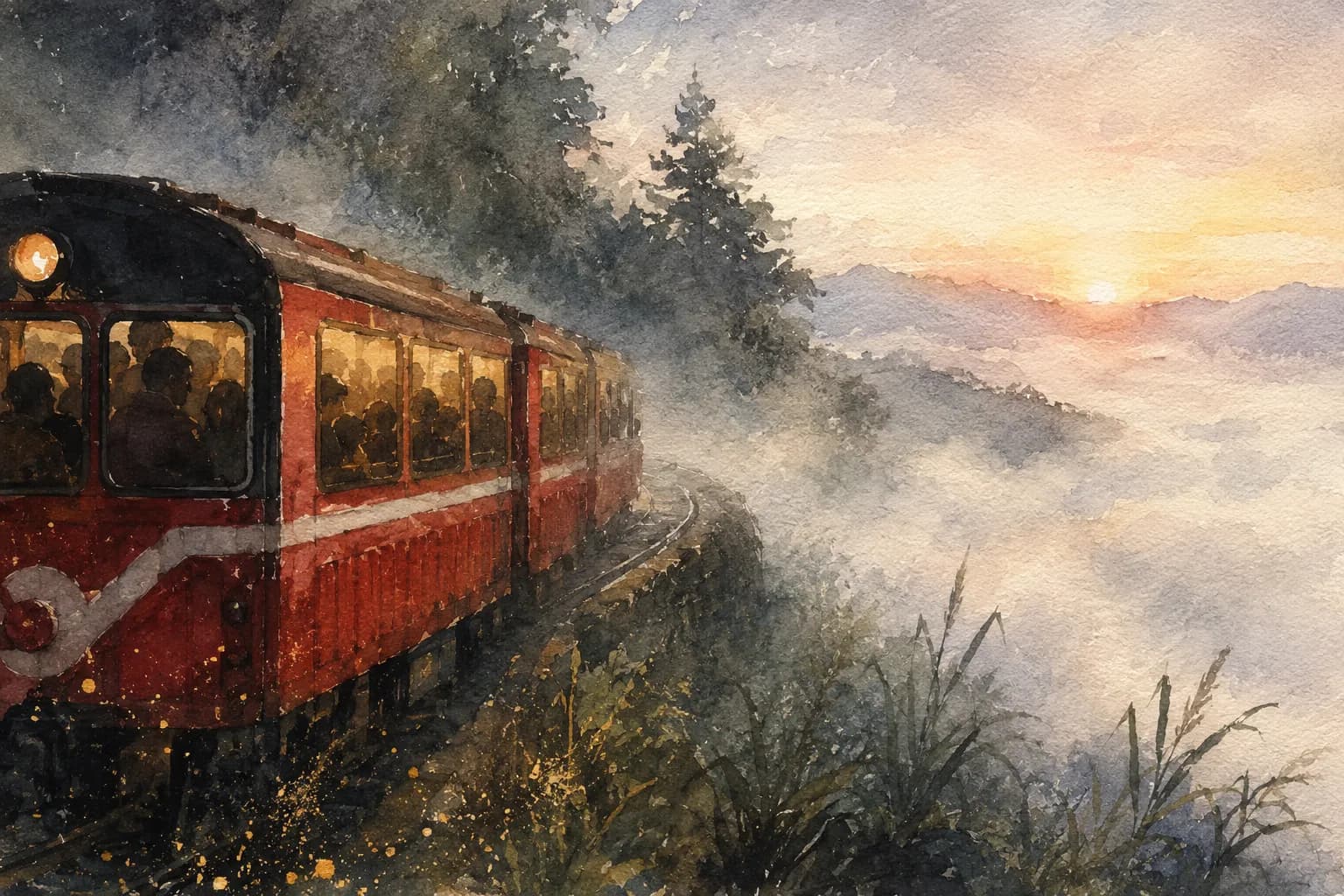
The Zhushan Line sunrise train has no fixed timetable. The first departure is set from the next morning's sunrise and only posted at 16:30 the day before, on the railway's booking site, at Alishan Station, at the park entrance and at the visitor centre. If you sleep on the mountain, you find out what time to get up that evening.
The Alishan Forest Railway opened in 1912 to bring timber down the mountain and did not carry passengers at first. Logging has stopped, the line now carries visitors, and the Zhushan branch to the viewpoint opened in 1986.
New Year's Day has the earliest departure of the year. On 1 January 2026 the first Zhushan sunrise train left Alishan Station at 02:50. Tickets were released in three rounds, for groups, online and at the station, and leftovers went on sale at Alishan Station from 02:20 that morning, up to 10 per person.
While Zhushan Station was being rebuilt, sunrise trains stopped elsewhere; they have called there again since 21 November 2023. The end of the line, Zhushan, is the highest railway station in Taiwan.
The full guide to this place
Alishan sunrise and Forest Railway: visible year-round, reached by the pre-dawn Zhushan Line train
Full guide: dates, getting there and what you can book →
Tickets and transport you can book
These are affiliate links: if you book through them, VoucherData may earn a commission. You pay the same price.
Chiayi
Taiwan Tourist Shuttle Alishan line: round-trip ticket
A way up for independent travelers without a car: board at HSR Chiayi station and show the QR code to the driver.
See plansAlishan, Chiayi
Alishan day or multi-day tour: forest railway & Zhushan sunrise
Choose an all-road route or one with the forest train; multi-day plans include the Zhushan sunrise. Train seats depend on what is released for sale. Mandarin-speaking guide.
See pricesAlishan, Chiayi
Alishan day tour from Taichung, Chiayi or Kaohsiung
Meet in Taichung, Chiayi or Kaohsiung and go up by vehicle all the way; about 11 hours with a Chinese- or English-speaking guide. No train tickets to chase or buses to change.
See pricesTaiwan
Taiwan high-mountain tea gifts
Taiwanese high-mountain oolong and gift boxes, to drink yourself or give away; origin and packaging are listed on the brand's site.
Shop at Tianxia Diyi TeaTaiwan
Yulu Tea Garden Taiwanese tea
Taiwanese tea from Yulu Tea Garden; check the brand's product pages for organic certification and origin.
Shop at Yulu Tea Garden