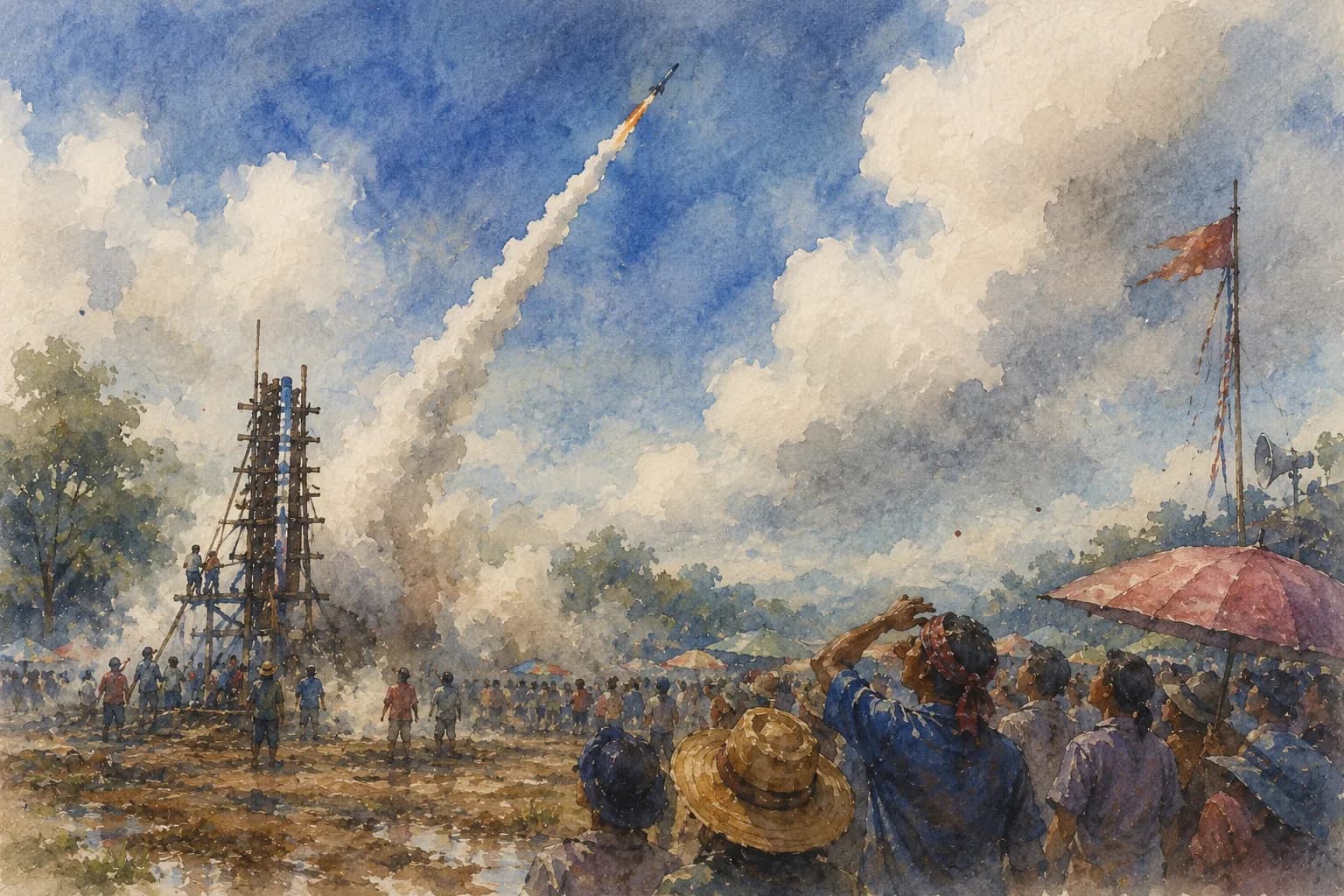
Teams whose rockets misfire get thrown in the mud
Related guide: Bun Bang Fai 2027
Yasothon usually holds its rocket festival on the second weekend of May, centred on Phaya Thaen Park in town. Provinces across Isan, including Roi Et, Kalasin, Udon Thani and Nong Khai, hold their own versions, and Yasothon's is the best known.
Farming in Isan depends on the rain, and firing rockets is a way of asking the sky for it. In the local legend, the Toad King, Phaya Khankhak, fought the rain god Phaya Thaen and won, and the god promised to send rain whenever people sent rockets up to him. The park is named after that god.
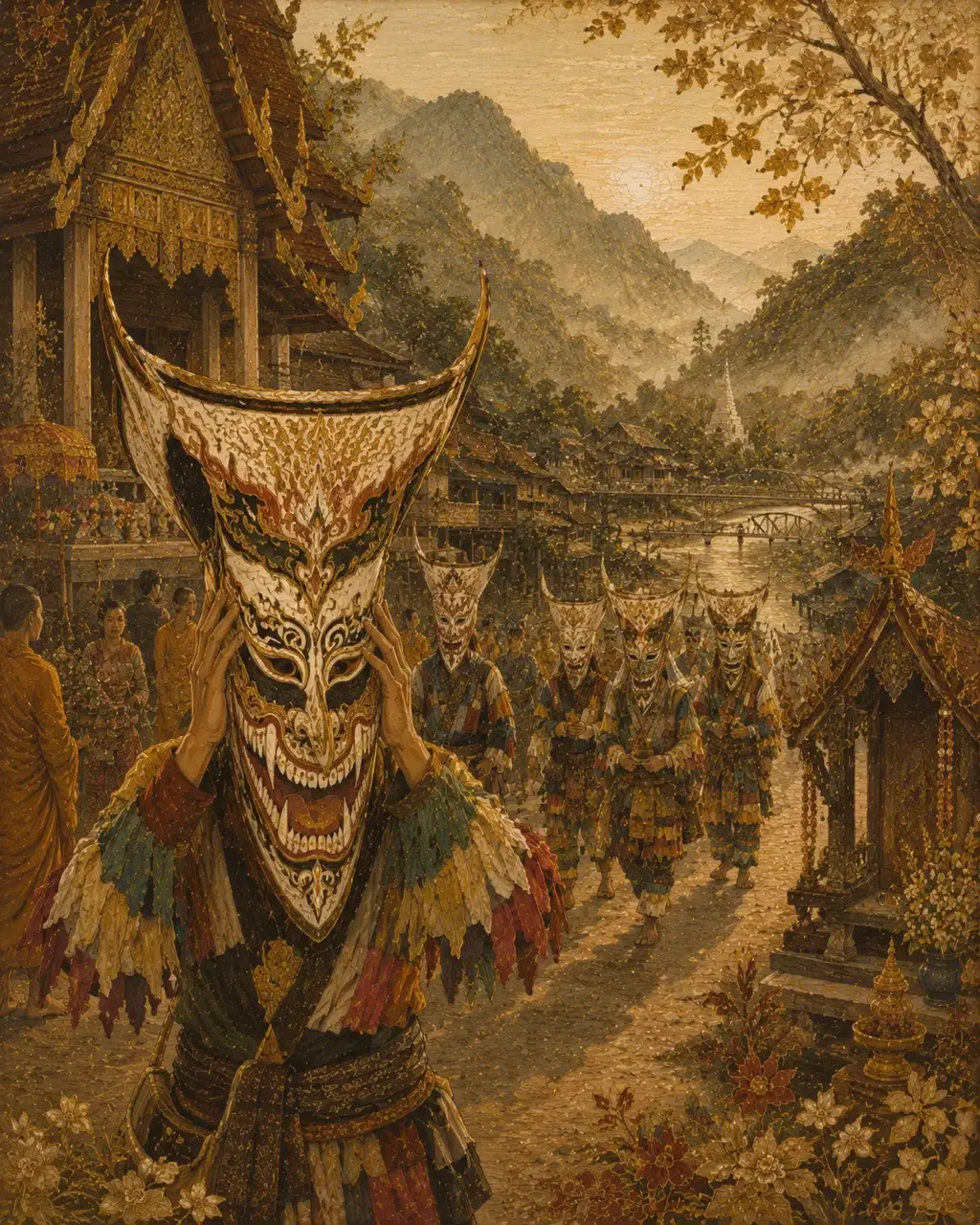
The rockets are bamboo tubes packed with 20 to 25 kilograms of gunpowder, often decorated with gilded carving and a naga. In Saturday's parade, teams bring their decorated rockets along Chaeng Sanit Road into the park, with folk dance troupes in traditional dress.
Sunday is launch day. The big rockets are fired from tall wooden towers and judged on how long they stay in the air. By custom, teams whose rockets fail to ignite or blow up on the tower are thrown into the mud pit.
The full guide to this festival
Bun Bang Fai 2027: Yasothon's rain-calling rocket festival, expected 7–9 May
Full guide: dates, getting there and what you can book →
Tickets and transport you can book
These are affiliate links: if you book through them, VoucherData may earn a commission. You pay the same price.
Thailand 5G eSIM (AIS)
Unlimited data on AIS. Your phone must support eSIM; activate it in the Klook app before you fly. Full refund if cancelled before it connects.
See plans