Tokyo's bloom date is read from one tree at Yasukuni Shrine
Related guide: Japan cherry blossoms 2027
Tokyo's first-bloom and full-bloom dates are set by the Japan Meteorological Agency from a Somei-Yoshino sample tree at Yasukuni Shrine: first bloom is the day five or six flowers are open, full bloom the day about eight in ten are. The 1991–2020 normals are 24 March and 31 March, two and three days earlier than the previous set of normals.
Cherry-blossom viewing is called hanami. Companies, clubs and neighbourhood groups often send someone ahead to save a spot in the park for a picnic under the trees. Rules vary by park: Shinjuku Gyoen bans alcohol and doesn't let you occupy one spot on the lawn for long.
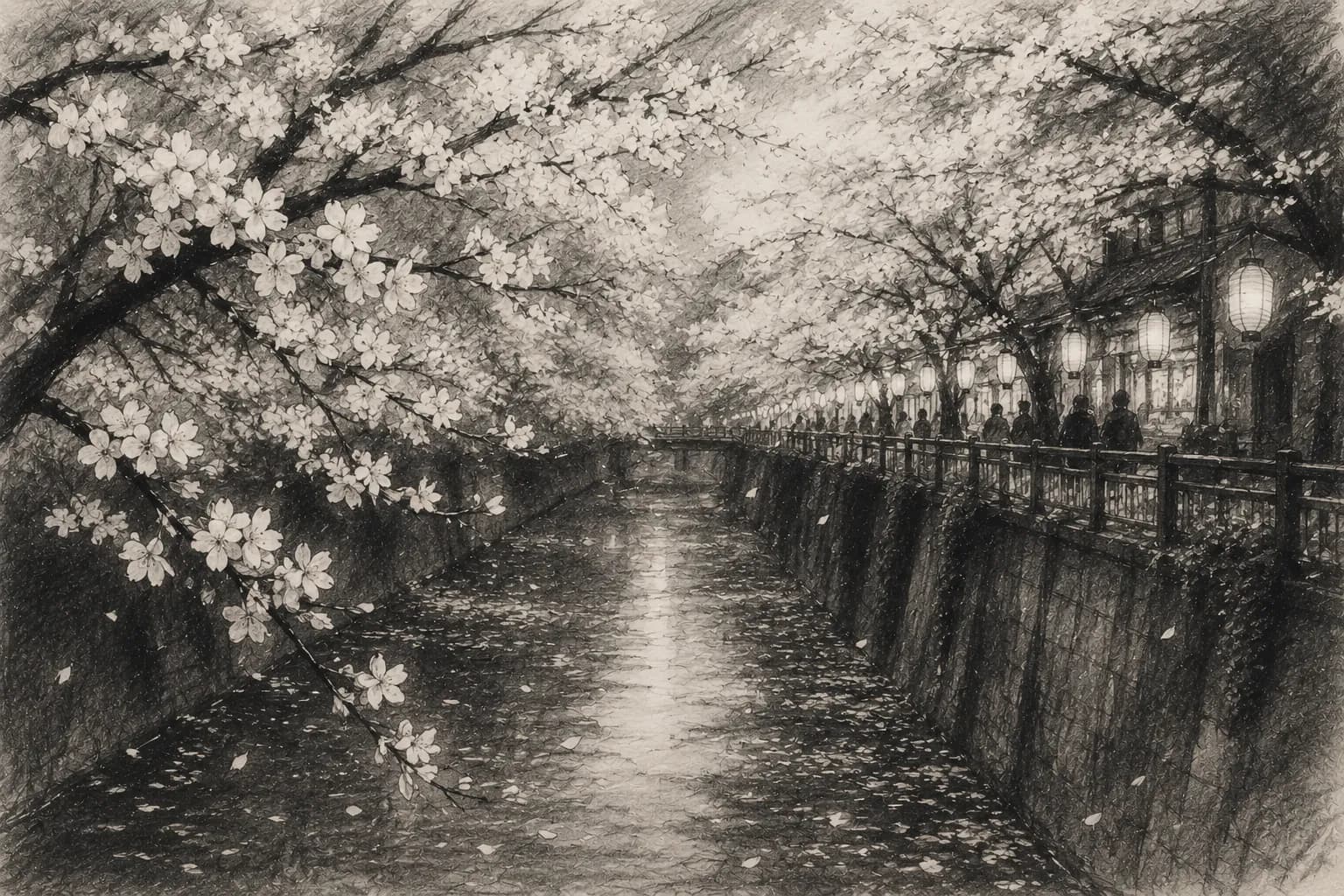
After dusk, spots such as the Meguro River and Chidorigafuchi are lit up for yozakura, night viewing.
In Kyoto, the Philosopher's Path, the weeping cherry in Maruyama Park and Arashiyama, and in Osaka, Osaka Castle Park, bloom at roughly the same time as Tokyo. The Mint Bureau's cherry passage in Osaka runs to its own schedule: in 2026 it opened 9–15 April, with 331 trees of 140 varieties, and entry required booking online and showing the QR code from the confirmation email.
Hanaikada, "flower raft", is the Japanese word for fallen petals gathered in a sheet on the water, usually a few days after full bloom.
The full guide to this festival
Japan cherry blossoms 2027: expected from late March, and where to see them in Tokyo, Kyoto and Osaka
Full guide: dates, getting there and what you can book →
Tickets and transport you can book
These are affiliate links: if you book through them, VoucherData may earn a commission. You pay the same price.
Kansai
JR Kansai Wide Area Pass
Five days of unlimited JR West rides across Kansai, reaching Kansai Airport, Nara, Himeji and Okayama. If you stay within Kyoto and Osaka you may not need it. Non-Japanese passport holders on temporary-visitor status only.
See plansKansai Airport, Osaka
JR Haruka Kansai Airport Express
Direct from Kansai Airport to Osaka and Kyoto, with QR e-tickets at the gates. Only for non-Japanese passport holders entering as temporary visitors.
See plansShinjuku, Tokyo
Shinjuku Gyoen ticket, Tokyo
Shinjuku Gyoen charges admission; this is the entry ticket. About a 10-minute walk from the South Exit of Shinjuku Station.
See pricesJapan eSIM (Softbank 5G / Docomo 4G)
Runs on Softbank or Docomo in Japan; install by QR code, unlimited-data plans with a choice of days.
See plans