Japan Season
Japan cherry blossoms 2027: expected from late March, and where to see them in Tokyo, Kyoto and Osaka
At a glance
- Best time
- Full bloom late March to early April, shifting each year
- Where
- Tokyo's Meguro River, Kyoto's Philosopher's Path, Osaka Castle Park
- Getting there
- Not listed
- Cost
- Shinjuku Gyoen entry ¥500
- Limits
- Osaka Mint cherry passage needs advance booking and a time slot
Dates last checked: 14 October 2026
The season
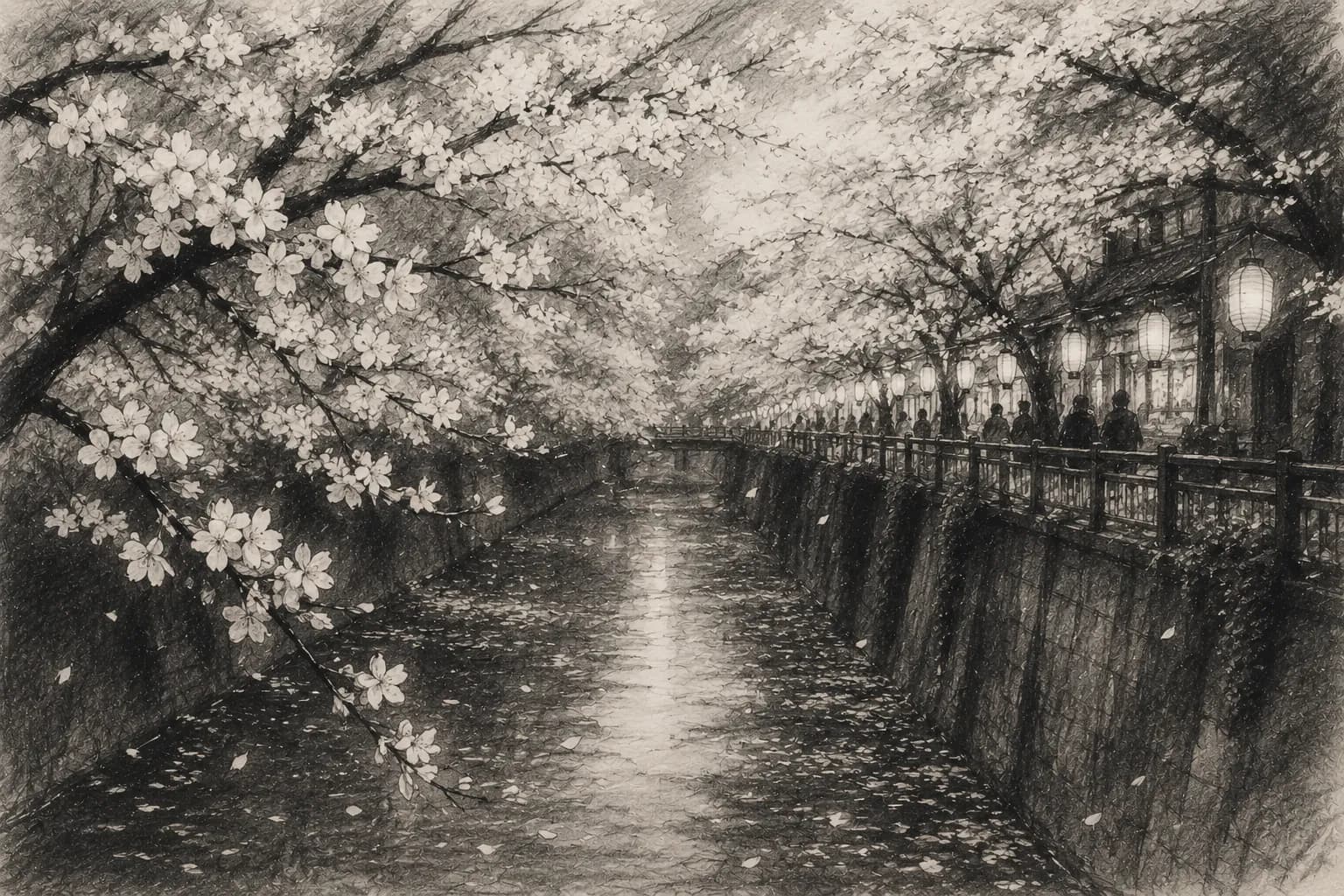
Tokyo's bloom date is read from one tree at Yasukuni Shrine
Tokyo's first-bloom and full-bloom dates are set by the Japan Meteorological Agency from a Somei-Yoshino sample tree at Yasukuni Shrine: first bloom is the day five or six flowers are open, full bloom the day about eight in ten are. The 1991–2020 normals are 24 March and 31 March, two and three days earlier than the previous set of normals.
Cherry-blossom viewing is called hanami. Companies, clubs and neighbourhood groups often send someone ahead to save a spot in the park for a picnic under the trees. Rules vary by park: Shinjuku Gyoen bans alcohol and doesn't let you occupy one spot on the lawn for long.
After dusk, spots such as the Meguro River and Chidorigafuchi are lit up for yozakura, night viewing.
Booking
These are affiliate links: if you book through them, VoucherData may earn a commission. You pay the same price.
Prices and ratings checked 13 Oct 2026
Transport
Kansai
JR Kansai Wide Area Pass
Five days of unlimited JR West rides across Kansai, reaching Kansai Airport, Nara, Himeji and Okayama. If you stay within Kyoto and Osaka you may not need it. Non-Japanese passport holders on temporary-visitor status only.
from NT$2,380
See plansKansai Airport, Osaka
JR Haruka Kansai Airport Express
Direct from Kansai Airport to Osaka and Kyoto, with QR e-tickets at the gates. Only for non-Japanese passport holders entering as temporary visitors.
from NT$248
See plans
Tickets and tours
Shinjuku, Tokyo
Shinjuku Gyoen ticket, Tokyo
Shinjuku Gyoen charges admission; this is the entry ticket. About a 10-minute walk from the South Exit of Shinjuku Station.
See prices
Mobile data
Japan eSIM (Softbank 5G / Docomo 4G)
Runs on Softbank or Docomo in Japan; install by QR code, unlimited-data plans with a choice of days.
See plans
Details
Book flights around a range and leave two or three spare days either side of the forecast peak: the 2027 bloom dates won't be known until the forecasts start coming out in February, and Tokyo's average full-bloom date is 31 March.
Bloom dates: late March to early April, varying each year
The 2026 season is over. For 2027, blooming is expected from late March, depending on the weather.
The blossoms have no fixed date, so everything hangs on the bloom forecasts published before each season. Tokyo, Kyoto and Osaka usually reach full bloom between late March and early April, but a shift of a week or two is common. Don't bet the whole trip on one day: take the forecast full-bloom date, add two or three days either side, and allow 5 to 7 days in all.
Somei-Yoshino: why trees bloom and fall together
Japan's most common cherry, the Somei-Yoshino, is a "single clone" propagated by repeatedly grafting one tree from the late Edo period, and DNA analysis shows the trees across the country are almost genetically identical. They respond to temperature in nearly the same way, so trees in the same area "bloom together and fall together", with full bloom lasting about a week.
Tokyo, Kyoto and Osaka: where to see the blossoms
Tokyo: the Meguro River is lit up at night, you can rent a boat at Chidorigafuchi, Shinjuku Gyoen charges admission, and Ueno Park draws the biggest picnic crowds. Transport is easy, which is why most first visits start here.
Kyoto: the Philosopher's Path, the weeping cherry in Maruyama Park and Arashiyama, with temples and old streets beside the trees and heavy crowds too.
Osaka: Osaka Castle Park, plus the Mint Bureau's cherry passage.
Hanami: picnics under the trees
Hanami happens under the trees, and companies and clubs often send someone early to save a spot. To join in, all you need is a picnic sheet and a rubbish bag. Rules vary: some parks ban alcohol or long stays in one spot, so check the park's rules before you go in.
A 5-to-7-day itinerary
Build the trip around the forecast full-bloom day. Put the spots you most want to see on the two or three days around it, and fill the other days with indoor or out-of-town plans you can move (museums, hot springs, nearby towns), so the whole trip can shift if the blossoms come early or late. Plan one daytime and one night viewing, for example the Philosopher's Path by day and the Meguro River or Chidorigafuchi after dark.
Booking, transport and avoiding crowds
Lodging and the shinkansen are in high demand at full bloom, so book once your dates are set. To avoid crowds at popular spots, go early in the morning or on a weekday. If you want to picnic under the trees, get to popular parks early at weekends to find space.
Level paths, benches and the most crowded walks
Cherry viewing means a lot of walking and queuing, and the paths at Ueno and along the Meguro River are most crowded on full-bloom weekends, hard going with a pram. Shinjuku Gyoen has level paths and benches and costs 500 yen for adults, but it closes at 18:00 (last entry 17:30), so there is no night viewing there. During the cherry season, 25 March to 24 April, it also opens on Mondays. The Mint Bureau's cherry passage needs advance booking for a set time slot, and you can't eat or drink inside.
Reading the bloom forecast
Don't just go by last year's dates. Bloom forecasts come from private forecasters such as Weathernews, the Japan Weather Association (tenki.jp) and Japan Meteorological Corporation, published before the season and updated as it goes. Weathernews plans to post its 2027 information in February. In Tokyo, the Japan Meteorological Agency declares first bloom and full bloom separately. In practice: before booking flights, check that year's forecast for a rough window, and two weeks before departure, use the latest forecast to reorder the trip. A warm winter usually means early blossoms and a cold spring late ones, and a week's difference is normal.
Side trips: Kamakura, Kawagoe, Arashiyama and Osaka backups
Mornings and evenings are still cool in cherry season, and the trip doesn't have to be all blossoms. In Tokyo, leave half a day for Kamakura or Kawagoe, or a museum to escape the crowds. In Kyoto, Arashiyama and the Fushimi area have cherries and temples beyond the Philosopher's Path. In Osaka, keep Universal Studios Japan or Dotonbori for the day the bloom is uncertain. That way the trip still works whether the flowers come early or late.
Etiquette
Respect the unwritten rules about saving spots, don't shake or break branches, take all your rubbish home and keep the noise down at night-viewing spots.
Good to know
- Bloom period
- Tokyo, Kyoto and Osaka usually reach full bloom between late March and early April. Tokyo's normal dates are 24 March for first bloom and 31 March for full bloom (1991–2020 average)
- Locations
- Tokyo (Meguro River, Chidorigafuchi, Shinjuku Gyoen, Ueno Park), Kyoto (Philosopher's Path, Maruyama Park, Arashiyama), Osaka (Osaka Castle Park, the Mint Bureau's cherry passage).
- Somei-Yoshino
- Somei-Yoshino is a single clone propagated by grafting, so trees in the same area open and fall at almost the same time
- Transport and lodging
- Lodging and the shinkansen are in high demand during full bloom, so book once your dates are set. To avoid crowds, go early in the morning or on weekdays
- Bloom forecasts
- Bloom forecasts come from private forecasters such as Weathernews and the Japan Weather Association, updated through the season. In Tokyo, the Japan Meteorological Agency declares first and full bloom by watching sample trees at Yasukuni Shrine
FAQ
5
Tokyo, Kyoto or Osaka: which is the better choice?
Tokyo has the classic spots and the easiest transport, which is why most first visits start there. Kyoto has the old-capital setting but is also crowded. Osaka has Osaka Castle Park and the Mint Bureau's cherry passage.
How can you tell whether a year will bloom early or late?
Don't go by last year's dates. Start following the bloom forecast a month before you leave and keep checking the updates. A warm winter usually means early blossoms and a cold spring late ones, and a week's difference is normal. Treat the forecast full-bloom day as your anchor and leave a few days either side.
How to plan a 5-to-7-day itinerary
Build around the forecast full-bloom day: put the spots you most want to see on the two or three days around it, fill the other days with indoor or out-of-town plans that can move, and schedule one daytime and one night viewing.
Where is it easiest to see the blossoms with older relatives or children?
Skip the peak crowds at Ueno and along the Meguro River and choose Shinjuku Gyoen, which has level paths and benches, or the wide grounds of Osaka Castle Park. During the cherry season (25 March to 24 April) Shinjuku Gyoen also opens on Mondays, but it closes at 18:00, and the garden says weekends and holidays may require advance booking.
What is the etiquette at a hanami?
Respect the unwritten rules about saving spots, don't shake branches or break them off, take all your rubbish home and keep the noise down at night-viewing spots. Shinjuku Gyoen bans alcohol, tents and occupying one spot on the lawn for long periods, and eating and drinking are not allowed in the Mint Bureau's cherry passage.
Read next