Thailand
Phuket Vegetarian Festival 2026: 10–18 October, white clothes, yellow flags and nine days of fasting
At a glance
- Dates
- 10–18 October 2026
- Where
- Phuket Old Town, around Jui Tui and Bang Neow shrines
- Getting there
- Walk to the shrines from Old Town lodging
- Cost
- Free entry; no tickets or booking
- Limits
- No meat dishes brought into jay food stalls or shrine grounds
Dates last checked: 13 October 2026
The festival
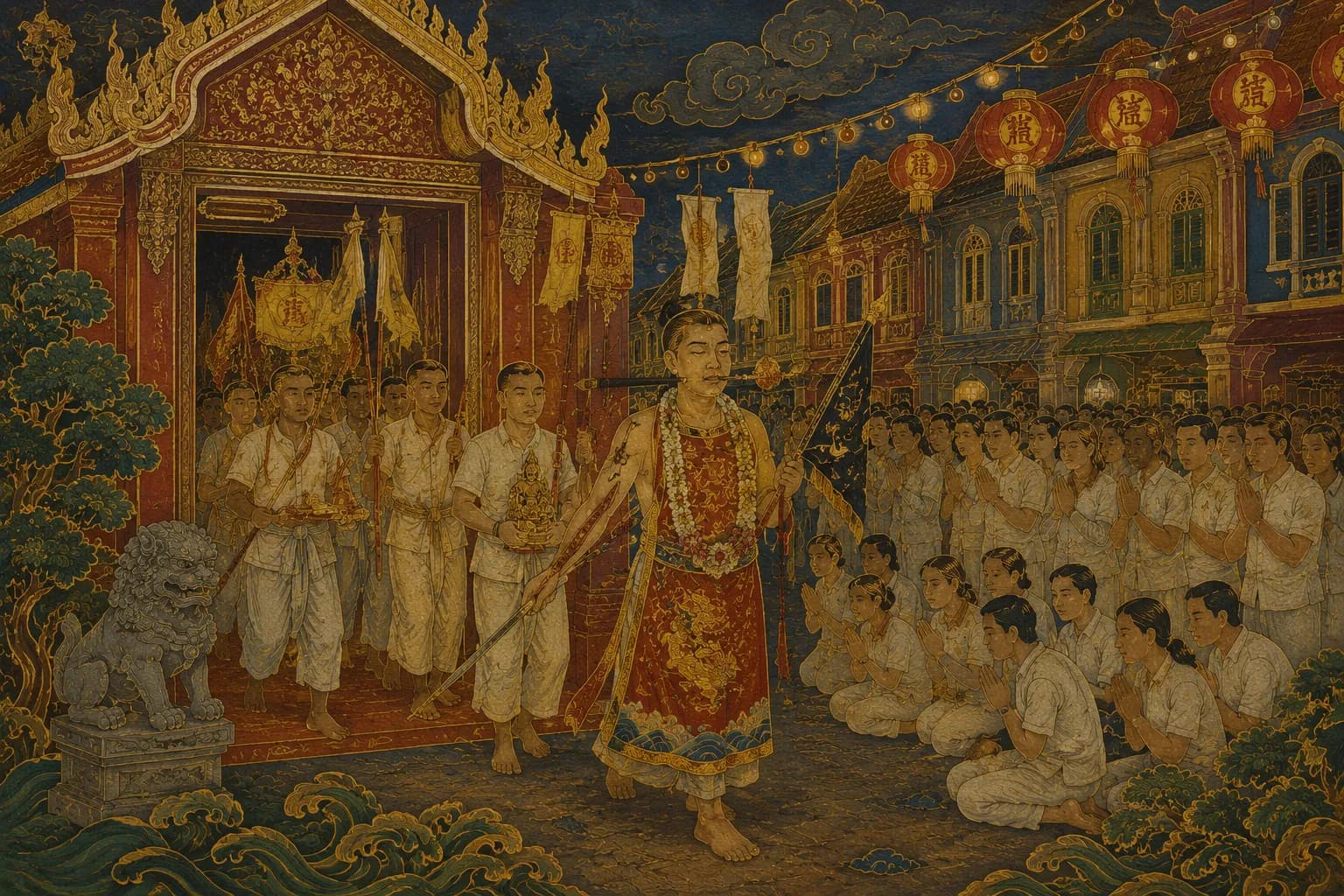
For nine days, yellow-flag stalls sell no meat, eggs, dairy or alcohol
Shrines across Phuket raise their Go Teng poles at 17:09 on 9 October, and nine days of fasting begin the next day. The festival is usually traced to 1825, when a Chinese opera troupe performing in Kathu fell ill, held a fasting ceremony and recovered, and the Hokkien community has held it every year since. Stalls flying yellow flags with red characters sell jay food, made without meat, eggs, dairy, garlic or onion.
From 11 to 18 October, palanquins of the Nine Emperor Gods are carried through Phuket city every day, and households along the route set up offering tables outside their doors. The mediums in the processions are called Ma Song. Early in the morning they pierce their cheeks with blades and skewers inside the shrine grounds before joining the procession, and devotees believe that once a deity descends, the Ma Song take on the community's misfortune.
Two purification rites also take place during the festival. In Koi Han, devotees cross a bridge to shed bad luck and receive the seal of the Nine Emperor Gods. In Koi Hoi, they walk barefoot over hot coals. Firecrackers start before dawn, and in the belief they clear a path for the gods.
Booking
These are affiliate links: if you book through them, VoucherData may earn a commission. You pay the same price.
Prices and ratings checked 13 Oct 2026
Transport
Phuket & Phang Nga
Private transfer Phuket–Phang Nga
One-way private car between Phuket and Phang Nga with hotel pick-up. Sedans seat up to 3, vans up to 9; surcharge outside the service area.
from NT$950
See plans
Tickets and tours
Phuket
Phuket Old Town & Promthep Cape evening
16:00–21:00 in a small group (up to 10): Karon Viewpoint, sunset at Promthep Cape, Old Town and a night market. Pick-ups outside Patong, Kata and Karon cost THB 200 extra per person.
from NT$785
See prices
Mobile data
Thailand 5G eSIM (AIS)
Unlimited data on AIS. Your phone must support eSIM; activate it in the Klook app before you fly. Full refund if cancelled before it connects.
See plans
Details
The processions start early: most shrines set off between 6:00 and 8:00, and the mediums pierce their cheeks in the shrine grounds before that. Firecrackers go from before dawn into the night, so bring earplugs, long sleeves and closed shoes.
How the dates work
The festival always falls on days one to nine of the ninth lunar month. Its Gregorian dates move every year and different sources often disagree, so the lunar dates are the safest reference. The evening before it opens, each shrine raises a Go Teng pole to welcome the gods, and lowers it nine days later.
The 2026 schedule
11–18 October: daily Iw Keng processions of palanquins, flags and ceremonial signs through Phuket city.
11 October, evening: a night procession joined by more than 40 shrines, starting with a prayer ceremony.
16 October, 06:00–12:00: the TAT Phuket office sets up an offering table outside its office for the Jui Tui Shrine procession.
18 October, evening: the Jade Emperor is sent off at around 22:30, followed by the farewell to the Nine Emperor Gods towards Saphan Hin.
Procession start times
Most shrines set off between 6:00 and 8:00, for example Bang Neow at 6:00, Kathu at 6:45 and Jui Tui at 8:00. The mediums are pierced in the shrine grounds from about 5:30 or 6:00, so arrive earlier if you want to see that. Times change from day to day and shrine to shrine, and each shrine posts its own.
Safety around piercings and firecrackers
At the heart of the processions, mediums pierce their cheeks with blades and skewers, and up close there is blood. Firecrackers go off from before dawn into the night, are very loud and can burn clothes. If you are squeamish about blood, sensitive to noise or travelling with small children, stand well back, or skip the processions and stick to the food stalls and shrines.
Where to stay and getting around
Processions leave the old town shrines early in the morning, so a room within walking distance of Jui Tui and Bang Neow saves looking for transport at dawn. The government expects hotel occupancy in Mueang Phuket of around 80% during the festival, so rooms are tighter than usual.
What to wear and bring
Devotees wear white for the whole festival. For visitors it is customary rather than required, but avoid black. Sparks from firecrackers can burn clothes and shoes, so wear long sleeves and closed shoes and bring earplugs. Old Town pharmacies sell cheap ones during the festival. It is hot, so bring a hat and water.
Jay food and yellow flags
Stalls and restaurants flying yellow flags with red characters serve jay food. Jay is stricter than ordinary vegetarian food, with no meat, eggs, dairy or alcohol, and no garlic, onion, shallot, chives or leek.
Do not bring meat into the jay stalls or shrine grounds.
The devotees' rules
For nine days, fasting devotees wear white, avoid meat and animal products, alcohol and pungent foods such as garlic, keep separate cooking utensils, abstain from sex and avoid lying. People in mourning and women who are pregnant or menstruating do not take part in the rites. These rules are for devotees, not visitors, but respect them in the shrines.
Costs
The festival has no tickets. Shrines and processions are free to watch and there is nothing to book. Your costs are food, transport and a room.
Good to know
- Origin
- Usually traced to 1825, when a Chinese opera troupe performing in Kathu fell ill, held a fasting ceremony and recovered. It has been held every year since
- Where
- More than 40 Chinese shrines across the province take part. Processions centre on Phuket Old Town, with Jui Tui and Bang Neow shrines as the main starting points
- Yellow flags and jay food
- Yellow flags with red characters mark places serving jay food: no meat, eggs, dairy or alcohol, and no garlic, onion, shallot, chives or leek
- Ma Song
- Mediums pierce their cheeks with blades and skewers inside the shrine grounds in the early morning before setting off. Devotees believe they take on misfortune for the community
- Heritage status
- Listed as intangible cultural heritage by Thailand's Department of Cultural Promotion in 2018
FAQ
5
Where can you watch the processions?
In Phuket Old Town. Jui Tui and Bang Neow shrines are the main starting points, there are processions every day from 11 to 18 October, and from a room in the old town you can walk to the shrines.
Why do yellow flags hang along the streets?
A yellow flag with red characters marks a place serving jay food. Jay is stricter than ordinary vegetarian food, with no meat, eggs, dairy or alcohol, and no garlic, onion, chives or other pungent ingredients.
What is Ma Song?
Ma Song are the spirit mediums in the processions. They go into trance in the shrine grounds early in the morning and pierce their cheeks with blades and skewers before setting off. Devotees believe this takes on the community's misfortune so that everyone's luck returns.
What should you wear to the festival?
Devotees wear white for the whole festival. For visitors, white is customary rather than required, but avoid black. Firecrackers can burn clothing, so wear long sleeves and closed shoes for the processions.
Do you need tickets?
No. There are no tickets and nothing to book. You only pay for food, transport and a room.
Read next