Bonjol: the days when noon casts no shadow
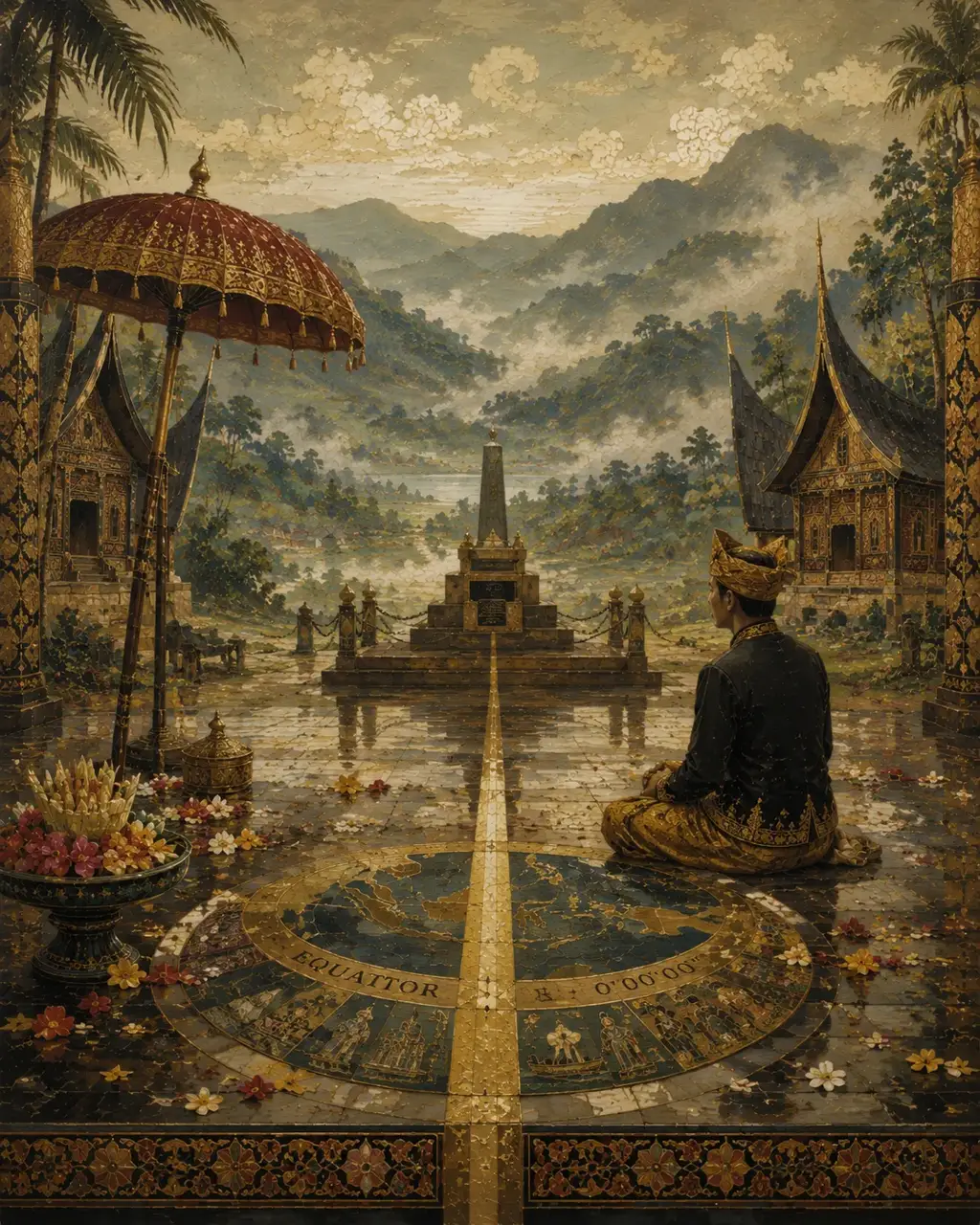
North of Bukittinggi, in the hills of Pasaman Regency, a roadside park marks the equator on the ground, one foot in each hemisphere.
Around the March and September equinoxes, the sun's declination matches Bonjol's latitude. At midday it stands at the zenith, so upright objects cast no visible shadow. The moment is called kulminasi utama, and the day a shadowless day. Bonjol is a small inland town in West Sumatra, and the equator runs right through it.
Drive north from Bukittinggi into the hills of Pasaman Regency and the road crosses the equator at Bonjol. A roadside park marks the line on the ground, so visitors can stand with one foot in each hemisphere. The land around it is all slope, and the road climbs, bends and drops again.
The town shares its name with a man. Tuanku Imam Bonjol led the Padri movement in the early nineteenth century from a stronghold here, which Dutch troops took in 1837. He was exiled and died in Minahasa, North Sulawesi, in 1864. Indonesia counts him among its National Heroes, and his portrait was printed on the old 5,000-rupiah note.
The equator park has a statue of him and a museum in his name, with displays on the Padri War and his life. Every year from 21 to 23 March and 21 to 23 September, the shadowless days, the park hosts the Pasaman Equator Festival, now more than twenty years old, and Indonesia's meteorology agency BMKG chose the site for its 74th World Meteorological Day commemoration.
Sources