Denpasar: a square named for 1906
North of the square, the tallest shrine of Pura Jagatnatha is a white stone lotus throne whose seat is left empty for the supreme god.
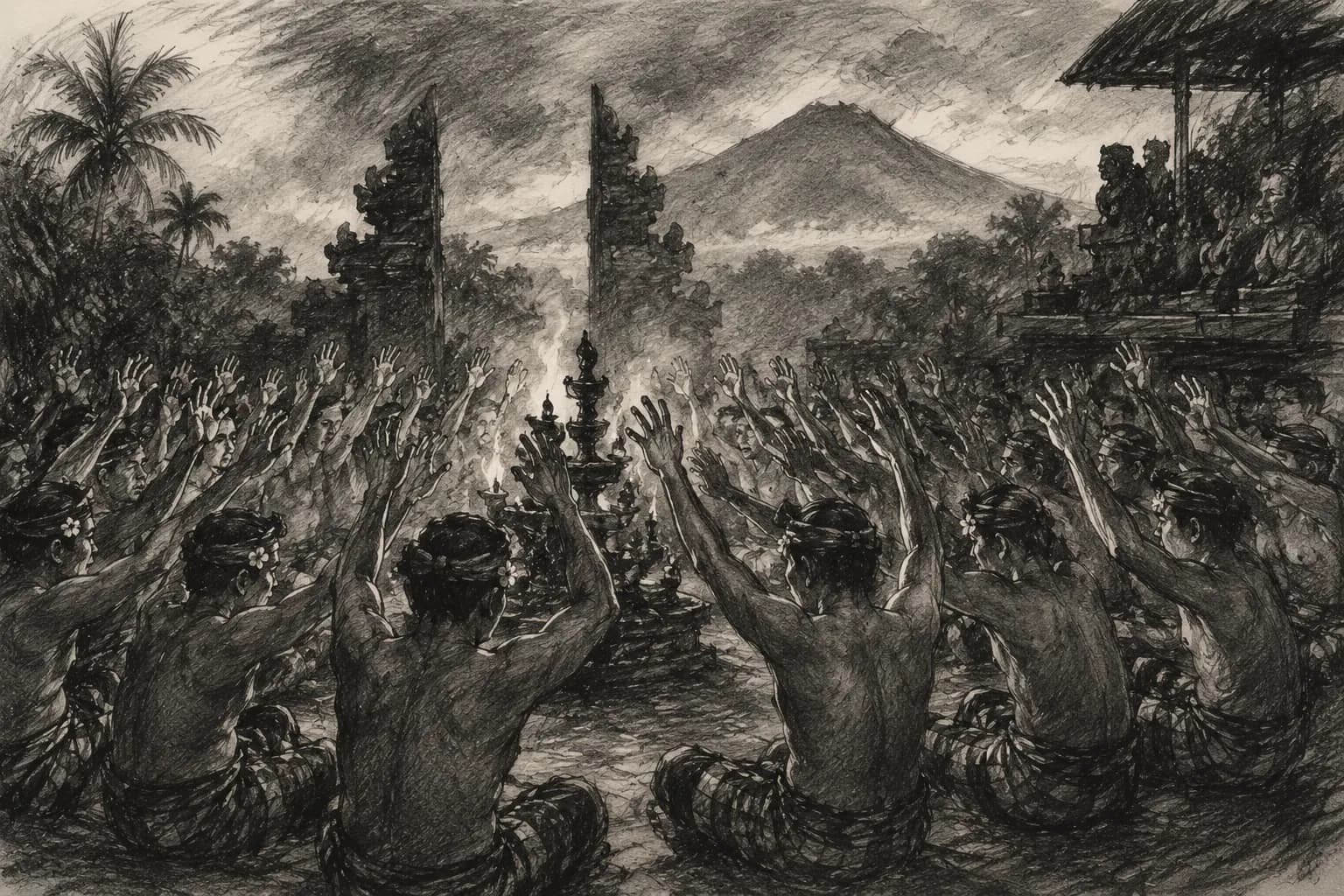
Puputan Badung Square, in the centre of Denpasar, takes its name from 1906. That year Dutch troops marched on Badung, and the royal court, dressed in white, walked out to meet their guns rather than surrender. In Balinese that act is called a puputan.
The Bali Museum on the east side of the square opened in 1932 and holds objects from prehistory to the modern period: tools, masks, textiles, ritual pieces. To the north is Pura Jagatnatha, whose tallest shrine is a lotus throne of white stone with an empty seat at the top, kept for the supreme god.
Southeast of the centre, in Renon, the Bajra Sandhi monument rises from a wide lawn. Its official name is the Monument to the Struggle of the Balinese People, and inside, a series of dioramas tells the island's history from early times to the war of independence. The top floor looks out over the city. The Bali Arts Festival is held in Denpasar too, in June and July, centred on the Taman Werdhi Budaya arts centre.
Sanur, on the east coast, is also part of the city of Denpasar. The waves are small on this side, a long path runs behind the beach for walking or cycling, and the sun comes up straight out of the sea. Drawn up on the sand are jukung, the traditional boats of Sanur's fishermen, with an outrigger on each side. Most are built from belalu or suar wood, with fittings of camplung and waru. The hull follows the shape of Gajah Mina, the giant fish of Balinese shadow-puppet stories, it is painted in strong colours, and each boat carries only two or three people.
Festivals in the same city
Bali Arts Festival 2027: a month of dance and gamelan in Denpasar, est. mid-June to mid-July
Full guide: dates, getting there and what you can book →
Sources