Three kilometres from Mendut to Borobudur
Related guide: Vesak at Borobudur 2027
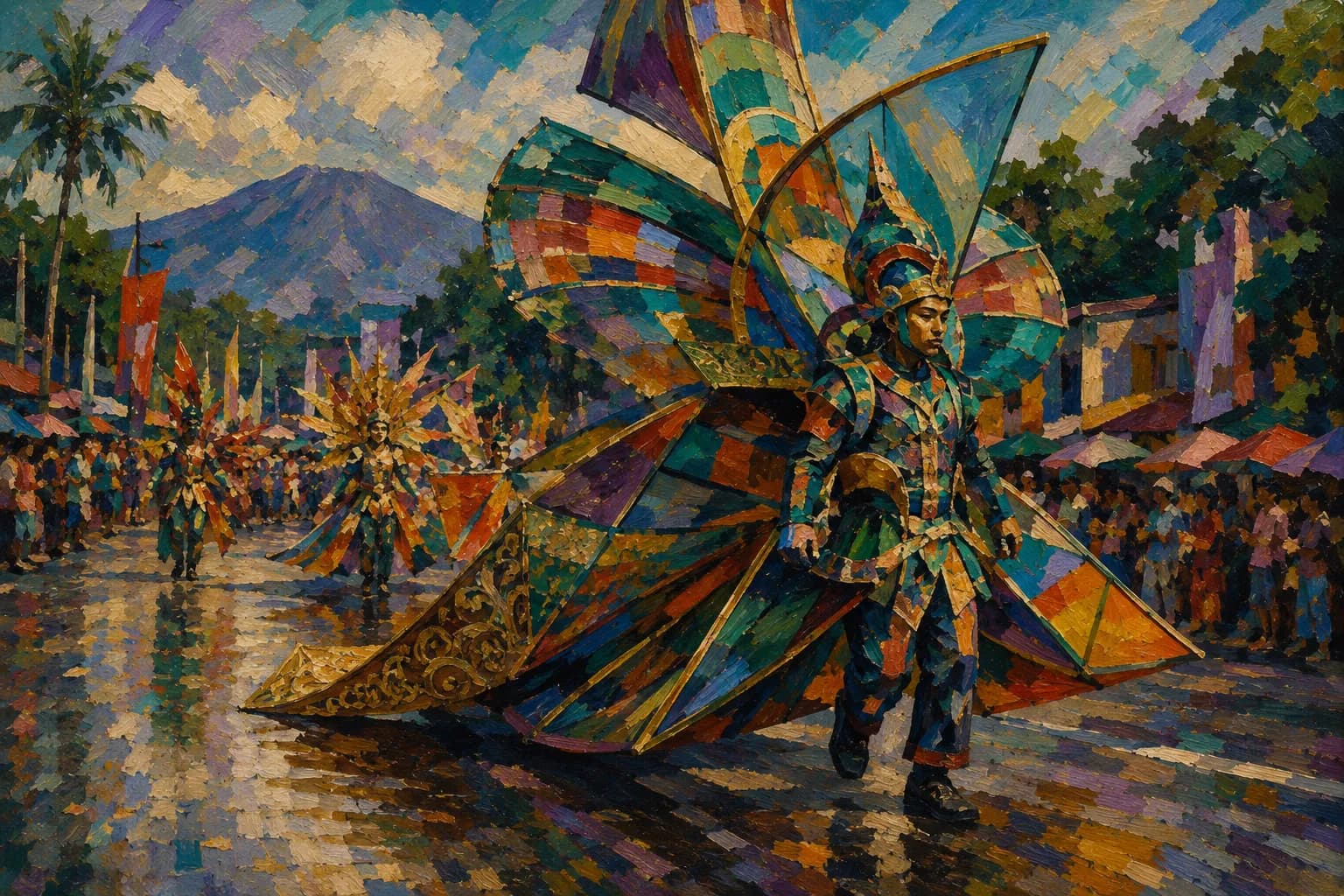
The Vesak procession leaves Mendut temple and walks roughly 3 km along the road to Borobudur, ending at Kenari Field in the temple's Zone 1. In 2026 it set off at about 10 a.m. on 31 May. Vehicles near the front carried the eternal flame from Mrapen and holy water from the Umbul Jumprit spring. Behind them came Buddha relics, a palanquin bearing the Tripitaka and a group carrying farm produce.
Vesak marks the Buddha's birth, enlightenment and passing, and its date follows the full moon. In 2026 the moment of Vesak fell at 3:44:44 p.m. Worshippers meditated in the Borobudur courtyard, led by a senior monk, then walked clockwise around the temple three times (pradaksina).
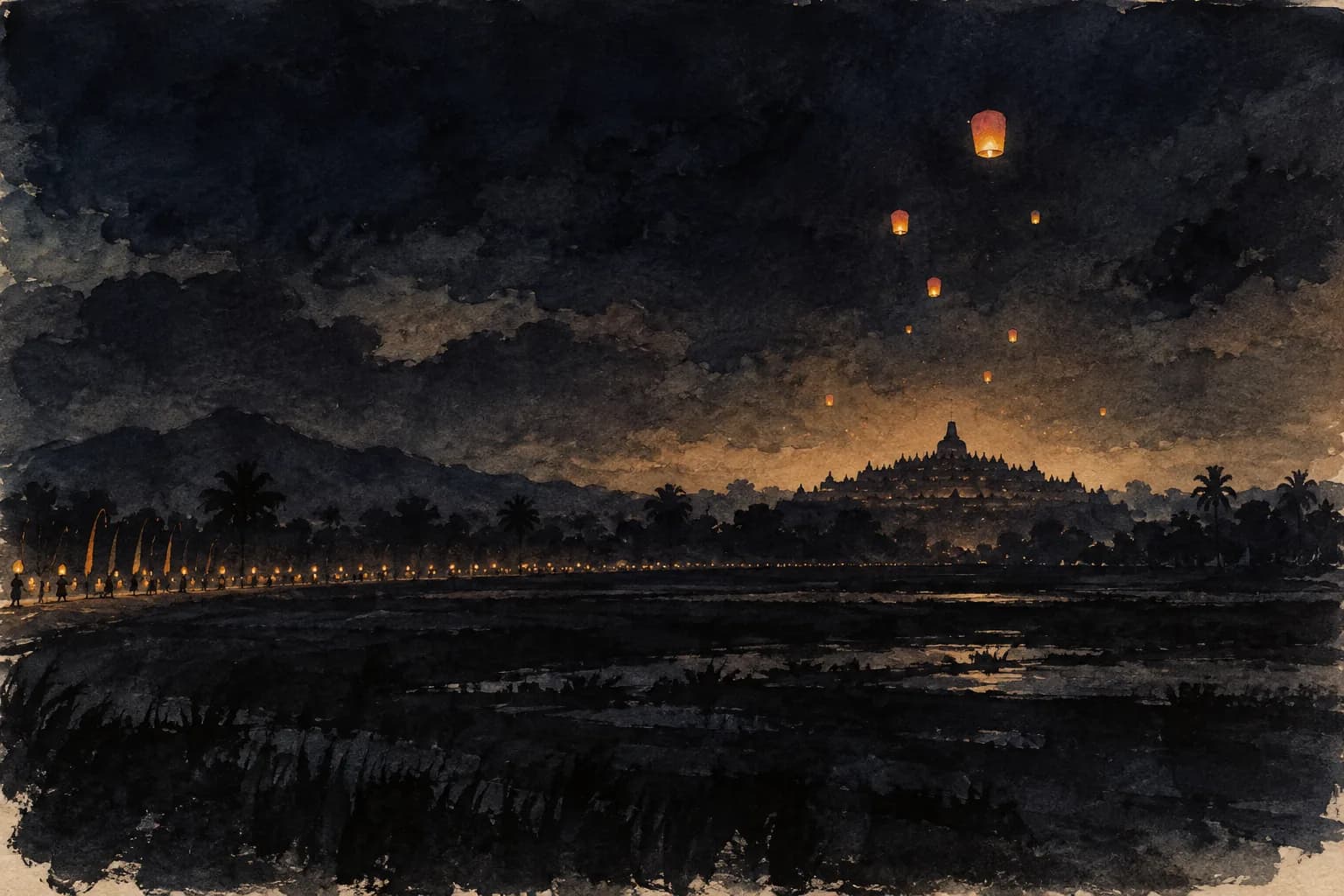
The lanterns come after dark. In 2026 the release organised by the Buddhist council MBMI ran in two sessions, 17:30–19:30 and 21:30–23:00. Each lantern is held up by a group of at least four and let go together into the sky over Borobudur.
The full guide to this festival
Vesak at Borobudur 2027: 20 May full moon, monks' procession and lanterns
Full guide: dates, getting there and what you can book →
Tickets and transport you can book
These are affiliate links: if you book through them, VoucherData may earn a commission. You pay the same price.
Yogyakarta, Indonesia
Borobudur (with temple climb) & Prambanan day tour from Yogyakarta
Hotel pick-up in Yogyakarta, about 8 hours, English-speaking driver-guide. Some plans do not include temple tickets (IDR 900,000 paid on the day), so check before booking.
See pricesYogyakarta, Indonesia
Borobudur sunrise climb & Prambanan day tour from Yogyakarta
Climb Borobudur through the VIP entrance for sunrise, then visit Prambanan. English-speaking guide, hotel pick-up, shared group.
See prices