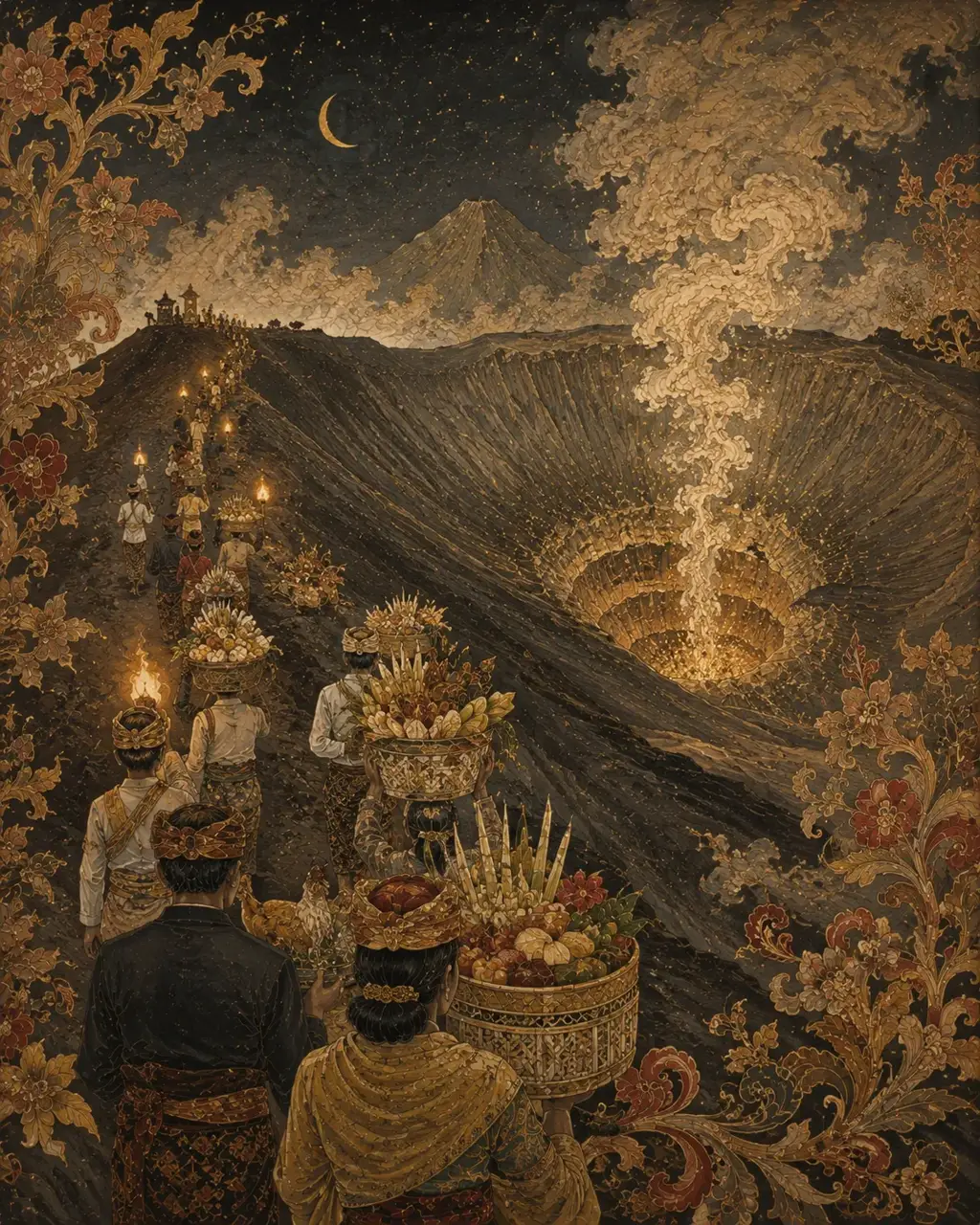
The rite runs through the night, and offerings go into the crater before dawn
Related guide: Yadnya Kasada 2027
The Tengger have lived in the highlands around Bromo for generations and follow Hinduism. The ceremony goes back to the legend of Roro Anteng and Joko Seger, a childless couple who prayed for children and promised their youngest to the volcano. Human sacrifice is long gone. What remains is the custom of taking the harvest up the mountain every year.
The rite falls on the 14th or 15th of Kasada in the Tengger calendar, so the Gregorian date shifts. It was held on 10–11 June in 2025 and on 1 June in 2026, and the 2027 rite is expected earlier still, in May.
From midnight on 30 May to 23:59 on 2 June 2026, the Bromo Tengger Semeru National Park authority (BBTNBTS) suspended all tourism around Bromo. Only residents taking part in Yadnya Kasada, rangers and clean-up crews were allowed in. The closure followed a circular from the Tengger council of priests, the Paruman Dukun Pandita. The whole of 2 June was kept for clearing up after the rite. The area reopened to visitors at 01:00 on 3 June 2026.
The offerings are crops, livestock, money and valuables, given in thanks for the harvest and for safety. The ceremony begins the night before at Pura Luhur Poten at the foot of the volcano, and near dawn the procession reaches the crater rim and casts the offerings in.
The full guide to this festival
Yadnya Kasada 2027: est. around 20 May, with Bromo closed to tourists during the rite
Full guide: dates, getting there and what you can book →
Tickets and transport you can book
These are affiliate links: if you book through them, VoucherData may earn a commission. You pay the same price.
East Java, Indonesia
Bromo sunrise & Madakaripura Waterfall tour
A private trip from Surabaya and nearby cities, about 16.5 hours. The crater may close to tourists on Kasada day itself, so book the days around it.
See prices