Indonesia
Toraja funeral season 2027: est. July–August, attending Rambu Solo' respectfully
At a glance
- Dates
- Next: no fixed date
- Where
- In front of family tongkonan houses in Tana Toraja, South Sulawesi
- Getting there
- Fly to Makassar, then about 8–9 hours by road
- Cost
- Not listed
- Limits
- A local guide must introduce you; wear black or dark blue
The 2026 season has passed · Families set their own dates (usually runs July–August)
Dates last checked: 13 October 2026
The festival
Until the funeral, the dead are only sick
Each family sets the date of its Rambu Solo' and holds it only when the money and people are in place, sometimes after years of waiting. Most fall in the dry season after the harvest. The funerals take place in Tana Toraja, up in the South Sulawesi highlands from Makassar.
Until the funeral, the body is treated with formalin and water and kept at home. The family regards the deceased as a sick person (to makula'), bringing food, tea and cigarettes and sitting with them to talk. In Toraja belief a person is not truly dead until Rambu Solo' has been held.
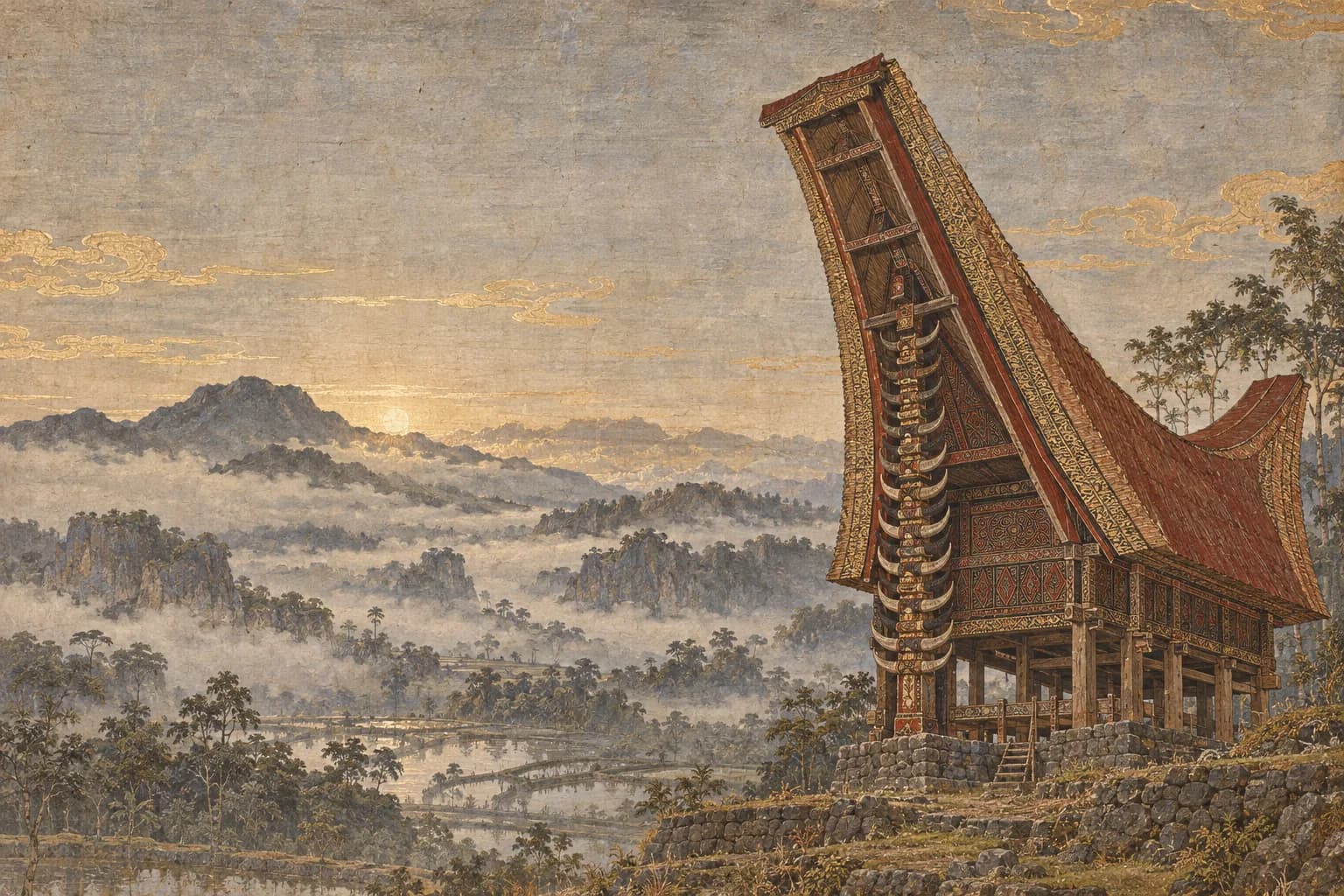
Rambu Solo' means "rites of descending smoke". It is usually held in front of the family tongkonan, the ancestral house, and can last a week or more.
Booking
There are no tickets or transport to book for this page right now.
Details
Funerals are not on any calendar, so leave a day or two of slack. Buffalo and pigs are slaughtered in front of the guests, and the blood is in plain view, so think twice before bringing children.
Season and location
Rambu Solo' has no fixed date. Each funeral depends on when the family is ready, so there is no calendar to check. Ask a local guide or your guesthouse which funerals are coming up and whether you can attend.
Funerals take place in Tana Toraja, in the South Sulawesi highlands. Makassar is where you fly in, not where funerals are held.
Getting there: by road from Makassar
Fly to Makassar (UPG), then go up by road, which takes about 8–9 hours (the figure Indonesia's transport minister gave when Toraja Airport opened in 2021).
Wings Air flew Makassar to Toraja Airport (Buntu Kunik) but suspended the route in July 2025 because of low passenger numbers. Check with the airline whether it has resumed.
Buffalo and rank
Buffalo and pigs are slaughtered at the funeral. The buffalo is believed to carry the soul to Puya, and the number slaughtered reflects the family's standing and honour.
The animal sacrifice
A funeral is not a performance. Buffalo and pigs are slaughtered in front of the guests, and there is blood. It is not suitable for young children, and if animal slaughter upsets you, think it over before going. You can quietly step away from parts you do not want to watch. Which funeral you attend and how large it is depends on which family is holding one, and there is no timetable.
Etiquette when you are invited
Go with a local guide who introduces you to the family and explains the steps. Wear plain clothes in black or dark blue, and bring a small gift for the hosts, such as sugar, tea or cigarettes.
Stay calm and quiet, and ask before taking photos.
Cliff graves and tau-tau
After the funeral the body is placed in a grave cut into a cliff or in a cave. Wooden effigies called tau-tau, carved in the likeness of the dead, stand at the graves, and only wealthy families can afford them.
Lemo and Kete Kesu are among the most visited burial villages. Do not touch the graves or effigies, and do not climb on the stone tombs.
Side trips: rice terraces and tongkonan houses
The Toraja valleys are terraced with rice fields, and the villages have tongkonan, traditional houses with boat-shaped roofs, alongside rice barns. Set aside a full day and have a guide take you through a few villages.
Suggested itinerary
Allow 3–4 days: one to get up from Makassar, one or two to attend a funeral with your guide, and one for burial villages and tongkonan houses. Funeral dates can shift at short notice, so keep a day or two spare.
Good to know
- Season
- Most are held in July–August. The 2026 peak has passed, and the next is expected in July–August 2027
- Location
- Tana Toraja (reached via Makassar)
- Getting there
- About 8–9 hours by road from Makassar
- Where it happens
- Funerals are usually held in front of the family tongkonan, the traditional ancestral house
- Before attending
- Go with a local guide who introduces you to the family, and wear black or dark blue
FAQ
5
How can you find a funeral to attend?
There is no calendar. Ask a local guide or your guesthouse which funerals are coming up and whether visitors can attend. The guide introduces you to the family. Keep your schedule flexible.
Where are the funerals held?
In Tana Toraja, in the highlands of South Sulawesi, usually in front of the family tongkonan house. Makassar is only the gateway.
How do you get to Toraja?
Fly to Makassar (UPG), then travel about 8–9 hours by road. Wings Air flew Makassar–Toraja Airport (Buntu Kunik) but suspended the route in July 2025 for lack of passengers, so check with the airline whether it has resumed.
What is the significance of the water buffalo at the funeral?
In Toraja belief the buffalo carries the soul to Puya, the land of souls. The more respected the deceased, the more buffalo are slaughtered, so the number also signals the family's rank and honour.
What should you be prepared to see?
This is a real funeral, not a show for tourists. Buffalo and pigs are slaughtered in front of the guests and there is blood. It is not suitable for young children, and anyone uneasy about animal slaughter should think it over first.
Date sources
10
- orami.co.id · Upacara Rambu Solo
- anthropology.uconn.edu · Sevgi Demiroglu Featured in National Geographic
- visittoraja.com · Rambu Solo
- thejakartapost.com · Respecting the Dead in Toraja
- cnnindonesia.com · Wisata Mistis Ala Makam di Gua di Toraja
- liputan6.com · Diresmikan Jokowi Bandara Toraja Dibangun Dengan Memangkas 3 Bukit
- detik.com · Wings Air Setop Penerbangan Toraja Makassar Karena Penumpang Sepi
- 4stogo.com · Sulawesi Tana Toraja Culture
- en.wikipedia.org · Torajan People
- en.wikipedia.org · Tana Toraja Regency
Read next