Until the funeral, the dead are only sick
Related guide: Toraja funeral season 2027
Each family sets the date of its Rambu Solo' and holds it only when the money and people are in place, sometimes after years of waiting. Most fall in the dry season after the harvest. The funerals take place in Tana Toraja, up in the South Sulawesi highlands from Makassar.
Until the funeral, the body is treated with formalin and water and kept at home. The family regards the deceased as a sick person (to makula'), bringing food, tea and cigarettes and sitting with them to talk. In Toraja belief a person is not truly dead until Rambu Solo' has been held.
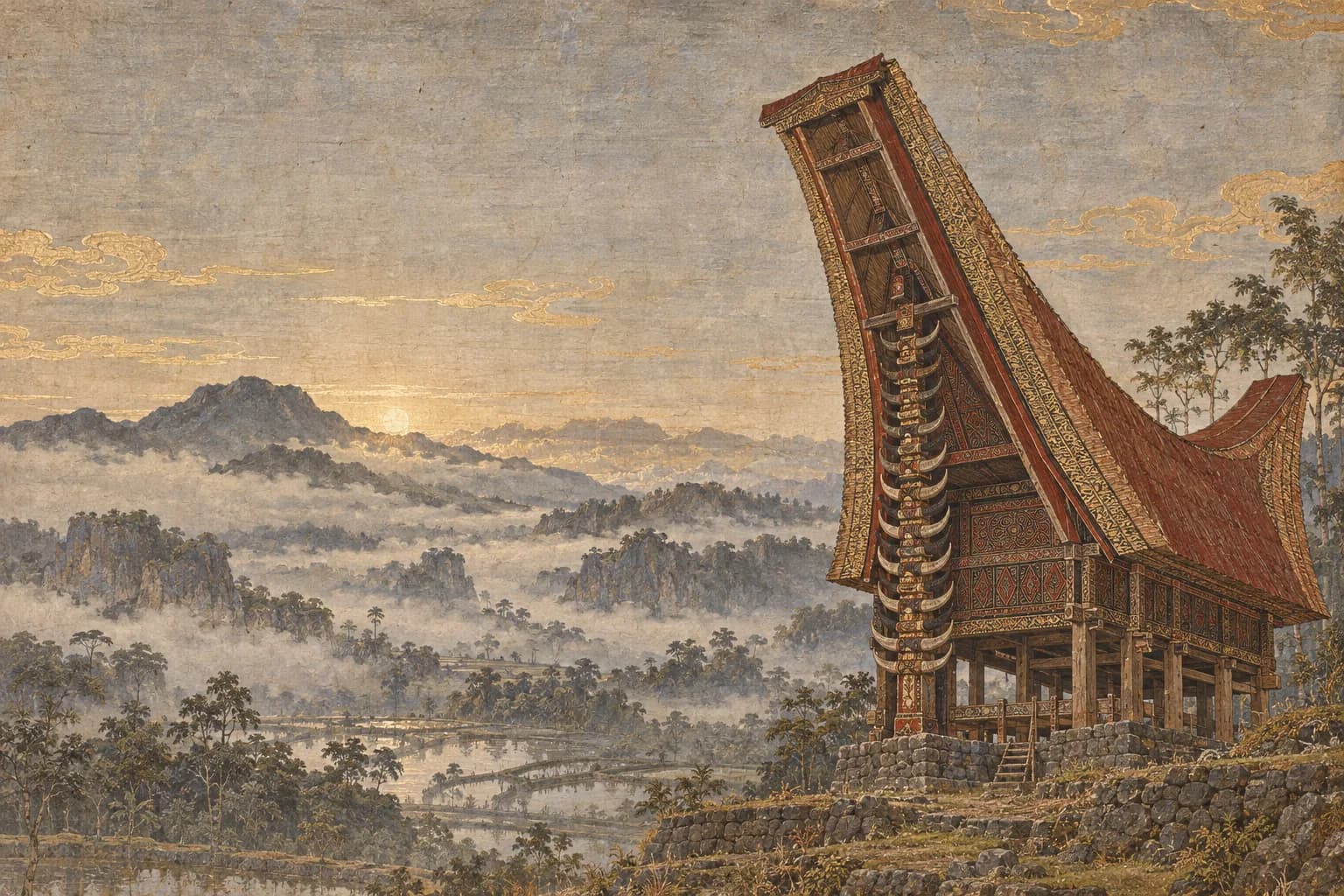
Rambu Solo' means "rites of descending smoke". It is usually held in front of the family tongkonan, the ancestral house, and can last a week or more.
The buffalo is believed to carry the soul to Puya, the land of souls. The more respected the deceased, the more buffalo are slaughtered, sometimes hundreds at one funeral, and the meat is shared among the guests.
The dead are not buried in the ground but placed in graves cut into cliffs or in caves. At Londa, a cave burial site about 7 km south of Rantepao, the higher a coffin (erong) sits, the higher the status of the person inside.
The full guide to this festival
Toraja funeral season 2027: est. July–August, attending Rambu Solo' respectfully
Full guide: dates, getting there and what you can book →