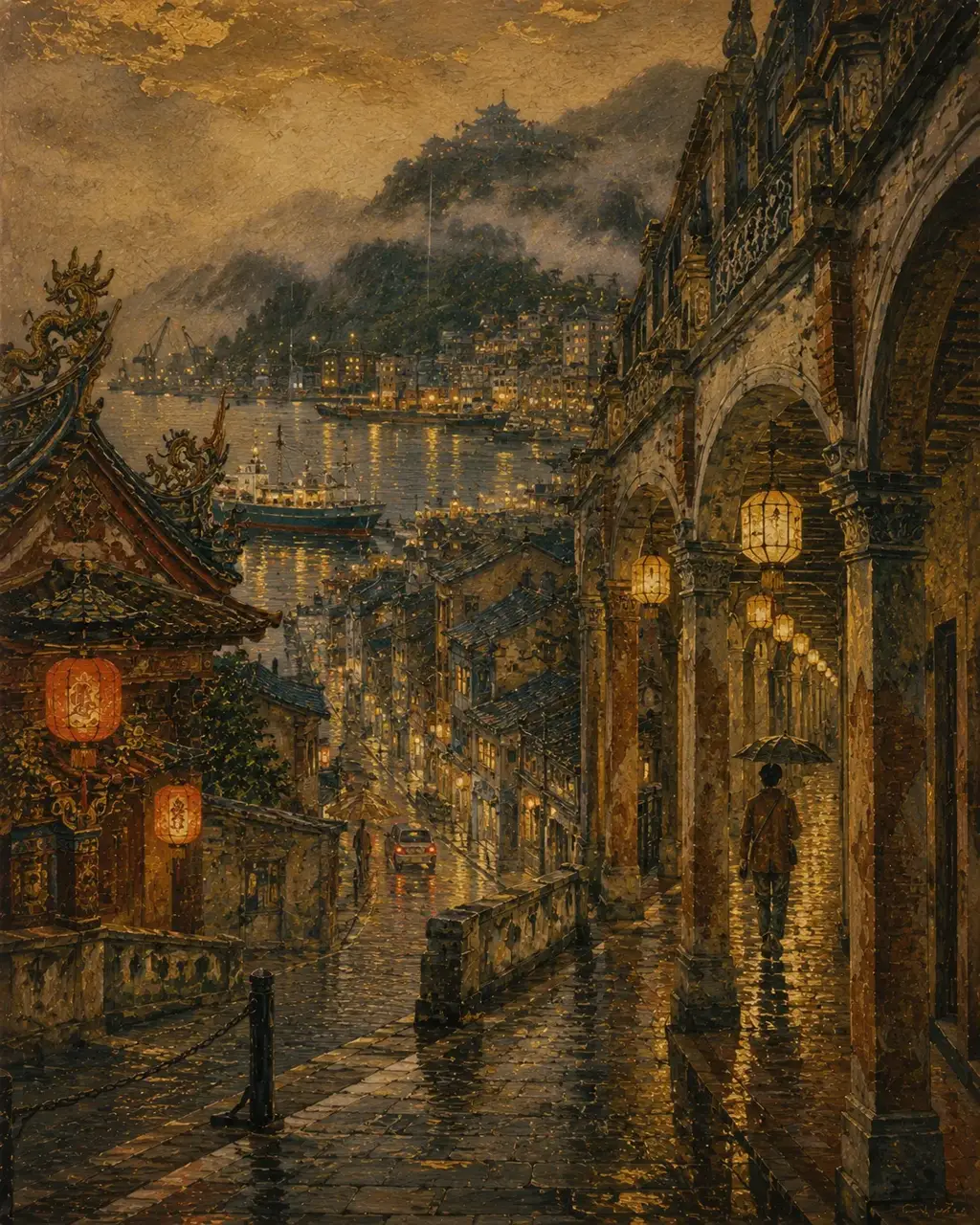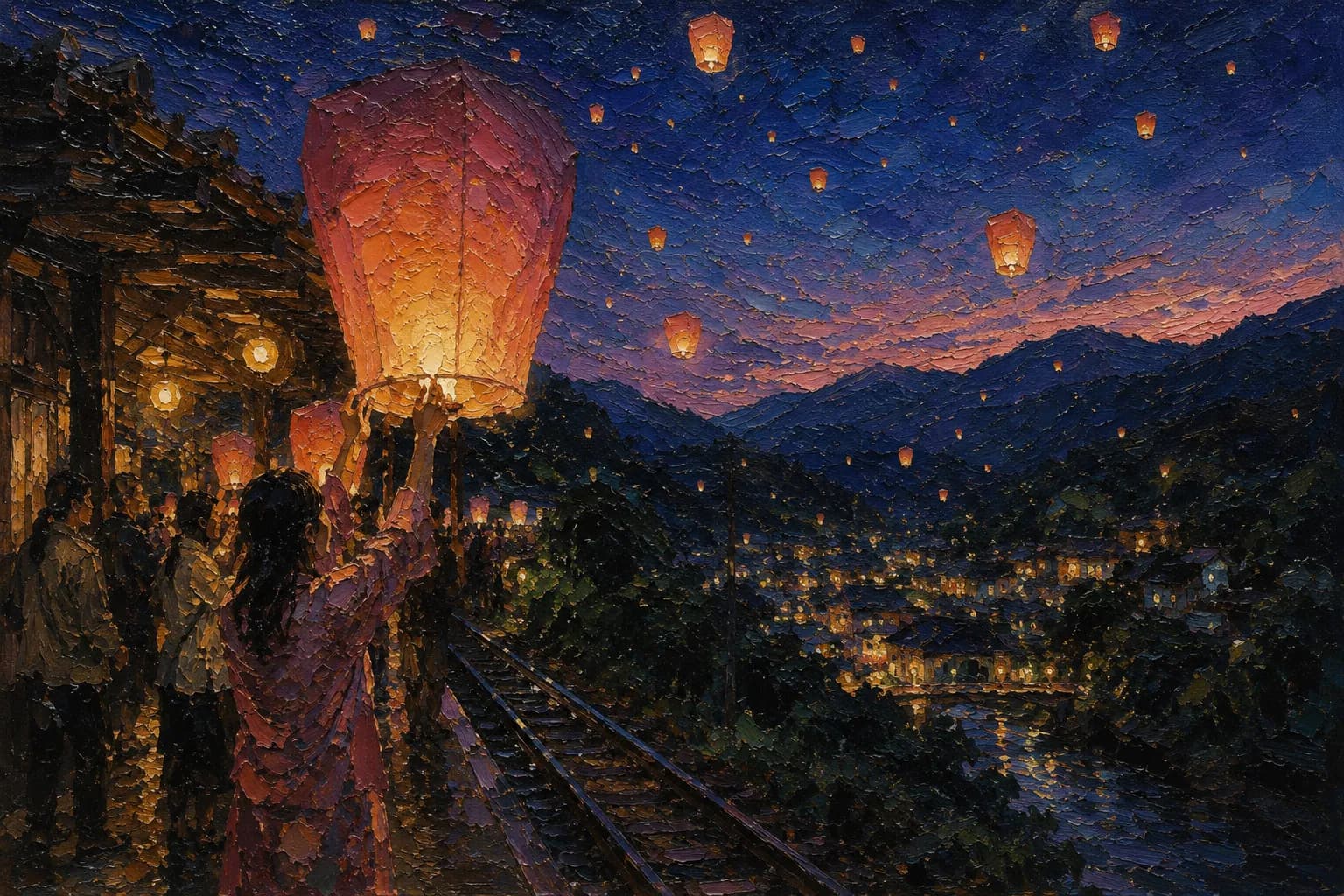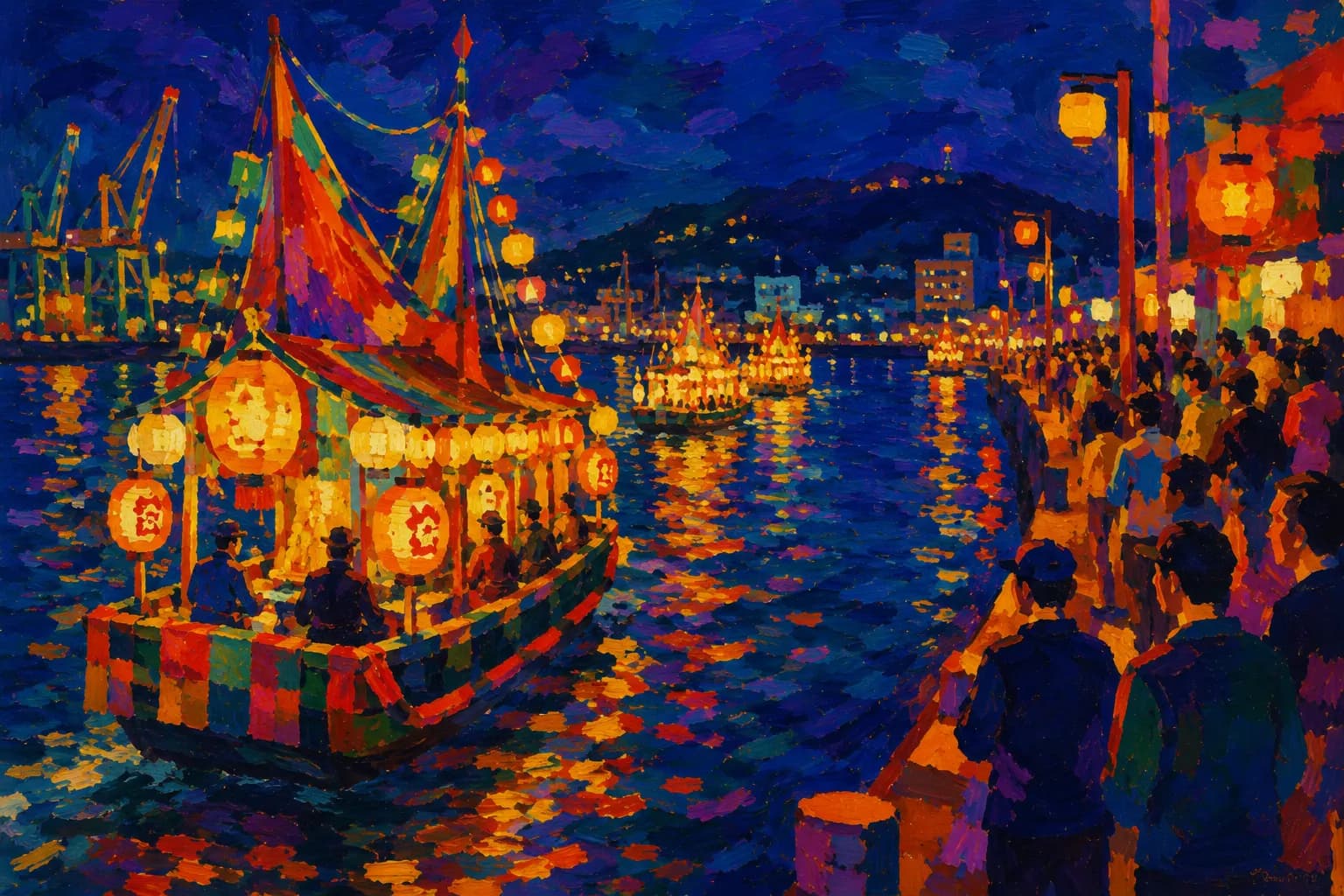
Each clan's lantern house is pushed into the sea at Wanghai Lane
Related guide: Keelung Ghost Festival 2027
On the night of the 14th day of the seventh lunar month, floats carry each clan's lead water lantern through central Keelung and on to Wanghai Lane in Badouzi, where the lanterns are lit and pushed into the sea. In 2026 that night was 26 August, with the Liu-Tang-Du clan association as chief host; in 2027 it falls on a Sunday.
The rotation started as a truce. In 1853, the third year of the Xianfeng reign, Keelung's Zhangzhou and Quanzhou settlers fought with heavy losses (the Ministry of the Interior also lists 1851). Elders from both sides brokered peace, buried the dead together as the "Elder Lords" and agreed that the surname clans would take turns hosting the festival, competing with performance troupes rather than fists. The rotation began in 1855, and on 29 January 2008 the Council for Cultural Affairs, now the Ministry of Culture, designated the festival a national Important Folk Custom.
The lantern release is one rite in a month of them. Matched against the Central Weather Administration almanac for 2027: the shrine gate at the Laodagong Temple opens on the afternoon of the 1st of the month. The main altar in Zhongzheng Park is lit on 13 August, the Dipper lanterns are carried in procession the next day, the lanterns go out on the 14th and the universal salvation follows on 16 August. On 1 September, the 1st of the eighth month, the gate closes and the host's incense burner is handed over at Qing'an Temple.
Once pushed off the shore, the lead lanterns drift out on the current, lighting a path for the spirits in the water and calling them ashore for the next day's universal salvation.
The full guide to this festival
Keelung Ghost Festival 2027: 2–31 August (seventh lunar month), water lanterns on the night of 15 August
Full guide: dates, getting there and what you can book →
Tickets and transport you can book
These are affiliate links: if you book through them, VoucherData may earn a commission. You pay the same price.
Keelung
Heping Island Geopark ticket
Sea-carved rocks by day, back to town for the water lanterns at night.
See pricesKeelung
Keelung Islet landing: island loop, lighthouse & Elephant Trunk Rock
Open seasonally, in the same summer as the Ghost Festival. Landings are capped at 1,200 people a day; weekend places are confirmed 30 days ahead, and trips that don't fill are rescheduled or refunded.
See pricesKeelung & New Taipei
Northeast Coast day tour
From Taipei Main Station, about 9 hours: the Bitou Cape trail, Zhengbin Fishing Port and Heping Island, then Keelung's Miaokou night market. No driving needed.
See prices