Lukang: a Mazu blackened by incense
Once its harbour silted up, Lukang was never rebuilt wholesale, so Zhongshan Road still has its cake shops and old temples and the lanes keep their original width.
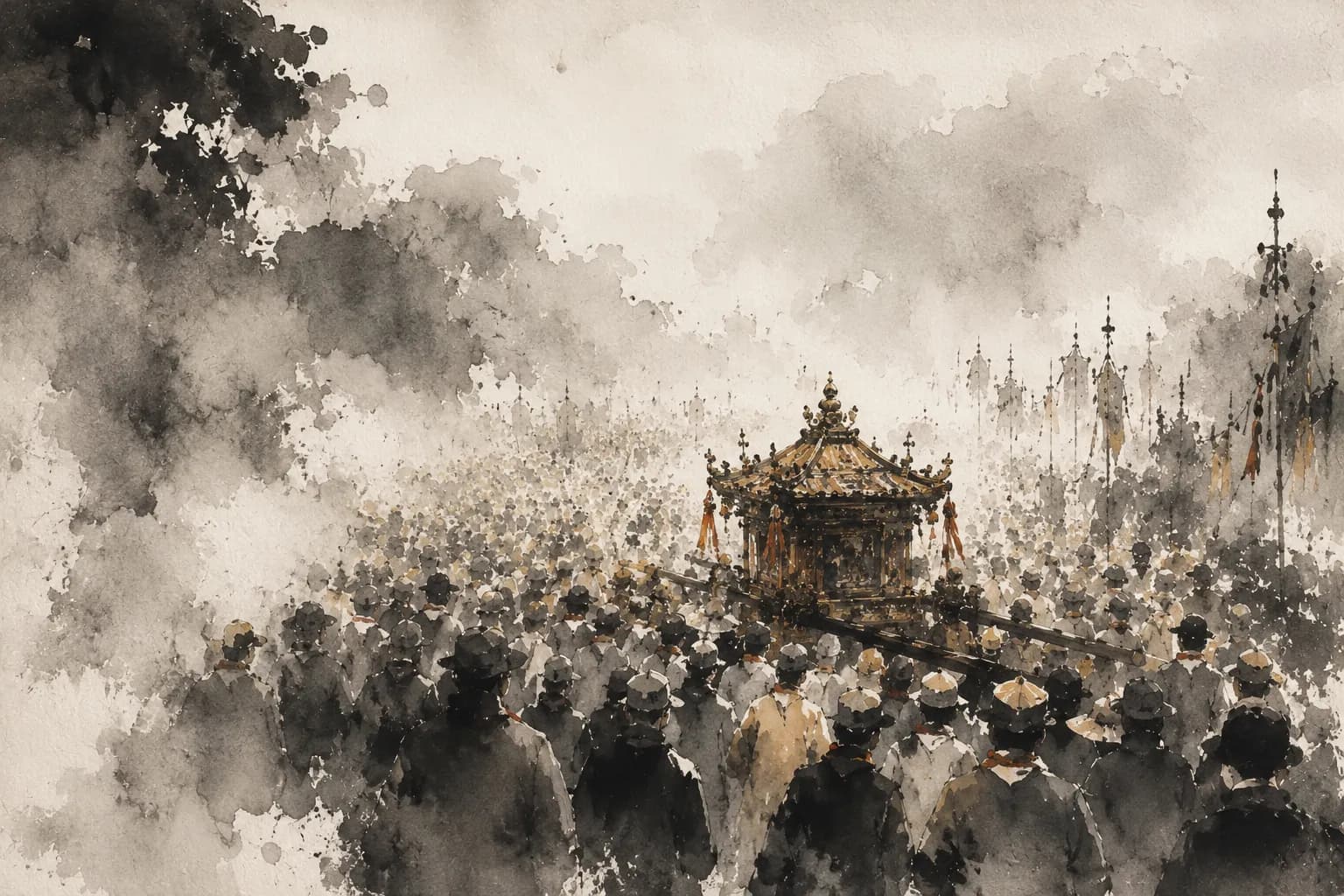
Lukang's Tianhou Temple is on Zhongshan Road, with incense sellers at the edge of its forecourt, and pilgrim groups from around Taiwan still come. Its founding Mazu statue is said to have been brought from the ancestral temple on Meizhou by Shi Lang, the early Qing admiral of the Fujian fleet. Long exposure to incense smoke has turned the figure black, which is why it is known as Black-faced Mazu.
Under the Qing, Lukang was the most important port in central Taiwan. An old saying ranks it second only to Tainan and ahead of Bangka, now part of Taipei. Then the harbour silted up, ships moved elsewhere and trade fell away for good. With no new boom, nobody was in a hurry to knock the old houses down, so many lanes keep their original width and the red brick walls still stand.
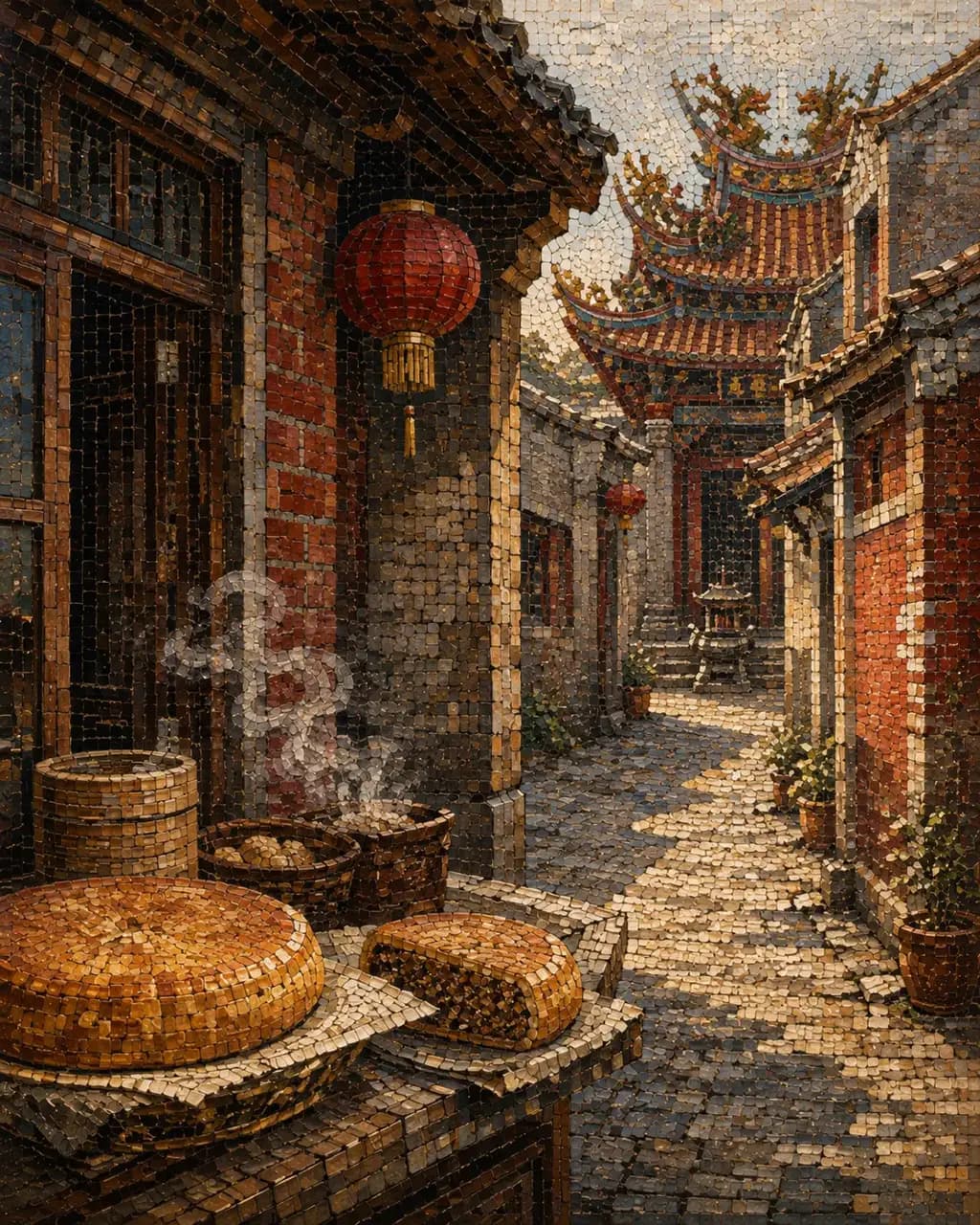
Off Zhongshan Road and the Old Street the lanes narrow quickly. Nine Turns Lane bends and bends again, a layout usually explained as shelter from the strong northeasterly that blows in off the strait in autumn and winter. Moru Lane is tighter still: two people meeting have to turn sideways to pass. Overhead are old eaves, low-hung tablets and lanterns.
Lukang has cake shops along the Old Street and Zhongshan Road, with phoenix-eye cakes, ox-tongue biscuits and mung bean cakes behind the glass. Many are shaped in wooden moulds: the dough is pressed into the carving and knocked out onto the table, leaving a flower or a character raised on top.
Tickets and transport you can book
These are affiliate links: if you book through them, VoucherData may earn a commission. You pay the same price.
Taiwan
Handmade sterling silver
Handmade sterling silver jewelry from Taiwan, ordered online and shipped.
Shop at Silver StudioTaiwan
Pinkoi designer & handmade
Designer and maker pieces: tea ware, small objects, homeware.
Shop at PinkoiTaiwan
ACERA ceramic cups
Ceramic teacups and teapots from the Taiwanese brand ACERA, ordered online and shipped.
Shop at ACERA
Sources