Two karakuri children leap bar to bar and land on Hotei's shoulders
Related guide: Takayama Festival 2027
The spring festival brings out 12 floats and the autumn festival 11. The spring Sanno Matsuri belongs to Hie Shrine in the south of the old town, and the Hachiman Matsuri on 9–10 October to Sakurayama Hachimangu in the north, each with its own floats and route.
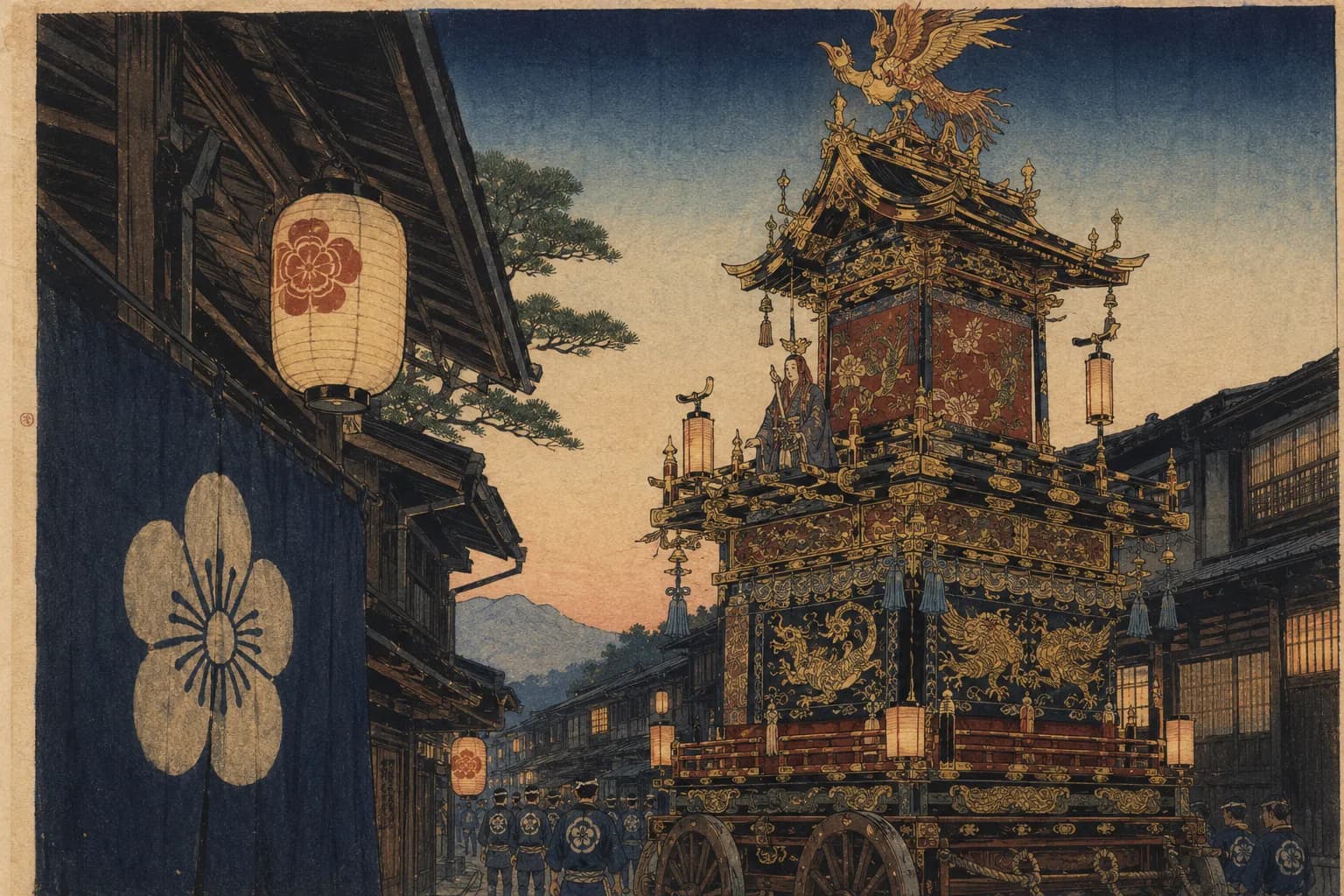
Each float is a three-storey wooden structure in black lacquer and gold, covered in carved dragons, phoenixes and scrollwork and in metal fittings. Hida is mountainous with little farmland and has long been known for its carpenters, who were once summoned to build palaces and temples in the old capital. The Takayama floats come out of that tradition.
Only 4 of the 23 floats still carry karakuri puppets: Sanbaso, Shakkyotai and Ryujintai in spring, and Hoteitai in autumn. The puppeteers sit inside the float, each working one small part of the figure by rope, with no electricity or motors involved. On Hoteitai two child figures leap from bar to bar and finish standing on Hotei's shoulders; Ryujintai plays out a dragon god that a child has made drunk and sealed in a jar, and which wakes and dances in fury.
The yoi-matsuri takes place on the first night of each festival. In spring the route runs from the Jinya-mae crossing through Honmachi and Yasukawa-dori to Kamiichinomachi; in autumn from Oshinmachi through Shimoninomachi and Yasukawa-dori to Shimoichinomachi.
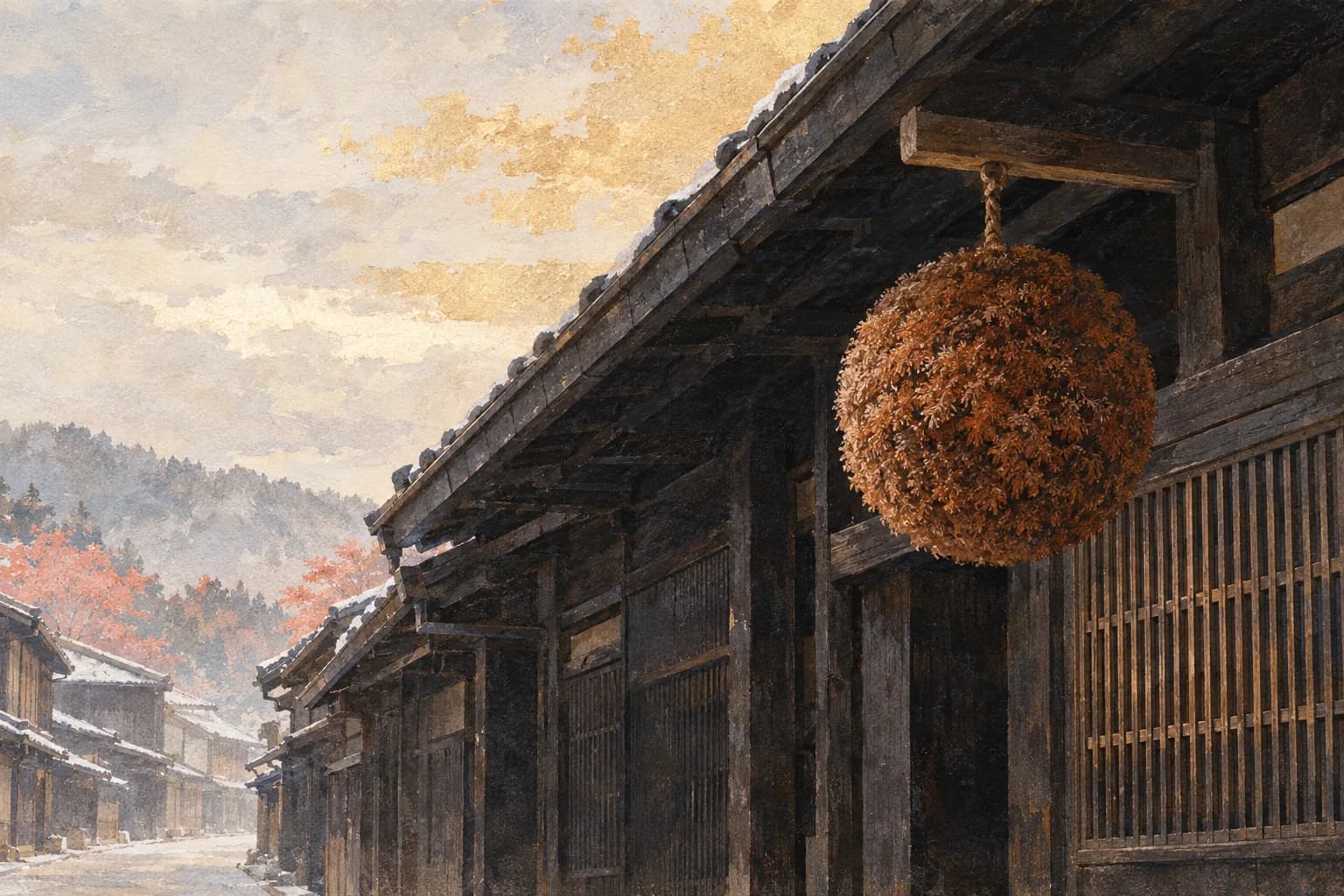
The old town still has rows of Edo-era wooden townhouses. On the night of the yoi-matsuri, the floats, hung with lanterns, are paraded between them.
The full guide to this festival
Takayama Festival 2027: spring Sanno Matsuri at Hie Shrine, 14–15 April, with floats and karakuri puppets
Full guide: dates, getting there and what you can book →
Tickets and transport you can book
These are affiliate links: if you book through them, VoucherData may earn a commission. You pay the same price.
Nagoya, Takayama and Hokuriku
JR Takayama-Hokuriku Area Tourist Pass (5 days)
Covers the Limited Express Hida from Nagoya to Takayama, plus designated JR trains and buses in the area for 5 consecutive days, including the bus from Takayama to Shirakawa-go.
See plansShirakawa-go & Takayama, Gifu
Shirakawa-go & Takayama day tour from Nagoya
Bus tour from Nagoya (08:15–19:30) covering Gujo Hachiman, Takayama and Shirakawa-go. Chinese, English and Japanese guiding; free cancellation up to 48 hours before.
See prices