Ubon Ratchathani: a scripture library in the middle of a pond
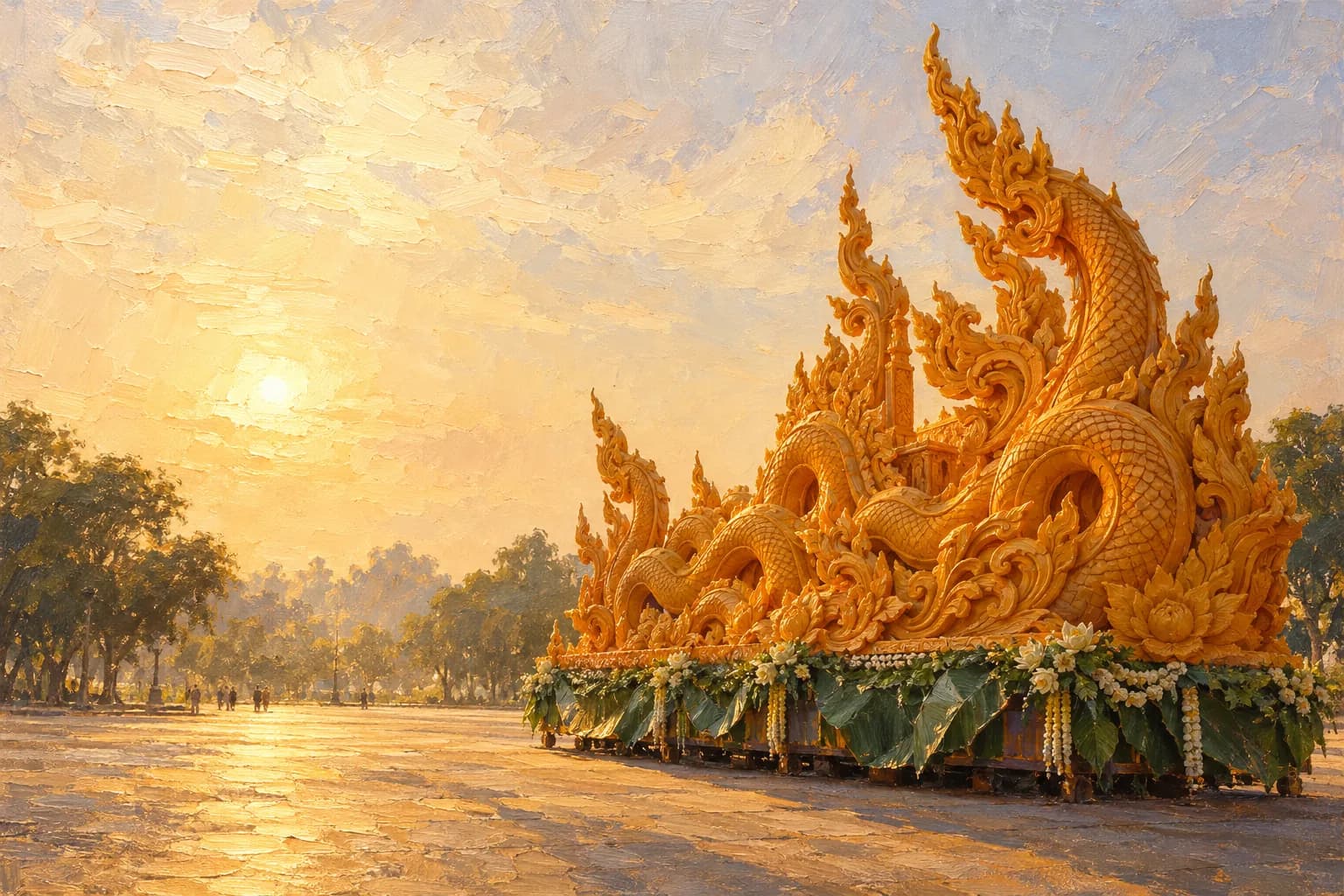
Each year at the start of Buddhist Lent, giant wax sculptures made by Ubon's temples go on show in Thung Si Mueang park for the Candle Festival.
Beside Thung Si Mueang park in Ubon Ratchathani, Wat Thung Si Mueang dates from around 1842, in the reign of Rama III, and was built to house a replica of the Buddha's footprint brought from Wat Saket in Bangkok. Its scripture library, or ho trai, is a wooden building on stilts in the middle of a pond, reached by a wooden footbridge; keeping the palm-leaf manuscripts over water helps protect them from termites, ants and damp. The library has a tiered roof and carved panels with Lao motifs, and the murals in the old footprint hall next to it were painted during the same reign.
The heart of the old town is Thung Si Mueang park. To the south-west, Wat Si Ubon Rattanaram keeps Phra Kaew Butsarakham, a Buddha image carved from topaz. South of the park, the Ubon Ratchathani National Museum occupies a former city hall more than a century old. The Thung Si Mueang night market opens every evening, with Isan, Thai and Vietnamese food, handicraft stalls and live music and performances.
At the start of Buddhist Lent each year, the giant wax sculptures made by the temples go on show in the park for Ubon's Candle Festival.
The town was founded by Thao Kham Phong, a descendant of Phra Wo and Phra Ta, who had broken away from Vientiane and moved into Siam during King Taksin's reign. He later took the title Phra Pathum Wongsa and became Ubon's first ruler. In 1792 King Rama I raised the settlement to the status of a province. Until 1972 Ubon was the largest province in Thailand by area; Yasothon and Amnat Charoen were later carved out of it.
Ubon Ratchathani, usually just Ubon, takes its name from the lotus: it means roughly "royal lotus city". The town lies on the north bank of the Mun River at about 125 metres above sea level, on a mostly flat floodplain. Warin Chamrap, on the south bank, is a separate municipality joined to Ubon by road bridges, and the railway station that bears Ubon's name is actually on the Warin side.
Festivals in the same city
Ubon Candle Festival 2027: expected 17–19 July in Ubon Ratchathani, giant wax sculptures for Buddhist Lent
Full guide: dates, getting there and what you can book →
Tickets and transport you can book
These are affiliate links: if you book through them, VoucherData may earn a commission. You pay the same price.
Thailand 5G eSIM (AIS)
Unlimited data on AIS. Your phone must support eSIM; activate it in the Klook app before you fly. Full refund if cancelled before it connects.
See plans
Sources