A figure-eight walk through a grass ring
Related guide: Nagoshi no Harae 2027
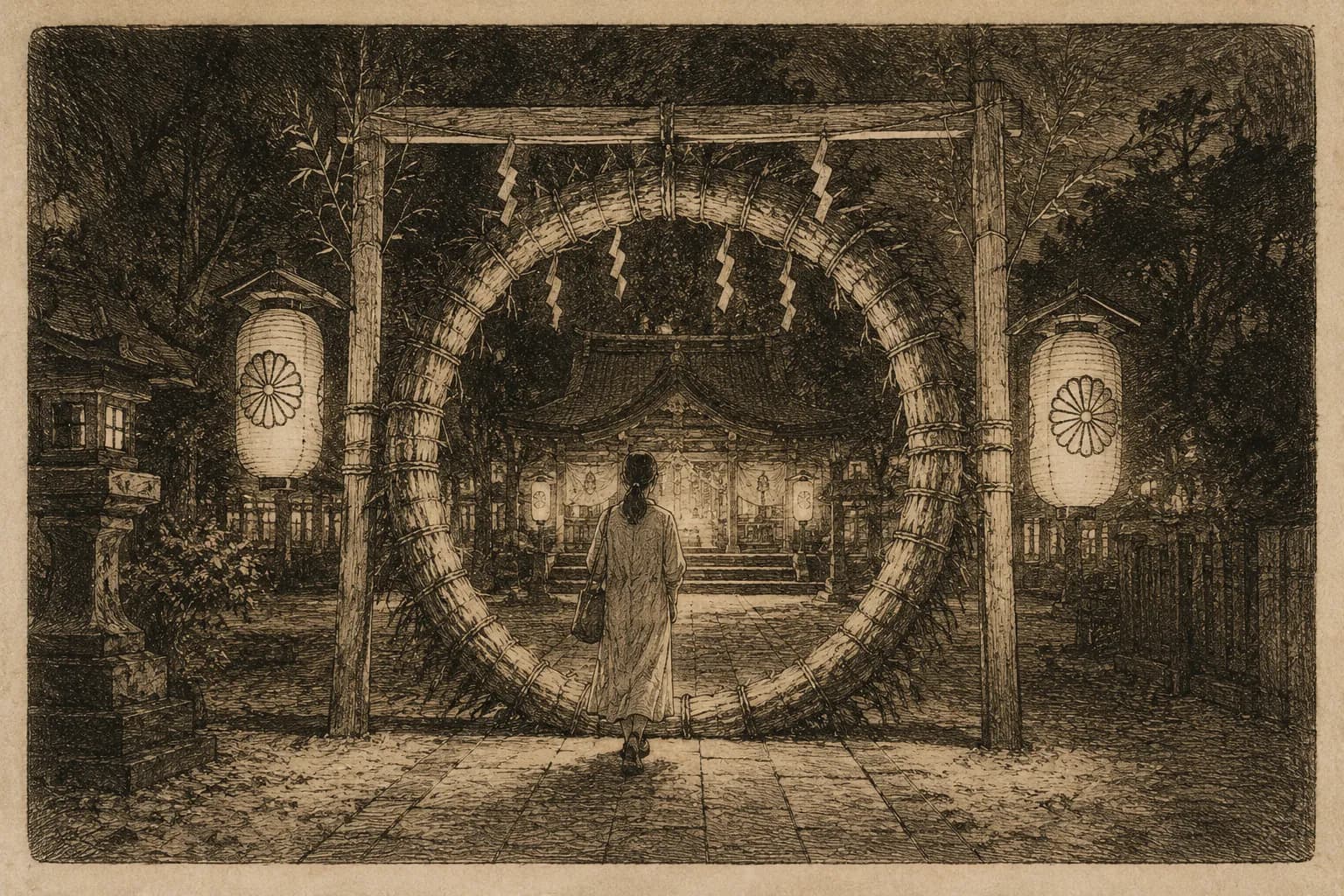
Tokyo Daijingu sets up its chinowa on 25 June and leaves it in place until the day of the rite. From about 1pm to 5pm that day, the ring is closed to walkers for the Oharae ceremony, which is held twice, at 2pm and 4pm, with the first session limited to 300 people.
In Shinto belief, the impurities and wrongs gathered over half a year can be cleared away at the end of June, so you enter the second half of the year clean; a matching rite, Toshikoshi no Harae, is held at the end of December. The June rite is called Nagoshi no Harae and is held at shrines across Japan.
Its symbol is the chinowa, a ring of cogon grass taller than a person, set up under the torii gate or in front of the hall of worship. You usually bow lightly, then walk through it left, right and left again, tracing a figure eight on its side; the diagrams on each shrine's signboard differ slightly.
At Kamigamo Shrine, you write your name and age on a paper figure, hold it to the left, right and centre of your chest, then breathe on it to pass your impurities into the paper. Figures can be handed in from mid-May to the end of June, and on the day itself until the ceremony of releasing them ends; in recent years car-shaped papers have been added for people praying for road safety.
At 8pm on the day, Kamigamo Shrine's Nagoshi no Harae begins. The priests gather on the bridge pavilion lit by bonfires, a reader recites the poem Fujiwara no Ietaka wrote about this rite, and two priests sitting at the edge of the pavilion flick the collected paper figures into the Nara-no-ogawa stream below.
The full guide to this festival
Nagoshi no Harae 2027: 30 June at shrines across Japan, walking through the chinowa ring
Full guide: dates, getting there and what you can book →