Japan
Nagoshi no Harae 2027: 30 June at shrines across Japan, walking through the chinowa ring
At a glance
- Dates
- Next: 30 June 2027
- Where
- Shrines across Japan, especially common in Kyoto
- Getting there
- Not listed
- Cost
- No ticket to walk the chinowa; paper-figure offerings vary by shrine
- Limits
- Some shrines do not allow walking through during the ceremony
The 2026 edition has passed
Dates last checked: 14 October 2026
The festival
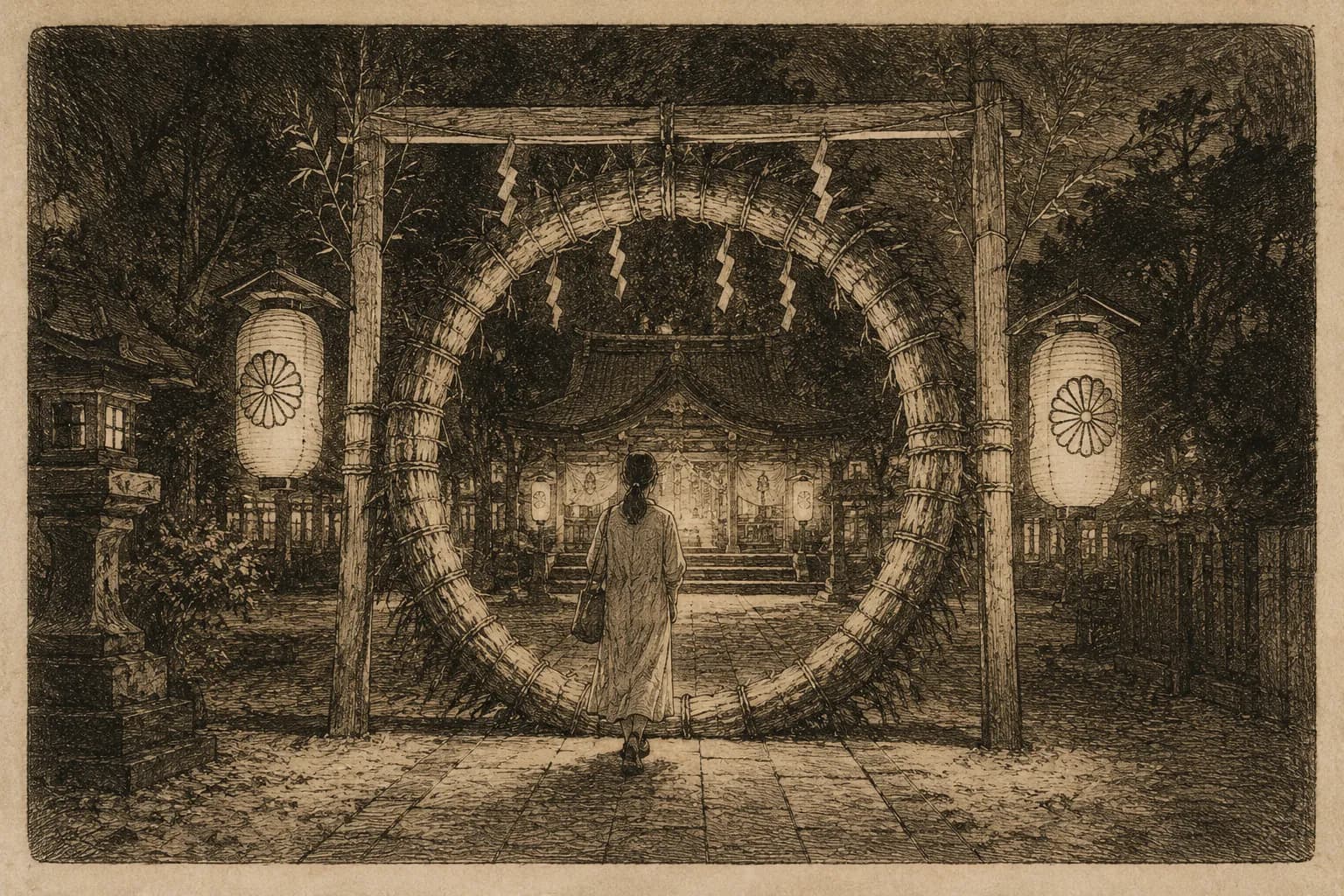
A figure-eight walk through a grass ring
Tokyo Daijingu sets up its chinowa on 25 June and leaves it in place until the day of the rite. From about 1pm to 5pm that day, the ring is closed to walkers for the Oharae ceremony, which is held twice, at 2pm and 4pm, with the first session limited to 300 people.
In Shinto belief, the impurities and wrongs gathered over half a year can be cleared away at the end of June, so you enter the second half of the year clean; a matching rite, Toshikoshi no Harae, is held at the end of December. The June rite is called Nagoshi no Harae and is held at shrines across Japan.
Its symbol is the chinowa, a ring of cogon grass taller than a person, set up under the torii gate or in front of the hall of worship. You usually bow lightly, then walk through it left, right and left again, tracing a figure eight on its side; the diagrams on each shrine's signboard differ slightly.
Booking
There are no tickets or transport to book for this page right now.
Details
You don't have to go on the 30th itself: most shrines put up their chinowa in mid to late June. If you do go on the day, some shrines close the ring to walkers during the afternoon or evening ceremony.
Dates
Nagoshi no Harae is mostly held at the end of June, especially on 30 June, the midpoint of the year; a matching rite, Toshikoshi no Harae, comes at the end of December.
Times vary by shrine. Some set up the chinowa in mid-to-late June and let people walk through it for the whole period, while the formal purification ceremony is usually held on the afternoon or evening of 30 June. If you are making a special trip, plan around that shrine's schedule for the year.
Where to take part
Nagoshi no Harae is held at shrines across Japan, and many set up a chinowa at the end of June. It is especially common at Kyoto's shrines.
You don't need to travel to a particular shrine. If you are in Japan in late June, look under the torii gate or in front of the hall of worship as you pass a shrine: a grass ring taller than a person is a chinowa.
Walking the chinowa: the figure-eight
Walking through the chinowa (chinowa-kuguri) is the heart of the rite. The usual order is left, right, then left again, tracing a figure eight on its side.
Bow lightly in front of the ring, then walk the loops in order. The diagrams on each shrine's signboard can differ slightly, so follow the sign.
Using the paper figure
Some shrines accept paper figures. At Kamigamo Shrine, for example, you write your name and age on the figure, hold it to the left, right and centre of your chest, breathe on it to pass your impurities into the paper, and hand it in.
Whether a shrine offers figures, where to return them and how much to offer all vary, so follow that shrine's instructions.
Rainy season and ceremony times
Late June falls in the rainy season, so expect humid, wet days. Formal ceremonies are usually on the afternoon or evening of 30 June, and some shrines close the chinowa to walkers while they are under way. Walking through the ring takes a few minutes, with no parade or food stalls, so it fits into a gap in a sightseeing day.
Getting there and planning
Shrines everywhere hold the rite, so getting there is flexible and you don't need a dedicated route. The easiest approach is to fold it into your June itinerary: sightsee as usual during the day, then stop by a nearby shrine in the evening.
In Kyoto, many shrines in the city set up a chinowa, so you may come across one on a walk.
Where to stay and costs
Your main costs are the transport and accommodation you would have anyway; the offering for a paper figure varies by shrine.
You don't need to stay next to a shrine. Pick a city base that suits your daytime plans and walk over in the evening.
Seasonal sweet: minazuki
At the end of June, Kyoto's wagashi shops put out minazuki: white uiro topped with a layer of red beans and cut into triangles.
The triangle is said to represent the ice once used to beat the summer heat, and the red beans to ward off evil. Eating minazuki on 30 June is a Kyoto custom.
Etiquette, crowds and what to wear
Etiquette: bow lightly in front of the ring and keep quiet. Don't stop in front of the ring for photos while others wait behind you, and don't pull out any grass.
What to wear: there's no dress code; neat clothes are fine. Late June is already hot and humid, so wear breathable clothes and bring rain gear.
How long the rings stay up
Most chinowa go up in mid-to-late June, and each shrine takes its ring down at a different time. In examples collected by the Mie Prefecture tourism federation, Mie Gokoku Shrine sets up its ring in mid-June and lets anyone walk through until 30 June, while Kuwana Sosha keeps its ring open into early July.
If you miss 30 June itself, a few shrines may still have their ring up.
Good to know
- When
- Mostly at the end of June, especially 30 June (30 June in 2026). Each shrine sets its own chinowa period and ceremony times.
- Where
- Held widely at shrines across Japan, especially common at Kyoto's shrines
- Core rite
- Walking through the chinowa ring (chinowa-kuguri), in the order shown on each shrine's signboard.
- Paper figure
- Some shrines accept paper figures. At Kamigamo Shrine you write your name and age, breathe on the figure and hand it in; it can be submitted from mid-May to the end of June.
- Cost
- Walking through the chinowa costs nothing; the offering for a paper figure varies by shrine.
- Seasonal sweet
- Kyoto's seasonal sweet, minazuki: white uiro topped with red beans and cut into triangles.
FAQ
5
Where can you take part in Nagoshi no Harae?
It is a traditional rite held widely at shrines across Japan, especially common at Kyoto's shrines. When passing a shrine in late June, watch for whether a chinowa is set up beneath the torii.
How do you pass through the chinowa?
Following the shrine's guidance, trace a figure-eight path left and right through the grass ring, usually left, right, then left again. Give a slight bow before the ring, then go around in sequence.
How do you use the paper figure?
Some shrines hand out paper figures. At Kamigamo Shrine, for example, you write your name and age on it, hold it to the left, right and centre of your chest, breathe on it and hand it in; the shrine floats the figures down the stream at its ceremony on the evening of 30 June.
Is there a fee to take part in Nagoshi no Harae?
No. Walking through the chinowa needs no ticket, and at most shrines you can walk through freely while it is up. The offering for a paper figure varies by shrine.
Which seasonal sweet goes with it?
Kyoto's minazuki: a slab of white uiro topped with red beans and cut into a triangle.
Read next