Baliem Valley: a salt well worked with banana stems
The outside world first saw Papua's Baliem Valley in 1938, from the window of an expedition aircraft.
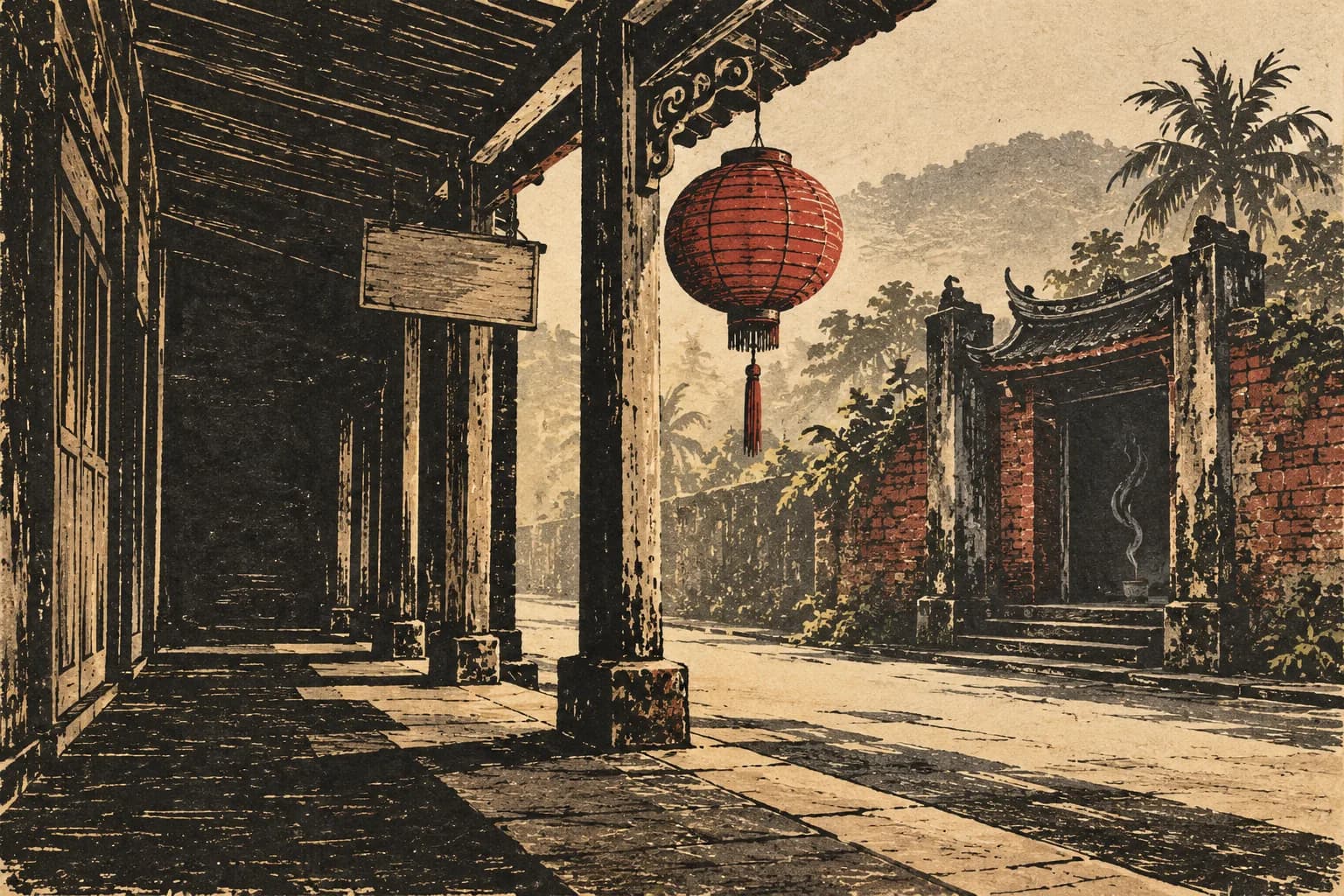
About an hour's walk up a mountain path from Jiwika, a village in the Baliem Valley, is a salt well called Iluakaima, a brine pool fed from underground and up to about four metres across. A 1972 documentary recorded how the salt is made. Women carry banana stems up on their heads, strip the outer layer, beat the stems into fibre and soak it in the brine. Back down the hill the fibre is burned to a fine ash, kneaded with water into salt cakes, wrapped in banana leaf and dried into blocks.
In June 1938 an aircraft of the American zoologist Richard Archbold's expedition, flying south from Hollandia (now Jayapura), sighted a broad valley in New Guinea's central ranges, with fenced villages, farm fields and drainage ditches. A Dutch soldier on board called it the Groote Vallei, the Grand Valley. The Baliem Valley is about 80 km long and 20 km wide, lies at 1,600 to 1,700 metres, and is now home to more than 200,000 people.
Its main town is Wamena, on the Baliem River, and most visitors fly in from Jayapura. The villages belong to the Dani, who call themselves Hubula, and other highland groups, and the houses are round, thatched honai. The main crop is sweet potato, hipere in the local language, grown in named varieties such as helaleke, yeleli and musaneken.
Papuans carry their loads in noken, knotted net bags. Methods vary by community, but generally stems or bark from small trees and shrubs are cut, heated over a fire, soaked, dried and twisted into thread, sometimes dyed with plant colours, and then knotted by hand into a bag. Learning the craft takes months. Noken carry crops, firewood and fish, and also babies and small animals; in 2012 UNESCO added them to its list of intangible heritage in need of urgent safeguarding.
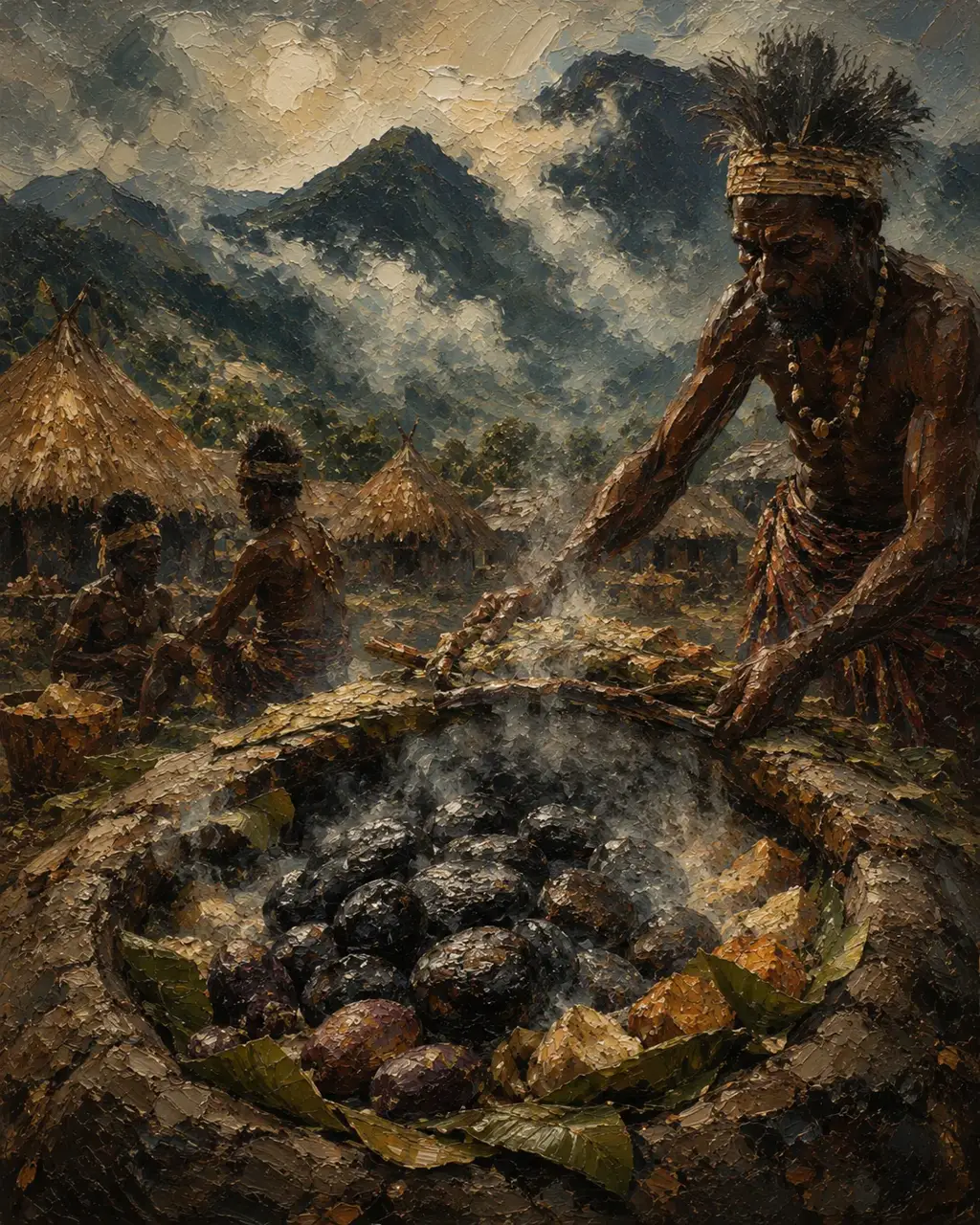
Weddings, funerals and peace-making between clans call for bakar batu: scorching stones are layered into a pit with sweet potato, vegetables and pork and left to steam, and a pit is dug at the Baliem Valley Festival near Wamena each August as well. Pigs are bought and sold at Wamena's Jibama market, one of the largest traditional markets in Jayawijaya regency, where close to 85 per cent of people still rely on traditional markets. There are not enough pig pens inside, so traders tie their live pigs up at the entrance.
Festivals in the same city
Baliem Valley Festival 2027: dates to be announced (held each August), mock battles and earth ovens in Wamena
Full guide: dates, getting there and what you can book →
Sources