Each syllable of Singkawang's Hakka name is a landform
Most of Singkawang's Chinese Indonesians are Hakka, and the town has so many temples that Indonesians call it the city of a thousand temples.
Singkawang is a town on the coast of West Kalimantan, and one account traces its name to Sakawokng, a Salako Dayak word for a broad stretch of swampy ground. The Hakka name is San Khew Jong, and each of its three characters stands for a feature of the landscape: san for the hills behind the town, khew for a river mouth, jong for the sea.
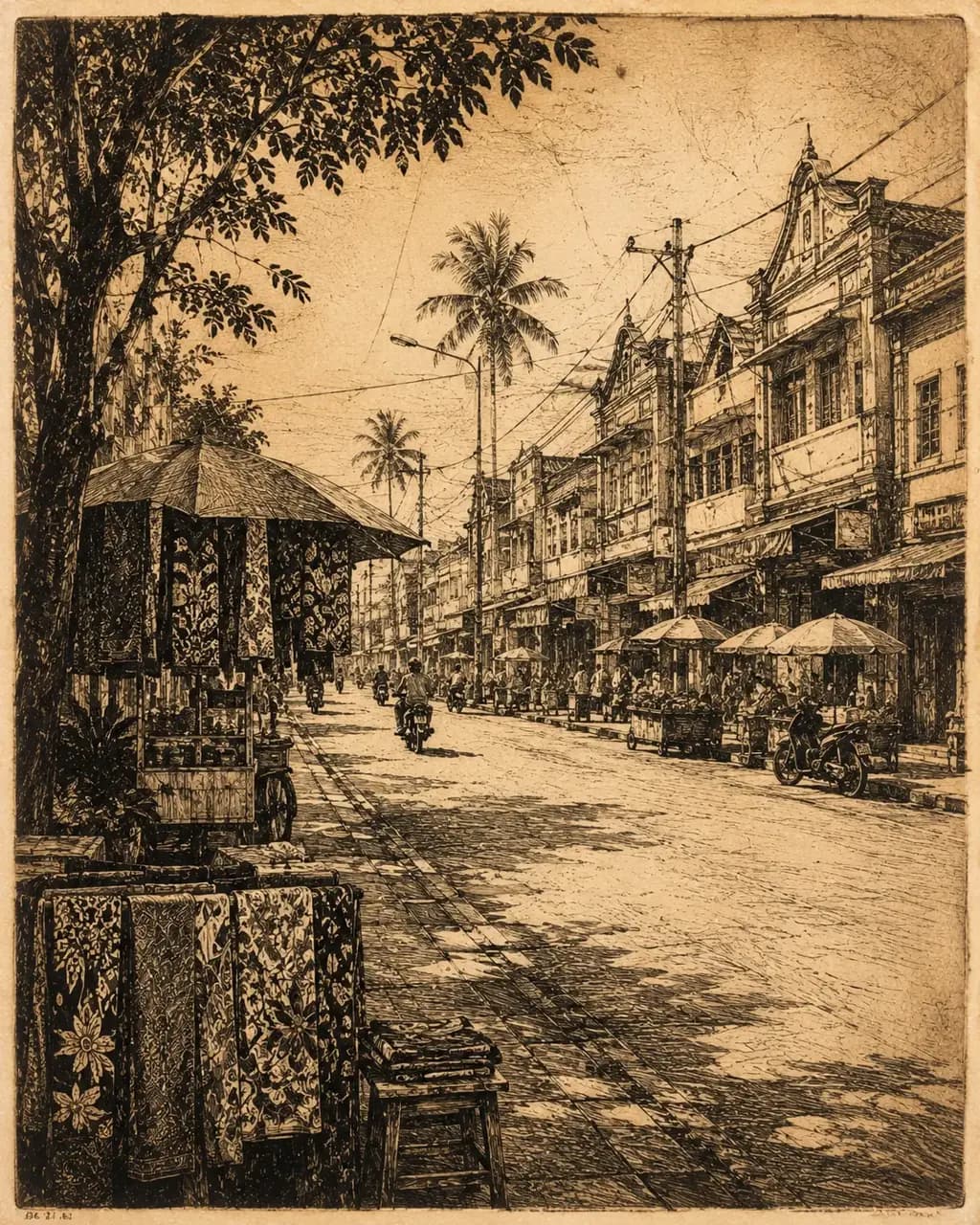
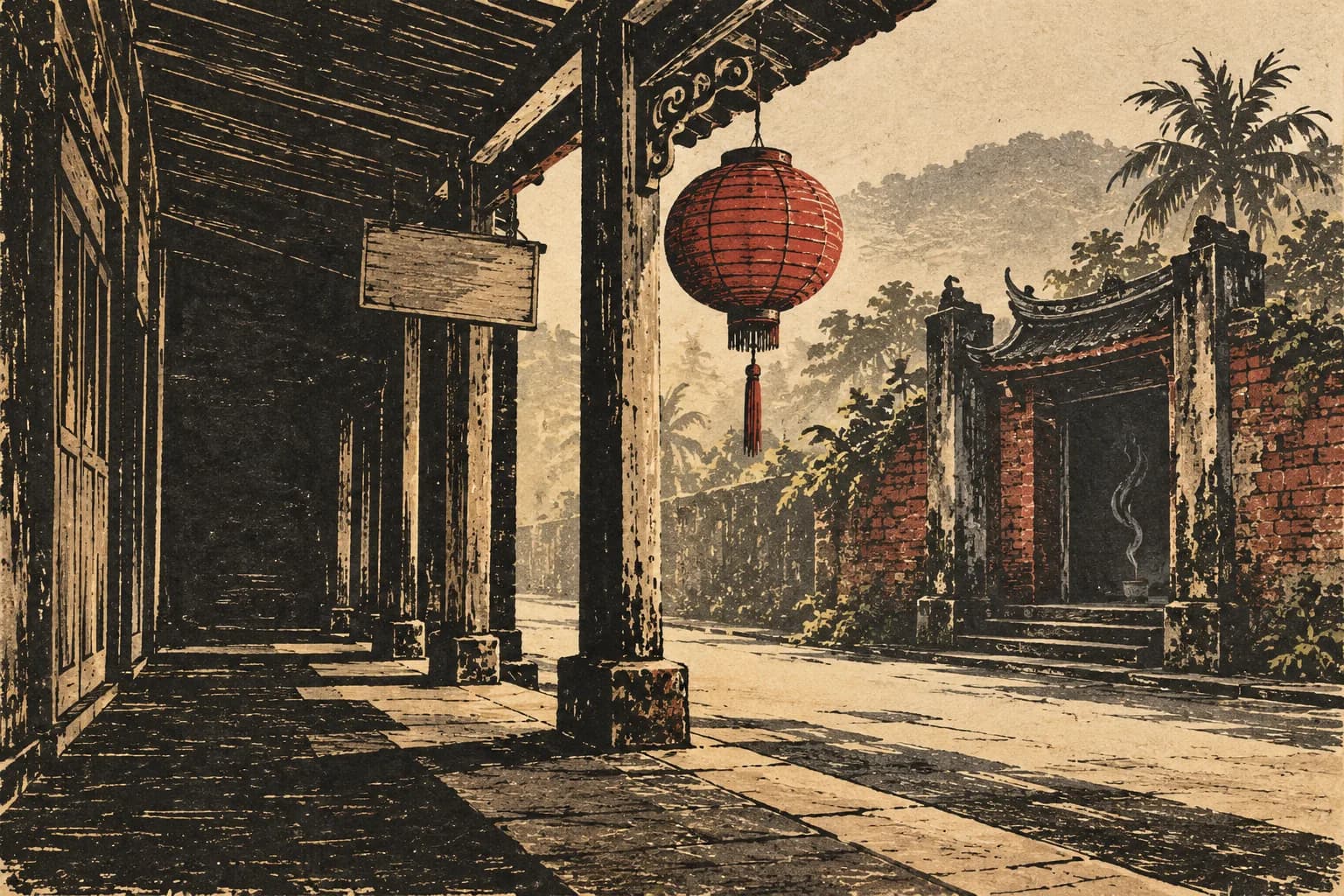
A large share of Singkawang's people are Chinese Indonesians, most of them Hakka. There are so many temples that Indonesians call it Kota Seribu Kelenteng, the city of a thousand temples. Red lanterns hang under the shophouse arcades all year, a few steps from a temple door, a wok of frying oil and a shop sign.
On ordinary days the temples are in everyday use, with offerings and incense at the door and wok stalls a few steps away. Turn off the main road and the side lanes have smaller temples of their own.
The snack sold everywhere is choi pan: thin rice-flour skins wrapped around shredded jicama or chives, steamed, topped with garlic oil and eaten with chilli sauce.
Most outsiders come for Cap Go Meh, the fifteenth day of the lunar new year, two weeks after Chinese New Year. In the Tatung parade that day, spirit mediums in trance pierce their cheeks with metal rods and are carried through the streets on sedan chairs. Dayak tatung take part alongside the Chinese mediums.
Sources