In Gujo Hachiman, each pair of dance geta is cut from one block of cypress
In Gujo Hachiman, a castle town in the Gifu mountains, the Bon dance runs on more than thirty nights from mid-July to early September.
The geta worn for the Gujo Odori are made from local hinoki cypress, each pair cut from a single board with no glued joints. From 13 to 16 August come the all-night dances, four nights that go on until dawn, with the whole ring keeping time to the sound of wooden geta striking the road.
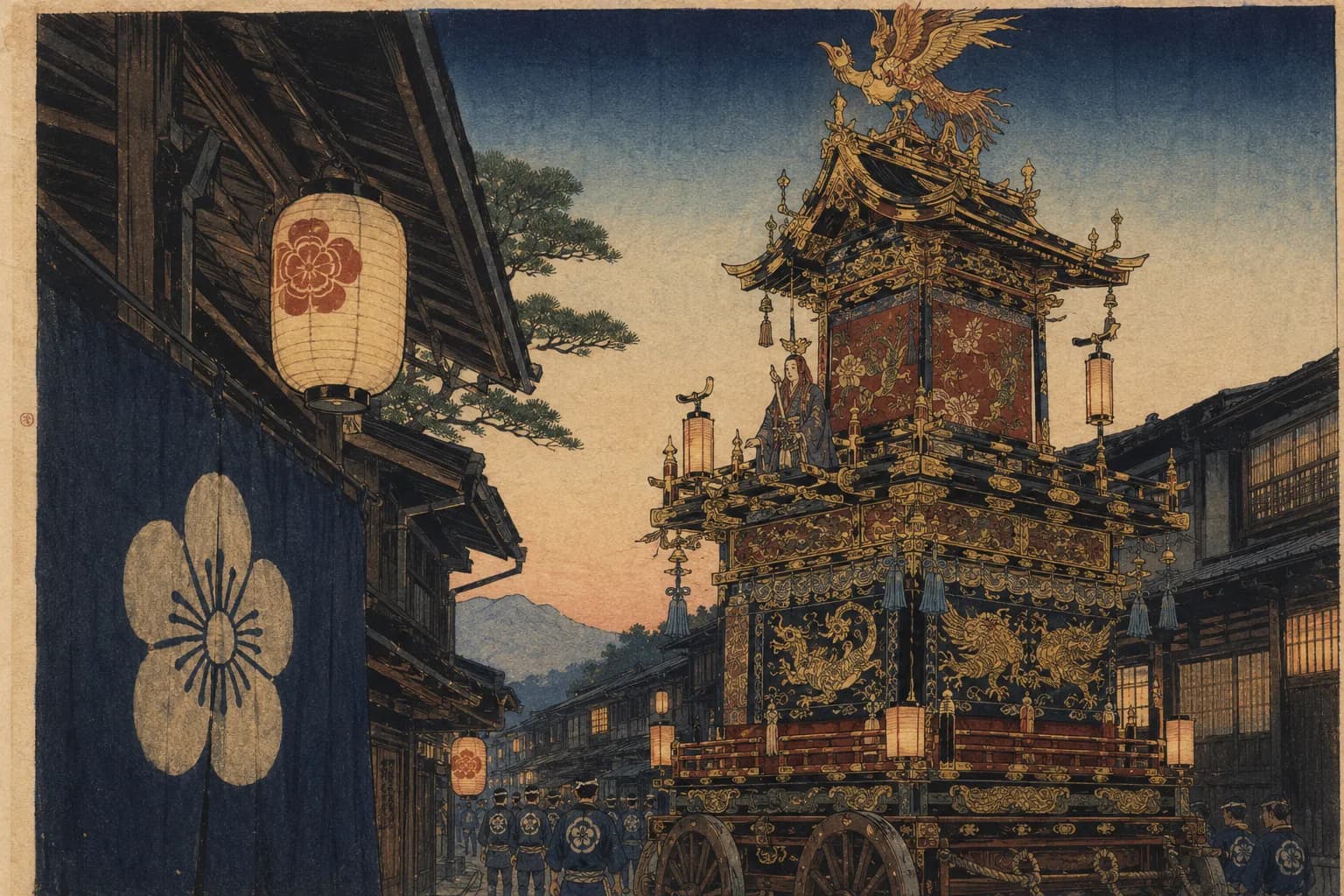
The Gujo Odori, the town's Bon dance, is held on more than thirty nights between mid-July and early September, in a different neighbourhood each night. Musicians sit on a small wheeled stage shaped like a house, singing and playing flute and taiko, while people in the street form a ring and dance around it, changing steps when the song changes. Visitors can simply step in and join.
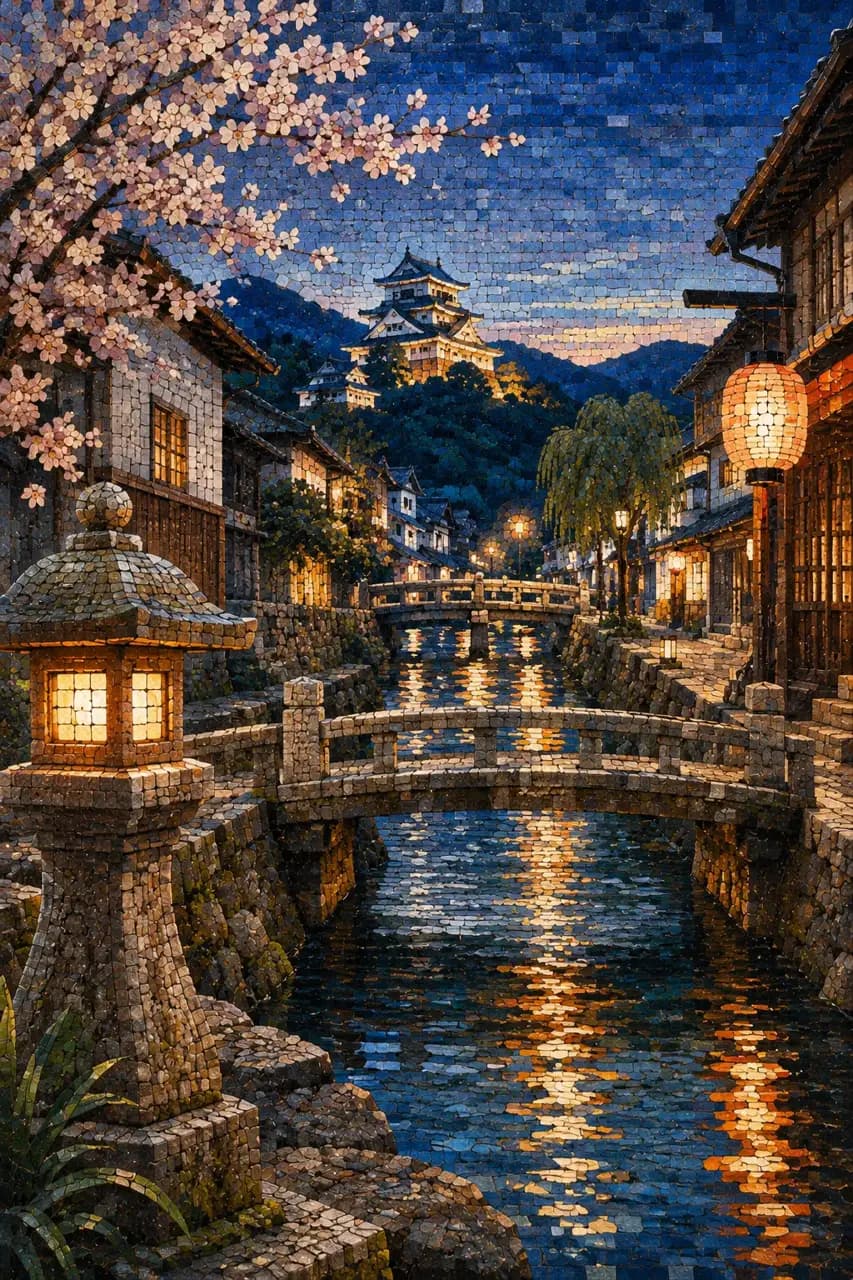
Gujo Hachiman sits in the mountains of Gifu Prefecture. The Yoshida River runs through the middle of town and joins the Nagara River just to the south. Many streets have a narrow channel along one side, the water clear enough to show the stones on the bottom, crossed every few steps by a stone slab or a short bridge leading to a front door. On the hill to the north stands Gujo Hachiman Castle, whose keep was rebuilt in wood in 1933.
In the centre of town is Sogi-sui, a spring named after the renga poet Iio Sogi, who stayed here in the fifteenth century; it is on Japan's list of a hundred notable waters. Nearby, the Igawa Komichi is a stone-paved path running beside a channel full of carp. Some houses still keep a mizubune, a tiered water tank: water from the top basin is for drinking, the next for washing vegetables, the lowest for washing dishes, and the rice grains that wash out of the bowls float down to the fish.
The Yoshida and Nagara rivers are known for ayu, or sweetfish, which local restaurants salt, skewer on bamboo and grill whole in summer. Many of the plastic food samples in Japanese restaurant windows are made in Gujo Hachiman, and workshops in town let visitors make their own piece of tempura or a head of lettuce: warm wax is poured into water, and as it cools it curls into the shape of leaves.
Sources