Where the Yoshino flooded, Tokushima grew indigo
The raw material of Tokushima indigo dye, sukumo, is chopped and dried indigo leaf left to ferment for about 100 days.
Tokushima was once Awa Province, and its indigo still carries the name: Awa-ai. The Yoshino River crosses the north of the prefecture from west to east and floods in typhoon season, which made rice hard to grow in parts of the basin. The floods also left fresh, fertile soil behind, so farmers along the river grew indigo instead. A shipping-tax ledger from the port of Hyogo records Awa indigo being traded in 1445, and by the 1700s it dominated the national market. Cultivation peaked at about 15,000 hectares in 1903, then collapsed as Indian indigo and European synthetic indigo came in.
In Aizumi, just north of the city, the Ai no Yakata museum holds about 100 old indigo-making tools, designated Important Cultural Properties by the national government. They were used to make sukumo, the raw material for the dye. Indigo planted in spring is harvested in summer, and the leaves are chopped, dried thoroughly and heaped in a workshop called a nedoko, where they are sprinkled with nothing but water and left to ferment, at a carefully controlled temperature, for about 100 days.
Tokushima, the prefectural capital, sits at the mouths of several large rivers in the north-east corner of Shikoku and works as a port. Rivers and canals cut through the city, the Shinmachi River among them, and the Hyotanjima boat tour follows the waterways around the city centre in about 30 minutes.
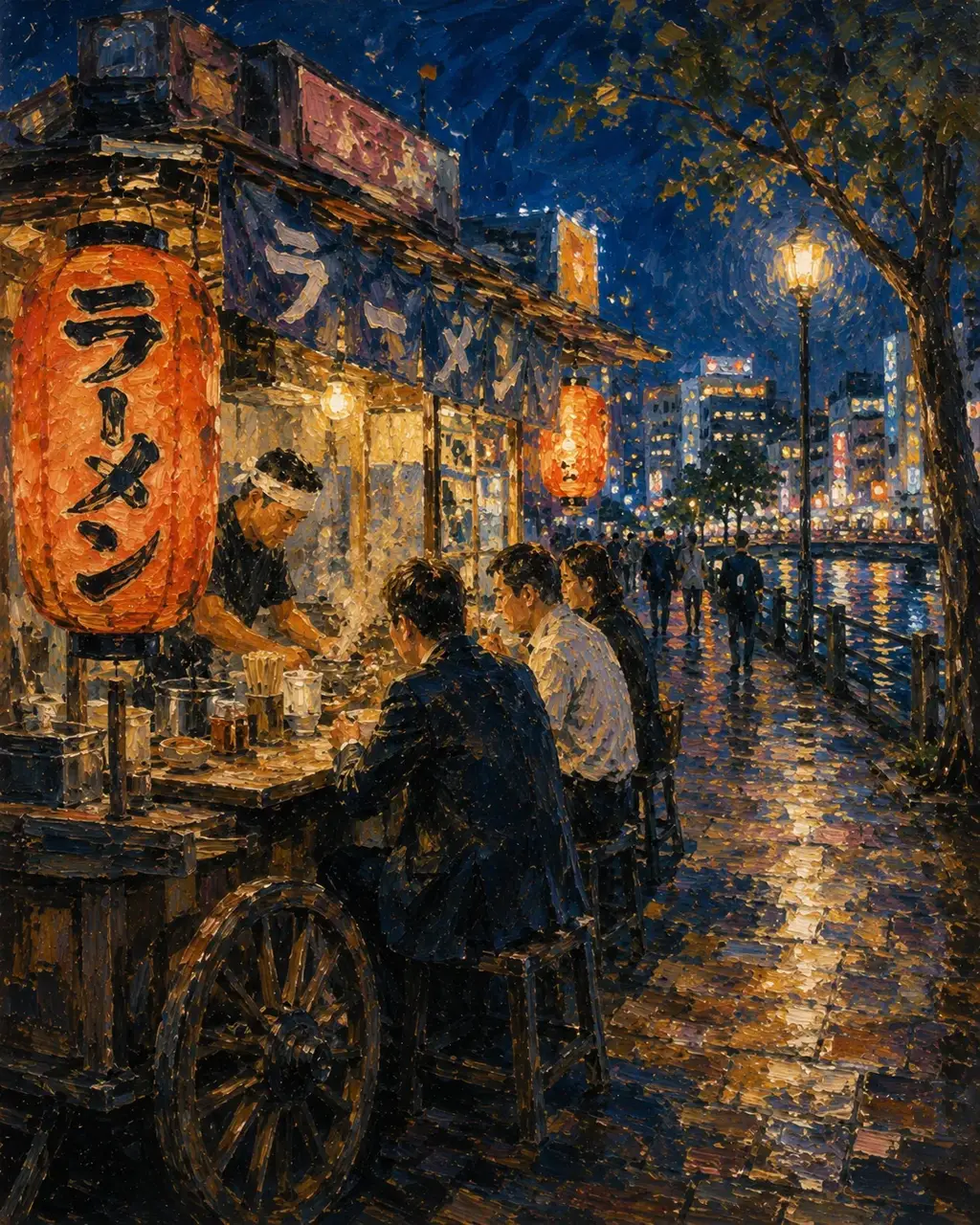
Tokushima ramen is a soy-seasoned pork-bone soup. Instead of chashu it carries pork belly stewed in a rich sauce, along with bean sprouts, bamboo shoots, spring onion and a raw egg. The broth comes in three colours, each tied to a place: brown in Tokushima city, white in Komatsushima and yellow in Naruto. The dish is said to have started in the early 1900s at a street stall run by a Chinese resident.
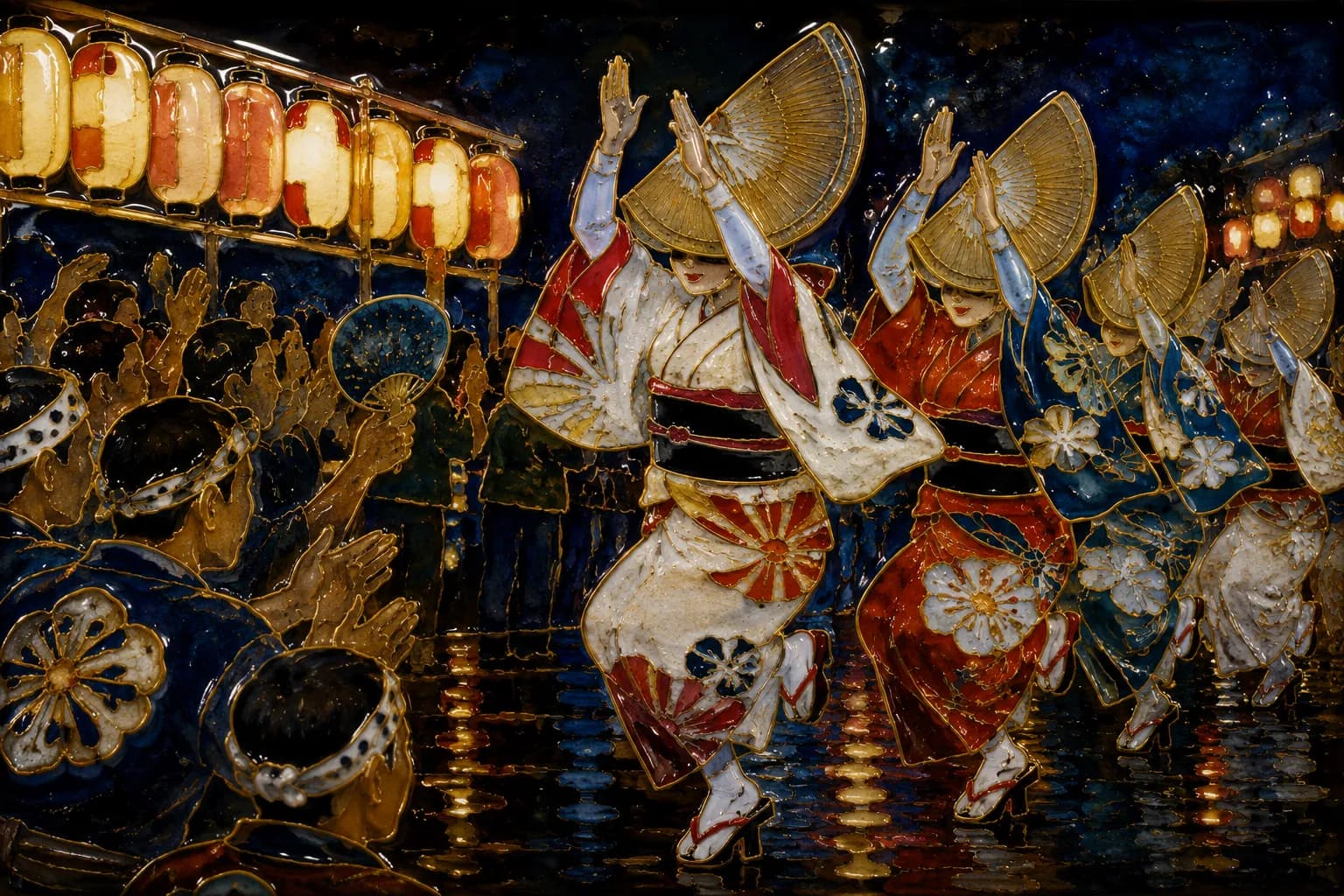
Behind Tokushima Station is Chuo Park, where the ruins of Tokushima Castle sit on a hill. Hachisuka Iemasa completed the castle in 1587; the Tokushima Castle Museum in the park covers its history and has a Japanese garden. In the other direction, the ropeway up Mount Bizan is about a 10-minute walk from the station. Its base station is inside the Awa Odori Kaikan, which stages the dance that fills the streets every August at Obon as a daily show the rest of the year.
Festivals in the same city
Awa Odori 2027: 12–15 August in Tokushima City, ticketed enbujo seats or free street viewing
Full guide: dates, getting there and what you can book →
Sources