Japan
Awa Odori 2027: 12–15 August in Tokushima City, ticketed enbujo seats or free street viewing
At a glance
- Dates
- Next: 12–15 August 2027
- Where
- Central Tokushima, around JR Tokushima Station
- Getting there
- JR to Tokushima Station, then walk to the venues
- Cost
- Paid enbujo are ticketed; streets and four free venues need no ticket
- Limits
- City-centre traffic controls apply; check the zones in advance
The 2026 edition has passed
Dates last checked: 14 October 2026
The festival
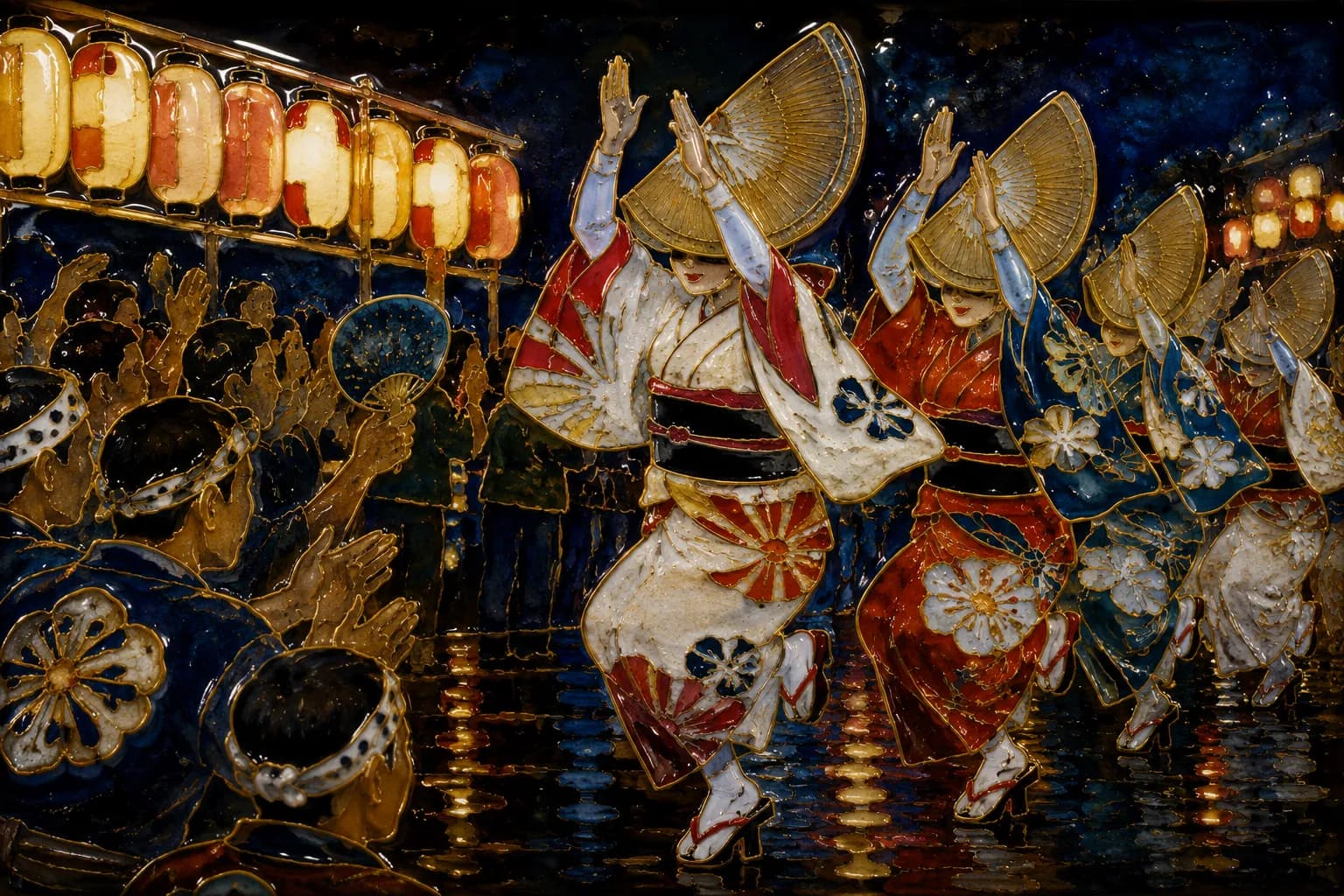
Watchers can join a niwaka-ren and dance in the street
Every ren, or dance troupe, moves in a fixed order: a banner or lantern at the front, then the dancers, then a band of shamisen, taiko drums, kane gongs and shinobue flutes. From 12 to 15 August each year, during Obon, the troupes take turns from early evening on the enbujo stages and streets of central Tokushima.
Women dance in yukata and half-moon amigasa straw hats, up on the toes of their geta with arms raised. Men keep low, knees bent, with broad, loose movements. Every dancer in a troupe follows the same steps to the band's beat.
There are three paid enbujo, Aibahama, Minami-Uchimachi and Konyamachi, each with shows at 18:00 and 20:20 and cleared in between. Tickets are sold through Ticket Pia. You can also watch for free at the Ryogoku-Honmachi and Dennou Kotsu enbujo, at two odori hiroba, or on the streets, where troupes dance as they walk.
Booking
There are no tickets or transport to book for this page right now.
Details
The ticketed stands run two shows a night, at 18:00 and 20:20, with seats sold through Ticket Pia. Without a ticket, use the four free venues or watch from the street, and if you want to dance, join a niwaka-ren.
Dates and nightly shows
Awa Odori fills Tokushima City for four days, and on the night before it opens there is a ticketed eve-of-festival stage show at Asty Tokushima.
The paid enbujo run two shows a night, 18:00–19:40 and 20:20–22:00, and are cleared between them. By day, a ticketed show of selected troupes plays Awagin Hall at 11:00, 13:30 and 16:00.
Tickets and seats
There are three paid enbujo: Aibahama, Minami-Uchimachi and Konyamachi. Tickets are sold through Ticket Pia. In 2026 presales opened on 13 June at 12:00 and general sales on 1 July, and the eve-of-festival and selected-troupe shows were sold the same way.
Popular shows sell quickly. The official website will post the 2027 sale dates, and seat sections and prices vary by venue and show.
Watching without a ticket
Four venues are free: Ryogoku-Honmachi Enbujo, Dennou Kotsu Enbujo, Shinmachibashi-Higashi Odori Hiroba and Ryogokubashi-Minami Odori Hiroba, each with its own times. You can also watch from the street as troupes dance past.
If you want to dance, join a niwaka-ren. There is no sign-up and no dress code, and dancers from well-known local troupes teach the basics.
Getting there and where to stay
The paid and free venues are all a short walk from JR Tokushima Station. Roads in the centre are closed during the festival, and the official website lists the closures, extra services and parking, so JR or the bus beats driving.
City hotels fill quickly for the festival. If they are full, stay in Naruto or Takamatsu and take JR to Tokushima Station. The last enbujo show ends at 22:00, so check the trains back if you are staying out of town.
Heat and stamina
August nights in Tokushima stay hot and humid, the dancing runs from early evening to 22:00, and the streets and free venues mean standing at the busiest time of day. With children, older relatives or anyone who can't stand for long, a paid enbujo seat makes more sense. For the streets, bring water, a towel and a fan, and agree on a meeting point in case you get separated.
Street etiquette: making way and joining in
On the street, step aside to open a path when a troupe comes through, and stay out of its route when taking photos. At an enbujo, stay in your seat and keep the aisles clear.
If a troupe or niwaka-ren invites you in, you can dance along. If not, a wave and a smile is enough to decline.
Good to know
- Location
- Central Tokushima City. The paid and free venues are all around JR Tokushima Station.
- Paid enbujo
- Aibahama, Minami-Uchimachi and Konyamachi, each with two shows a night, 18:00–19:40 and 20:20–22:00, cleared between shows.
- Tickets
- Ticket Pia sells the paid enbujo, the eve-of-festival show and the selected-troupe show.
- Free venues
- Ryogoku-Honmachi Enbujo, Dennou Kotsu Enbujo, Shinmachibashi-Higashi Odori Hiroba and Ryogokubashi-Minami Odori Hiroba, no ticket needed.
- Niwaka-ren
- Troupes that visitors can join without signing up, in whatever they are wearing; dancers from well-known local troupes teach the basic steps.
FAQ
5
Where should I watch Awa Odori in Tokushima?
For the full programme, buy a seat at one of the paid enbujo (Aibahama, Minami-Uchimachi or Konyamachi). Without a ticket, try the Ryogoku-Honmachi or Dennou Kotsu enbujo, the two odori hiroba at Shinmachibashi-Higashi and Ryogokubashi-Minami, or the streets where troupes dance past.
How do I get to Tokushima City?
The paid and free venues are all within walking distance of JR Tokushima Station. Roads in the centre are closed during the festival, and the official website posts the closures and extra transport services.
Where can I buy Awa Odori tickets?
Ticket Pia sells the paid enbujo, the eve-of-festival show and the selected-troupe show. In 2026 presales opened on 13 June and general sales on 1 July. The streets and free venues need no ticket.
Can visitors join the dancing?
Yes. A niwaka-ren is a troupe that visitors join on the spot: just turn up in everyday clothes, and local dancers leading it demonstrate the basic steps before you set off.
Is the Koenji Awa Odori in Tokyo the same event?
No. The Tokyo Koenji Awa Odori is a separate event run locally in Suginami in late August, on 29 and 30 August in 2026. This page covers the Tokushima City festival only.
Read next