Japan
Aoi Matsuri 2027: Kyoto's Heian-era procession on 15 May
At a glance
- Dates
- Next: 15 May 2027
- Where
- Kyoto Imperial Palace to Kamigamo Shrine via Shimogamo
- Getting there
- Short walk from Marutamachi subway station; city buses face closures
- Cost
- Free along the route; paid seats are sold separately
- Limits
- Rain moves it to the 16th; paid seats are not refunded for that
The 2026 edition has passed
Dates last checked: 14 October 2026
The festival
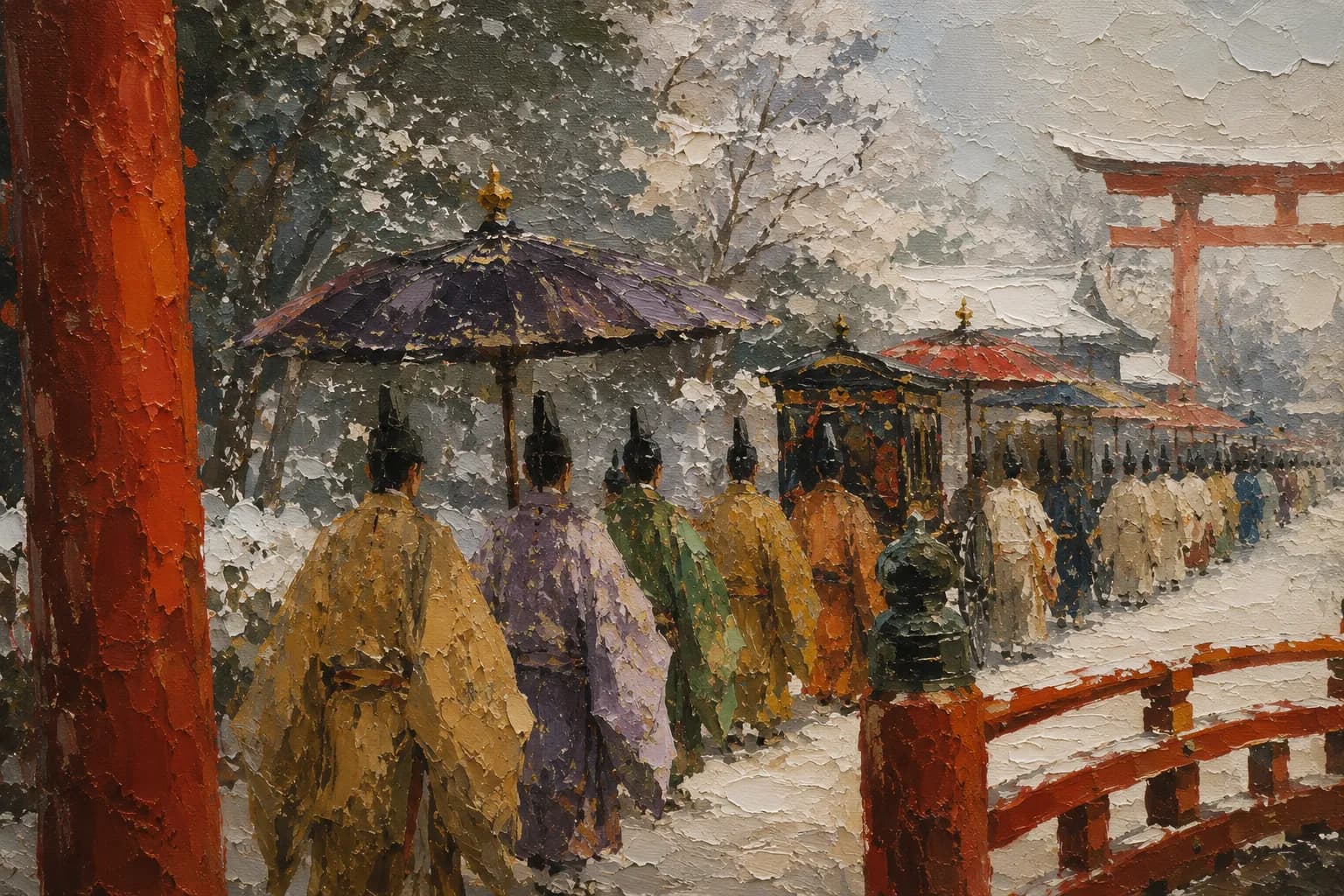
The procession leaves the Imperial Palace in the morning and reaches Kamigamo by afternoon
The Roto-no-gi procession of Aoi Matsuri is 511 people, 36 horses, 4 oxen and 2 ox carts, stretched over about a kilometre. It leaves the Kyoto Imperial Palace in the morning, enters Shimogamo Shrine around midday and follows the Kamo River north to Kamigamo Shrine in the afternoon. Aoi Matsuri falls on the same date every year, moving back a day if it rains, and it is the oldest of Kyoto's three great festivals, alongside the Gion Matsuri and the Jidai Matsuri.
The festival dates to the sixth century under Emperor Kinmei, when storms and failed harvests led the court to hold rites to appease the Kamo deities. That was the start of the Kamo Festival, and from 807 it was led by an imperial envoy. Because hollyhock leaves decorate the shrine buildings, carts, costumes and animals on the day, it came to be called the Aoi (hollyhock) Matsuri.
The procession includes court officials on horseback, attendants on foot and ox carts decorated with hollyhock, their robes layered in blue, scarlet and deep purple. Everyone wears aoi-katsura on their headgear and chest, and it hangs from the cart eaves too: twin hollyhock leaves wound on a katsura sprig, the crest of the Kamigamo and Shimogamo shrines. Oxen pull the carts on wooden wheels, and the whole procession moves at walking pace.
Booking
There are no tickets or transport to book for this page right now.
Details
Pick one stretch rather than following the whole route: the Imperial Palace in the morning or the Kamo River embankment in the afternoon. Most free spots mean standing.
Date and rain policy
Aoi Matsuri is held every 15 May on a fixed date, whatever the day of the week. If it rains, it moves to 16 May, and the decision is made around 18:00 the day before. The 2026 festival took place on 15 May, and the next is on 15 May 2027.
Route and times
Scheduled times for the head of the procession: it leaves the Kyoto Imperial Palace at 10:30, reaches Shimogamo Shrine around 11:40 for the Shato-no-gi rite, leaves around 14:20, follows the Kamo River north and reaches Kamigamo Shrine around 15:30 for a second Shato-no-gi. The route is about 8 km.
These are the Kyoto City Tourism Association's scheduled times and often run a little late. The whole procession takes about an hour to pass any one point.
Where to watch
In the morning, the Imperial Palace area has plenty of space to see the procession form up. Around midday, the Tadasu no Mori approach at Shimogamo Shrine is shaded by trees. In the afternoon, the Kamo River embankment is open as the procession heads north. Pick one stretch rather than following the whole route.
The Imperial Palace area and Shimogamo Shrine draw the biggest crowds. Don't cross the route while the procession is moving; wait until it has passed.
Paid seats and tickets
Paid seats are only at Kyoto Gyoen and on the Shimogamo Shrine approach, all reserved. For 2026 they went on sale on 1 April at 10:00. Individual tickets were sold on the Ticket Pia website (membership required) and at 7-Eleven stores, with general seats at 5,000 to 6,500 yen, Royal seats at Kyoto Gyoen at 18,000 to 20,000 yen and Manabi seats at Shimogamo at 8,500 to 10,500 yen (the front row costs more in each) including an official guidebook and audio guide.
If the procession moves to the 16th, tickets carry over and are not refunded. Refunds at the place of purchase apply only if both days are cancelled. The Kyoto City Tourism Association will announce 2027 prices and the sale date.
Long waits in the sun
Aoi Matsuri has no floats or performances; you watch a procession walk past, it takes an hour to pass one spot, and the free stretches mostly mean standing. Mid-May afternoons in Kyoto are sunny, and the Kamo River embankment has no shade, so bring a hat, a parasol and water, and keep the parasol low in crowded spots so people behind you can see. If standing for long is hard, a paid seat or just the morning departure from the Imperial Palace works better.
Good to know
- Standing
- One of Kyoto's three great festivals, with the Gion Matsuri and Jidai Matsuri, and the oldest of the three.
- Procession size
- About 511 people, 36 horses, 4 oxen and 2 ox carts, stretching about a kilometre from front to back.
- Route
- From the Kyoto Imperial Palace via Shimogamo Shrine to Kamigamo Shrine, about 8 km in all.
- Decoration
- Aoi-katsura, twin hollyhock leaves wound on katsura sprigs, hang from headgear, chests and the eaves of the ox carts.
- Origin
- Began in the sixth century under Emperor Kinmei as a rite to appease the Kamo deities, and became an imperial envoy festival in 807.
- Times
- Leaves the Imperial Palace at 10:30, reaches Shimogamo Shrine around 11:40, leaves at 14:20 and reaches Kamigamo Shrine around 15:30 (scheduled times for the head of the procession).
FAQ
5
What is the main thing to see at Aoi Matsuri?
The Roto-no-gi procession: about 511 people in Heian-era dress on horseback, on foot or with the ox carts, with hollyhock and katsura on their headgear and on the cart eaves. Near the back, the Saio-dai, the festival's female lead, rides in a palanquin carried on men's shoulders.
What route does the Aoi Matsuri procession take?
It leaves the Kyoto Imperial Palace, holds rites at Shimogamo Shrine in the late morning, then follows the Kamo River north in the afternoon to Kamigamo Shrine, about 8 km in all. Actual times often run a little late.
Where can you watch the procession for free?
Anywhere along the route. The Imperial Palace area, the Tadasu no Mori forest at Shimogamo Shrine and the Kamo River embankment are the usual spots. Paid seats are only at Kyoto Gyoen and on the Shimogamo approach.
How do you buy paid seats?
For 2026, seats went on sale on 1 April at 10:00. Individual tickets were sold on the Ticket Pia website (membership required) and at 7-Eleven stores, with general seats at 5,000 to 6,500 yen, Royal seats at Kyoto Gyoen at 18,000 to 20,000 yen and Manabi seats at Shimogamo at 8,500 to 10,500 yen including an official guidebook and audio guide. If the procession moves to the 16th, tickets stay valid and are not refunded.
Where does the name Aoi Matsuri come from?
The festival was originally the Kamo Festival, dating to the sixth century under Emperor Kinmei. Because hollyhock (aoi) leaves decorate the shrine buildings, carts, costumes and even the animals on the day, it came to be called the Aoi Matsuri.
Read next